




A grounding sheet may be part of a calming bedtime routine, but can earthing affect medications? It is a sensible question, especially if you take daily prescriptions or manage a chronic condition. The short answer is that there is currently no strong clinical evidence showing that earthing changes how prescription medications are absorbed, processed, or cleared by the body. Still, grounding is a wellness practice, not a substitute for medical care, and a few situations deserve extra caution.
What Earthing Does - and Does Not Do
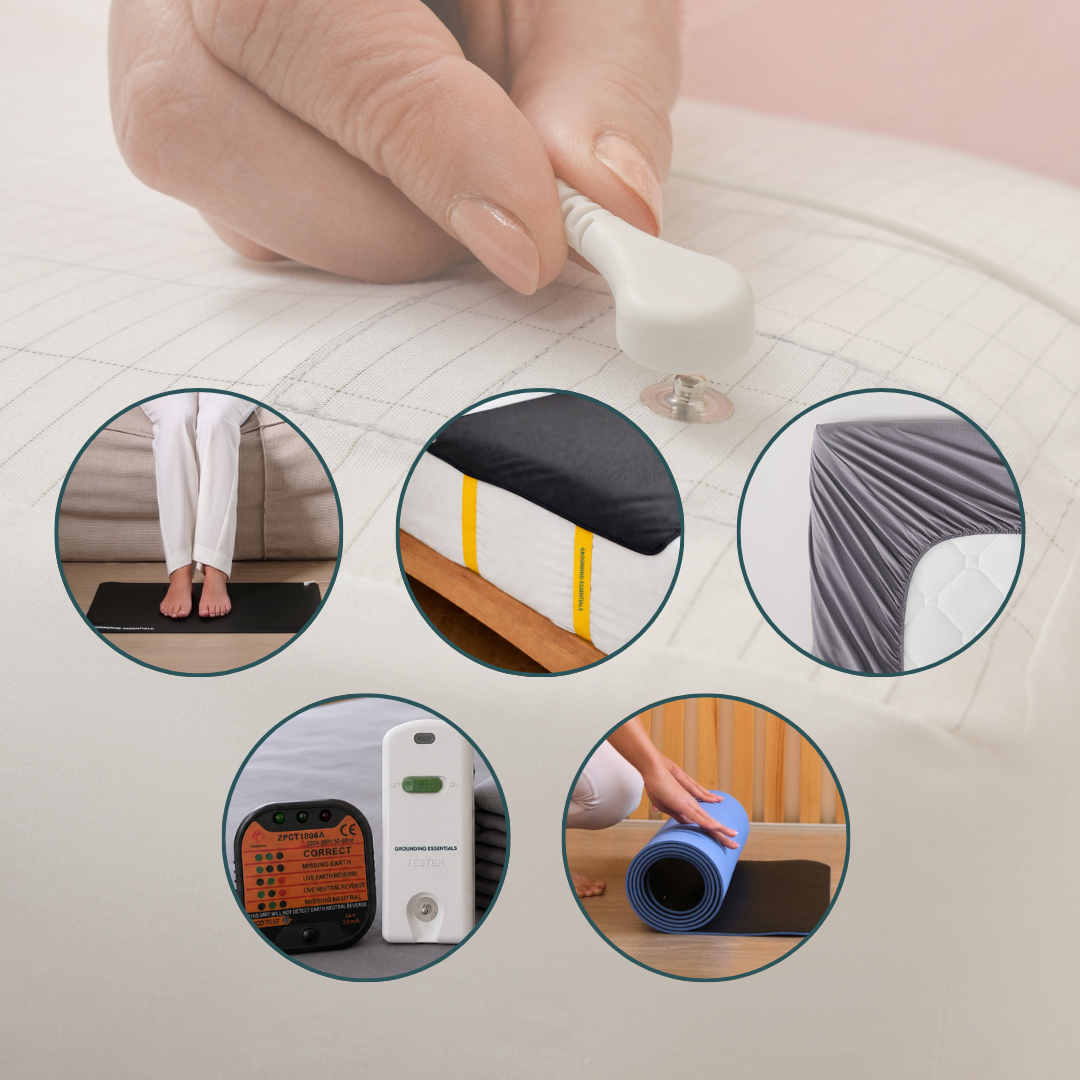
Earthing, also called grounding, involves making conductive contact with the Earth. Outdoors, that might mean bare feet on grass, soil, or sand. Indoors, grounding products such as bed sheets, mats, and sleep pads connect to the grounding port of a properly grounded outlet.
These products do not deliver electrical power into the body. When set up correctly, they are designed to bring your body's electrical potential closer to Earth potential. This is different from electrical stimulation devices, which intentionally send current through the body.
Some small studies and early research have explored whether grounding may influence measures such as body voltage, sleep patterns, cortisol rhythms, blood flow, or subjective pain and stress. The findings are interesting, but the research base remains limited. It does not establish earthing as a treatment for any disease, and it does not show that grounding can replace medication.
That distinction matters. Feeling more rested, relaxed, or comfortable after adding a grounding routine may be meaningful to you, but it is not proof that a medication is no longer needed or should be adjusted.
Can Earthing Affect Medications Directly?
There is no established evidence that earthing changes drug metabolism. In practical terms, researchers have not shown that grounding alters the liver enzymes that process medications, the kidneys' removal of drugs from the body, or the amount of a medicine absorbed in the digestive tract.
There is also no reliable evidence that a grounding sheet, mat, or pillowcase blocks a medication's action. A correctly used grounding product is not a drug and is not intended to act on the body in the same direct, dose-dependent way as a prescription treatment.
However, absence of evidence is not the same as proof that interactions are impossible in every individual and with every medication. Earthing research is still emerging, and large, high-quality medication-interaction studies have not been completed. The responsible approach is simple: continue taking medications exactly as prescribed unless the clinician who manages your care tells you otherwise.
Why some people worry about blood-thinning medications
This question often comes up because a small number of grounding studies have examined blood flow and blood properties. Some early reports suggest possible changes in blood viscosity or red blood cell behavior after grounding. These studies are not enough to guide medical decisions, and they do not prove that earthing has the same effect as an anticoagulant or antiplatelet drug.
If you take warfarin, apixaban, rivaroxaban, clopidogrel, aspirin prescribed for cardiovascular prevention, or another medication that affects clotting, speak with your prescribing clinician before beginning any new wellness practice that you hope will influence circulation, inflammation, or pain. This is particularly relevant if you have had unusual bruising, bleeding, dizziness, or a recent medication change.
Do not reduce, skip, or “balance out” a blood-thinning medication because you have started grounding. Those decisions require clinical oversight and, for some medications, laboratory monitoring.
Sleep, stress, and symptoms can change your routine
Medication interactions are not the only consideration. If grounding supports a more relaxed bedtime routine, you may notice changes in sleep quality, perceived stress, soreness, or energy. Those changes may affect how you experience a health condition, but they do not automatically mean the underlying condition has changed.
For example, better sleep might make daytime fatigue feel more manageable. It does not tell you whether a thyroid medication dose, blood pressure treatment, antidepressant, insulin regimen, or seizure medication should change. Symptom improvement can have many causes, including normal day-to-day variation, other lifestyle changes, placebo effects, and the medication itself.
Keep your healthcare team informed about meaningful changes in symptoms, especially if you are managing diabetes, high blood pressure, heart disease, epilepsy, autoimmune disease, mental health conditions, or chronic pain.
Who Should Ask a Clinician First?
Most healthy adults can discuss grounding as they would any low-intensity wellness habit. But a quick conversation with a pharmacist or clinician is a wise first step if you take multiple prescriptions, have a complex condition, or are unsure whether a new symptom is related to a treatment.
Extra care is appropriate for people who use anticoagulants or antiplatelet medications, insulin or other glucose-lowering drugs, blood pressure medications, diuretics, antiarrhythmic drugs, seizure medications, or medicines with a narrow therapeutic range. That does not mean earthing is known to be unsafe with these drugs. It means the consequences of changing or misreading symptoms can be more serious.
You should also ask your clinician or device manufacturer before using an indoor grounding product if you have an implanted electrical medical device, such as a pacemaker, defibrillator, neurostimulator, or insulin pump. Grounding products are designed for passive connection to a properly grounded outlet, but medical-device guidance should always take priority.
Pregnancy, recent surgery, active cancer treatment, unexplained swelling, chest pain, fainting, new shortness of breath, or sudden neurological symptoms are also reasons to seek medical advice rather than self-manage with a wellness product.
How to Try Earthing Responsibly Alongside Treatment
If your clinician has no concerns, keep your approach simple and consistent. Use grounding as an addition to your existing care plan, not an experiment that changes several health variables at once.
Start with a modest routine, such as sleeping on a grounding sheet or using a mat while reading in the evening. Follow the product setup instructions carefully, and verify that the outlet is properly grounded with a suitable outlet tester. Never connect grounding products to an ungrounded, damaged, or questionable outlet.
For the first few weeks, it can help to keep brief notes on sleep, comfort, stress level, and any symptoms you already track for your health condition. Record medication timing as usual. This creates a clearer picture than relying on a single unusually good or bad day.
If you notice side effects, worsening symptoms, faintness, unusual bleeding, major changes in blood glucose or blood pressure readings, or anything that concerns you, stop treating it as a wellness experiment and contact a healthcare professional. Urgent symptoms need urgent medical care.
A Practical Conversation With Your Pharmacist
Pharmacists are an underused resource for questions about supplements, lifestyle practices, and possible interactions. You do not need to present grounding as a cure or make a complicated case. You can say: “I am considering using a grounding sheet for sleep and relaxation. I will continue my medications as prescribed. Is there anything in my health history or medication list that means I should avoid it or monitor anything?”
Bring up any implanted devices, recent medication adjustments, and the specific results you hope to notice. A clinician can help separate reasonable wellness goals, such as improving your bedtime environment, from symptoms that may need assessment.
The Bottom Line on Earthing and Medication Safety
Earthing may be a useful part of a broader routine that includes regular sleep, movement, nourishing food, stress support, and prescribed medical care. Grounding Essentials products are designed to make that routine accessible indoors, but no grounding product should be used to diagnose, treat, cure, or replace treatment for a medical condition.
The most helpful next step is to keep your medications stable, set up any grounding product safely, and let your healthcare team know you are trying it. That gives you room to explore how you feel while keeping the decisions that matter most anchored in sound medical guidance.

Deixar um comentário
Este site está protegido pela Política de privacidade da hCaptcha e da hCaptcha e aplicam-se os Termos de serviço das mesmas.