



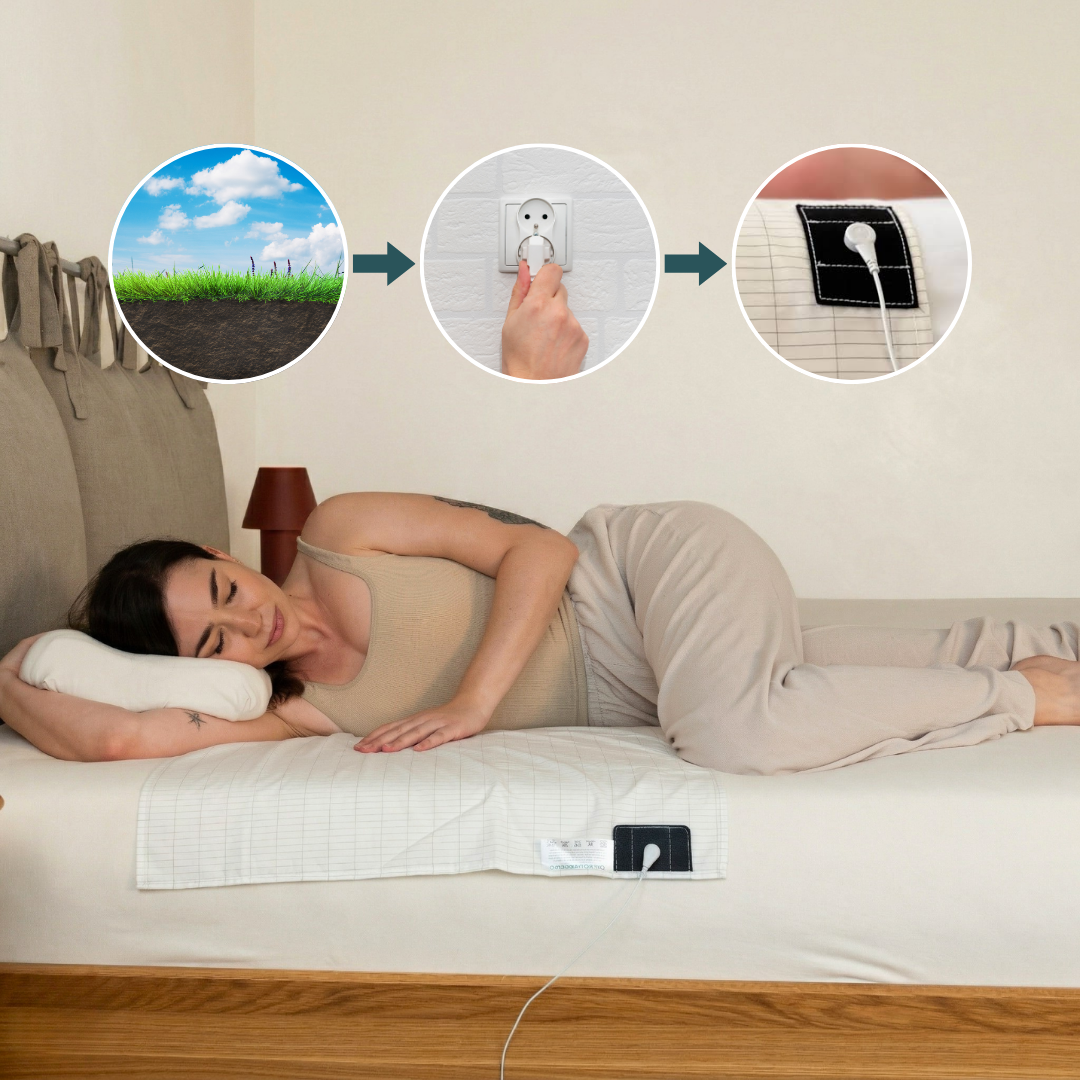
A bed can be the most consistent place to explore grounding. You spend hours there, mostly still, which is why grounding sheets are designed for overnight contact rather than a few minutes of barefoot time outdoors. For people looking to support a calmer bedtime routine, recovery habits, or simply a more comfortable sleep environment, that consistency is the main appeal.
Grounding is not a medical treatment, and results are not the same for everyone. Still, early research and many personal reports have made people curious about whether reconnecting with the Earth's electrical potential can influence sleep and everyday wellbeing. The useful place to begin is with the practical question: what does a grounding sheet actually do?

What Are Grounding Sheets?
If you're wondering what is a grounding sheet, it is a fitted or flat bed sheet made with conductive fibers, usually fine silver threads woven into cotton or a cotton-rich fabric. A cord connects the sheet to the grounding port of a properly grounded electrical outlet, or in some setups, to a dedicated grounding rod placed outdoors.
The cord does not supply electricity to the sheet. It creates a path between the conductive material and earth ground. When bare skin touches the sheet, the body can be brought closer to the same electrical potential as the Earth.
This is the indoor equivalent of direct contact with the ground, such as standing barefoot on grass, sand, or soil. It is not the same as walking on wood flooring, carpet, rubber-soled shoes, or most indoor surfaces, which generally interrupt that connection.
For overnight use, the conductive surface needs regular skin contact. The following points are particularly important:
- Direct skin contact: A foot, leg, arm, or torso touching the grounding sheet is enough.
- As little fabric in between as possible: Pajamas and bedding can reduce direct contact with the conductive surface.
- Proper positioning: Many people therefore leave a small area of skin exposed or position the sheet beneath the part of the body that naturally rests against it while sleeping.
- Consistent contact throughout the night: Because a grounding sheet can be used for several hours, the bed is particularly well suited to maintaining consistent contact with the conductive surface.
How do Grounding Sheets Work at Night
So, what are grounding bed sheets in practical terms? They are simply grounding sheets designed specifically for use in bed.
Modern homes contain electrical fields from wiring, appliances, chargers, and devices. The body can pick up a measurable induced voltage from these fields. A properly connected grounding product may reduce that measured body voltage relative to ground. This change is easy to observe with an appropriate meter, but it does not by itself prove a health benefit.
The proposed biological explanation is more complex. The Earth has a large reservoir of free electrons, and grounding researchers have suggested that contact with the Earth may influence electrical activity at the body's surface and potentially support normal processes related to stress, sleep, circulation, and inflammation.
Several small studies have reported changes in sleep patterns, cortisol rhythms, perceived pain, or markers associated with recovery. Some laboratory and pilot research is promising enough to justify further study. At the same time, the evidence base remains limited: many studies are small, methods vary, and more high-quality independent trials are needed before firm medical conclusions can be made.
That distinction matters. A grounding sheet may be a worthwhile wellness tool to try, especially if you value routines that help you slow down before bed. It should not replace clinical care, prescribed medication, or the fundamentals that influence sleep most strongly: a regular sleep schedule, light exposure, movement, a comfortable room, and appropriate support for medical concerns.
Grounding Sheet Effects: What Can Happen While You Sleep?
So, what do grounding sheets do while you sleep? Their effects are based first on a simple principle: your skin remains in contact with the conductive surface of the sheet for several hours. When the grounding sheet is correctly connected to a verified ground, a continuous electrical connection to the Earth is established. This can change the measurable electrical voltage on the body relative to its surroundings.
People searching for grounding bed sheets benefits are usually less interested in the electrical measurement itself and more interested in possible effects on sleep and well-being. Small grounding studies have examined areas including sleep quality, nighttime cortisol rhythms, perceived pain, and various recovery-related markers. The results so far are interesting, but they are not sufficient to clearly confirm a specific health effect.
The grounding bed sheet effects may also be experienced differently from person to person. Some users report feeling more relaxed in the evening, sleeping more comfortably, or feeling more rested in the morning. Others notice no clear difference. For this reason, it can be useful to use a grounding sheet consistently over a longer period while keeping the rest of your sleep routine as stable as possible.
It is also important to distinguish between the technically measurable function and potential health effects. The electrical connection to ground can be checked and measured. Claims about specific health benefits, however, should be considered cautiously because the current scientific evidence remains limited.

What You May Notice, and What You May Not
People use grounding sheets for different reasons. Some want to feel more settled at bedtime. Others are athletes experimenting with recovery routines, or busy professionals trying to create a more intentional wind-down ritual. Customer experiences often mention feeling more relaxed, sleeping more comfortably, or waking with a greater sense of rest.
Those experiences are personal, not proof that the product will create the same outcome for someone else. Sleep is especially sensitive to expectations, stress levels, room temperature, caffeine, alcohol, pain, travel, and many other factors. If you begin using a grounding sheet during a week when you also stop late-night scrolling and commit to an earlier bedtime, it can be hard to separate one effect from another.
|
Area |
What You Should Know |
|
Electrical connection |
With direct skin contact and correct grounding, a grounding sheet can change the body's measurable voltage relative to ground. |
|
Sleep and relaxation |
Some users report calmer or more comfortable sleep. Individual grounding sheet effects can vary. |
|
Recovery |
Small studies have investigated possible changes in various recovery-related markers, but the scientific evidence remains limited. |
|
Time until you notice a change |
Some people notice a difference relatively quickly, while others notice changes only after longer, consistent use — or no change at all. |
|
Other influencing factors |
Stress, caffeine, room temperature, sleep schedule, exercise, and other habits can also influence sleep quality. |
A practical approach is to change as little as possible at first. Use the sheet consistently for two to four weeks, keep a simple note of bedtime, wake time, and how rested you feel, and look for patterns rather than a dramatic first-night result. Some people report noticing a difference quickly; others notice nothing at all. Both are valid outcomes.
Choosing a Grounding Sheet That Holds Up
When deciding what is the best grounding sheet for regular use, conductivity is essential, but comfort and durability matter just as much when a product is part of your sleep environment every night. Look for a sheet with conductive silver fibers woven into the fabric rather than a surface coating that may wear unevenly. The fabric should feel comfortable against bare skin and fit your mattress securely enough that it will not bunch up overnight.
Also check what is included. A complete setup typically includes the sheet, a connection cord, and a way to verify that the outlet is properly grounded. A socket tester is useful because a grounding sheet can only work as intended when the outlet's grounding connection is correctly wired.
Silver is conductive but requires sensible care. Wash the sheet according to its instructions, usually with mild detergent and without bleach, fabric softener, or harsh additives. These products can leave residues on the fibers or gradually affect conductivity. Avoid lotions directly on the contact area when possible, and do not use a damaged cord or connector.
Price alone does not tell you whether a sheet is well made. Pay attention to material details, care guidance, warranty or trial terms, and whether the company provides clear safety and setup information. Grounding Essentials, for example, includes practical testing guidance so customers can confirm their setup before making it part of a nightly routine.

Set Up Your Sheet Safely
The safest setup starts with the outlet, not the bed. Use a grounded outlet that has been tested with a suitable outlet tester. If the tester indicates a wiring fault or no ground, do not connect the sheet there. Ask a qualified electrician to inspect the outlet instead.
Connect the grounding cord to the sheet first, then connect it to the grounding port as directed by the manufacturer. The grounding port is the round hole on a standard US outlet. Do not insert the grounding connection into a live slot, modify the plug, use a damaged outlet, or improvise with household wiring.
Place the sheet on the mattress with the conductive side facing up, if the product has a designated side. Make direct skin contact for part of the night. A fitted grounding sheet generally stays in place more easily, while a flat sheet may suit people who want to test grounding without changing their entire bedding setup.
If you use an electric blanket, heating pad, CPAP machine, or other bedside equipment, follow each device manufacturer's instructions and keep cords organized. Grounding products are intended to connect only to verified ground. They do not protect against faulty electrical installations, and they are not an alternative to proper home electrical safety.
Make It Part of a Better Bedtime Routine
A grounding sheet works best as one small part of a sleep-supportive environment, not as a replacement for everything else. Pair it with habits that have a stronger and more established effect on sleep: dim lights before bed, keep the room cool and quiet, limit late caffeine, and give yourself a consistent opportunity for enough sleep.
If you are managing chronic pain, insomnia, anxiety, circulation concerns, or another health condition, keep your healthcare professional involved. Grounding may be something you choose to explore alongside your care plan, but it should not delay an evaluation or change a treatment plan without guidance.
Start simply tonight: test the outlet, make direct skin contact with the sheet, and give the routine enough time to be evaluated fairly. The goal is not to chase a promise. It is to create a sleep space that supports the steady, practical habits your body can rely on.



Leave a comment
This site is protected by hCaptcha and the hCaptcha Privacy Policy and Terms of Service apply.