




Grounding research has attracted attention because it asks a simple question: can connecting the body to the Earth produce measurable changes in sleep, stress, recovery, circulation, or other physiological processes?
The answer so far is interesting, but not definitive.
A small body of published research suggests grounding may influence certain measurable outcomes, including body voltage, cortisol patterns, perceived sleep quality, soreness, and some recovery-related markers. At the same time, many studies are small, preliminary, or difficult to generalize.
That means grounding research is worth following, but it does not yet support claims that grounding treats disease, cures insomnia, eliminates inflammation, or guarantees better recovery.
What Have Grounding Studies Examined?
Grounding, also called earthing, means making conductive contact with the Earth.
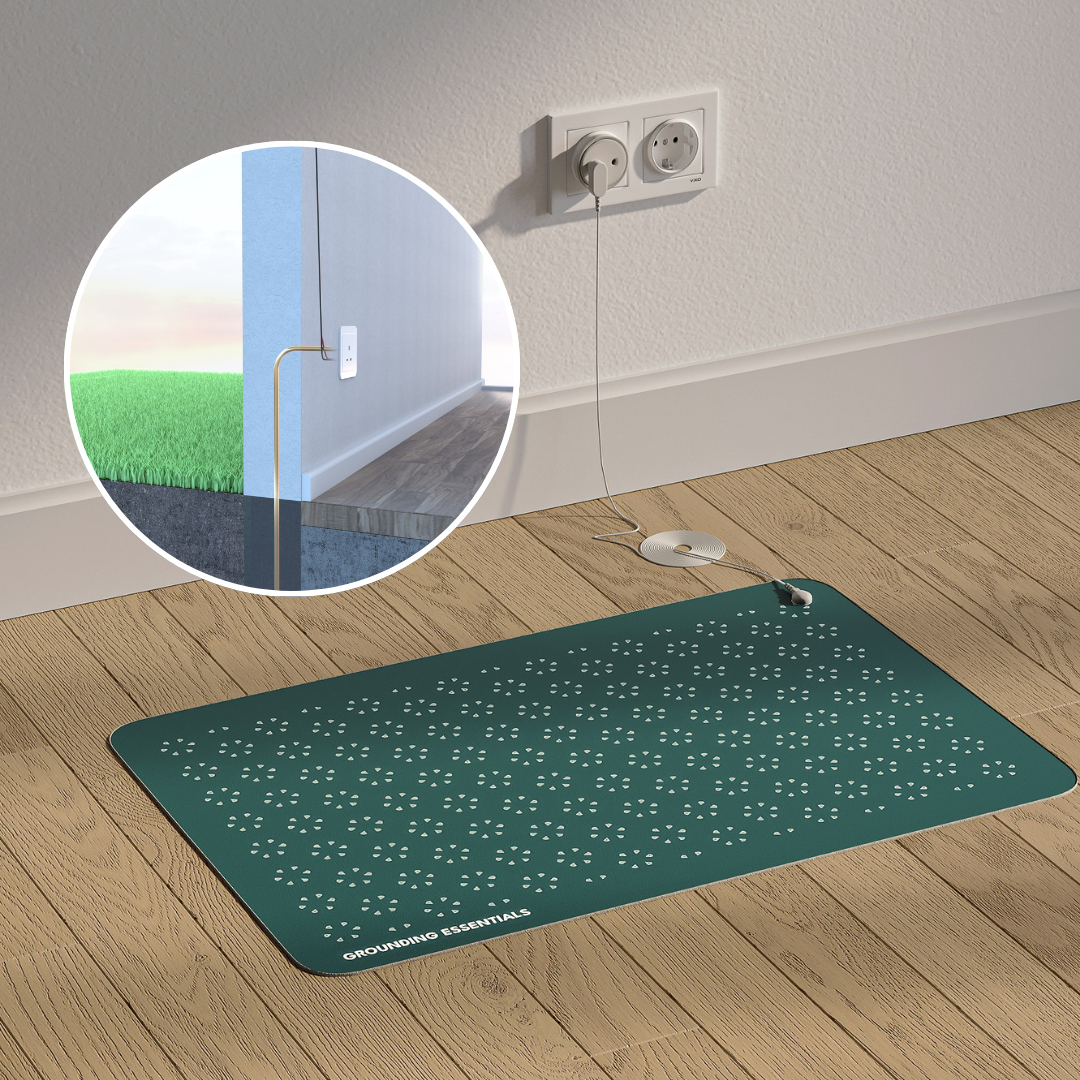
Outdoors, this may happen through bare skin on grass, soil, or sand. Indoors, products such as Grounding Bed Sheets, Grounding Bed Mats, and Grounding Mats provide a conductive connection through a properly grounded setup.
Researchers have explored grounding in relation to several areas, including:
- Sleep and cortisol rhythms
- Perceived stress and relaxation
- Exercise recovery and soreness
- Pain ratings
- Circulation-related measurements
- Inflammation-related markers
- Autonomic nervous system activity
- Body voltage
The important distinction is that these are different kinds of outcomes.
A study showing a change in body voltage is not the same as demonstrating better sleep. A change in a blood marker is not the same as proving that a disease has been treated.
Each result needs to be interpreted according to what the study actually measured.

What Does the Sleep and Cortisol Research Show?
One of the most frequently discussed grounding studies was published in 2004 by Maurice Ghaly and Dale Teplitz.
The pilot study followed 12 people who reported sleep problems, pain, and stress. Participants slept grounded in their own beds for eight weeks using conductive mattress systems.
Researchers measured 24-hour saliva cortisol patterns before grounding and again during the study. Participants also recorded subjective changes in sleep, pain, and stress.
The study reported changes in cortisol patterns and improvements in several self-reported symptoms.
These results helped generate interest in nighttime grounding, particularly because cortisol follows a daily rhythm that is closely connected with sleep and stress.
However, this was a very small pilot study.
With only 12 participants and no large independently replicated trial confirming the results, it cannot establish that grounding reliably improves sleep or regulates cortisol for the general population.
A more accurate interpretation is that the results provide a reason for further research.
What Does Research Say About Exercise Recovery?
Grounding has also been studied in relation to post-exercise recovery.
A 2010 pilot study examined eight healthy participants after eccentric exercise designed to produce delayed-onset muscle soreness, commonly known as DOMS.
Four participants were grounded using conductive sheets and electrode patches, while four followed the same protocol without an active grounding connection.
Researchers measured a wide range of outcomes, including blood markers, cortisol, pain, MRI-related measurements, and muscle pressure.
Differences were observed in several recovery-related measurements, including pain and selected blood markers.
Again, the scale of the study matters.
Eight participants is far too small to determine whether grounding reliably speeds muscle recovery across different athletes, training styles, ages, or levels of fitness.
The study is better viewed as exploratory research identifying questions worth testing in larger trials.
For people interested in grounding around exercise, products such as a Grounding Mat may fit naturally into a post-training relaxation routine, while Grounding Barefoot Shoes can combine outdoor grounding with walking or light active recovery.
Neither should be treated as a replacement for proven recovery fundamentals such as adequate sleep, nutrition, hydration, and sensible training loads.

What About Inflammation, Circulation, and Pain?
Research and review papers have also explored possible relationships between grounding and inflammation-related processes, circulation, pain, and autonomic nervous system activity.
These topics are often where grounding claims become exaggerated.
Early findings and proposed mechanisms may be scientifically interesting, but they do not show that grounding treats arthritis, chronic inflammation, cardiovascular disease, or chronic pain.
For example, a study may observe changes in a physiological measurement that researchers believe could be relevant to inflammation. That is different from demonstrating that a person with an inflammatory disease experienced a clinically meaningful improvement.
The same applies to pain.
Self-reported pain is a legitimate research outcome, but pain can be influenced by sleep, mood, expectations, activity, stress, and many other factors.
This is why individual studies should be read in context rather than turned into broad health promises.
Why the Evidence Is Promising but Still Limited
Several recurring limitations appear across grounding research.
Small Study Sizes
Many studies involve relatively few participants.
Smaller studies can be useful for identifying possible effects, but their results are more vulnerable to chance and may not hold up when repeated in larger populations.
Different Grounding Methods
Researchers have used different setups, including conductive bedding, electrode patches, grounding mats, and other systems.
These differences make it harder to compare results directly across studies.
Subjective Outcomes
Sleep quality, soreness, stress, and pain are meaningful outcomes, but they are also influenced by expectations and natural day-to-day variation.
Ideally, studies combine subjective reports with objective measurements.
Difficulty With Blinding
A strong clinical trial often tries to prevent participants from knowing whether they are receiving the active intervention or a placebo.
This can be difficult in grounding research, particularly when participants are familiar with grounding or test their setup themselves.
Limited Independent Replication
The strongest scientific findings become more credible when independent research groups reproduce them.
Grounding research still needs more large, well-designed studies conducted by independent teams.
What Does Grounding Research Actually Prove?
One of the clearest measurable effects of grounding is electrical.
When a person makes conductive contact with ground, their electrical potential relative to Earth can change.
That physical effect can be measured.
The more difficult question is whether those electrical changes consistently produce meaningful health outcomes.
Current studies suggest possible effects in several areas, but the evidence is not yet strong enough to conclude that grounding reliably:
- Treats insomnia
- Reduces chronic inflammation
- Relieves chronic pain
- Treats anxiety or depression
- Prevents cardiovascular disease
- Speeds muscle repair
- Treats hormonal disorders
Those claims require much stronger clinical evidence.
Grounding research is better described as early and promising in some areas, but not conclusive.
How to Evaluate a Grounding Study Yourself
You do not need to be a scientist to recognize some basic signs of stronger research.
Start by checking how many people participated. A study involving eight or twelve people should carry less weight than a large clinical trial involving hundreds.
Then look for a comparison group. Ideally, some participants receive real grounding while others use a convincing sham setup.
Check what was actually measured. Was the result a blood marker, body voltage, sleep questionnaire, pain rating, or diagnosed medical outcome?
These are not interchangeable.
It is also worth checking how long the study lasted and whether the researchers clearly disclosed funding or commercial relationships.
Finally, ask whether other independent researchers have reproduced the result.
One positive pilot study can be interesting. Several large, independent trials showing similar results are much stronger evidence.
What Can You Reasonably Take From the Research?
The research gives people a reasonable basis for curiosity.
Some small studies suggest grounding may influence sleep-related measures, stress physiology, soreness, and other physiological markers. Individual users also report a wide range of experiences.
But neither small studies nor customer experiences justify guaranteed health claims.
If you want to explore grounding, it makes more sense to treat it as a simple wellness practice and evaluate how comfortably it fits into your routine.
Someone mainly interested in sleep might use a Grounding Bed Sheet or Bed Mat. A person who wants grounding during the day may prefer a Grounding Mat or Mouse Mat.
For people who already want a more complete home-and-sleep setup, the Ultimate Grounding Starter Pack combines several grounding products and testing tools. There is no need to begin with multiple products, however. One setup that fits naturally into your routine is enough to start.
Keep Research and Personal Experience in Perspective
Scientific evidence and personal experience answer different questions.
Research asks whether an effect can be demonstrated reliably across groups of people.
Your own experience tells you whether a practice feels useful, comfortable, or worthwhile in your daily life.
Both can matter, but they should not be confused.
If grounding helps you build a calmer sleep routine, spend more time outdoors, or create a consistent recovery habit, that may have value to you even while the research continues to develop.
The most useful position is neither blind belief nor automatic dismissal.
Grounding research has produced some interesting early findings. It also has significant limitations.
Follow the evidence as it develops, keep expectations realistic, and treat grounding as a complementary wellness practice rather than a promise of a medical result.


Leave a comment
This site is protected by hCaptcha and the hCaptcha Privacy Policy and Terms of Service apply.