



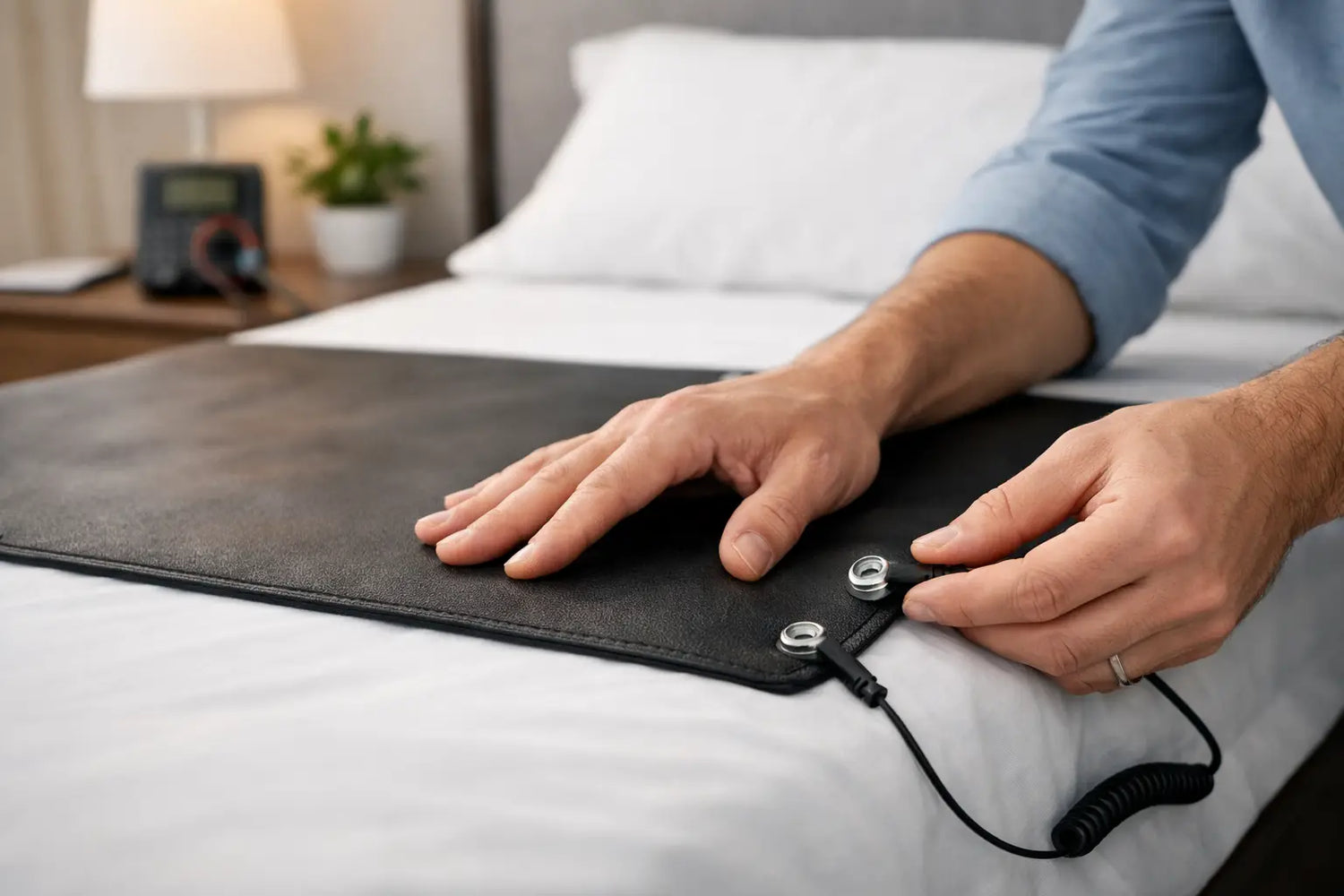
A conductive bed mat takes only a few minutes to set up, but the details matter. To install a conductive bed mat correctly, you need a verified grounded outlet, direct contact with the conductive surface, and a cord positioned so it is never pinched, strained, or used as a substitute for proper electrical work.
The goal is simple: the mat connects your body to the ground connection in a properly wired outlet. This may help reduce the electrical potential measured between your body and ground. Some early studies and many individual reports explore possible effects on sleep, stress, and recovery, but the research is still developing. A bed mat is best viewed as a practical wellness tool, not a medical treatment.
Before You Install a Conductive Bed Mat
Start by checking what came in the box. Most conductive bed mat systems include the mat itself, a grounding cord, and sometimes an outlet tester. The cord is designed to connect only to the ground port of a properly grounded outlet. It does not use the live electrical current from the outlet.
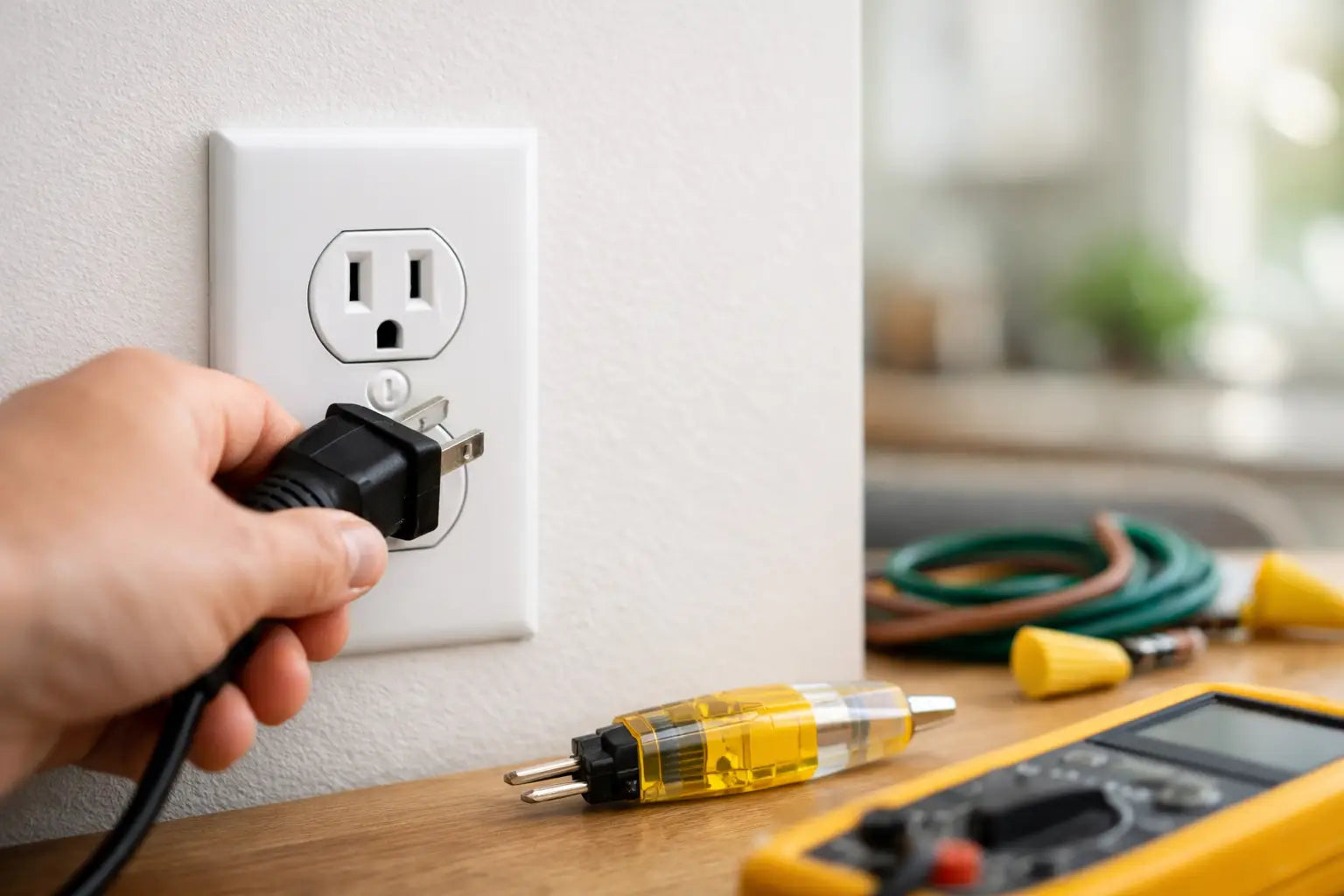
Do not guess whether an outlet is grounded. In a U.S. home, a standard three-prong outlet may have a ground connection, but appearance alone does not confirm that it is wired correctly. Plug an outlet tester into the outlet you plan to use and read its indicator pattern according to the tester instructions. If the tester identifies an open ground, reversed wiring, or another fault, choose a different outlet or ask a qualified electrician to assess the wiring.
Avoid improvised solutions. Do not connect the bed mat cord to a radiator, water pipe, extension cord, or an outlet that has not tested as properly grounded. Do not modify the plug or remove any safety components. If you use a grounding rod designed specifically for grounding products, follow that product's instructions and local safety requirements.
Choose the Right Place on the Bed
A conductive bed mat works only when some part of your skin contacts its conductive surface. For most people, the most convenient placement is beneath the lower fitted sheet, positioned where bare feet, legs, or lower back will touch it during sleep. A thin, natural-fiber fitted sheet is generally a practical choice because it allows more consistent contact than thick bedding layers.
Placement depends on how you sleep. If your feet are often uncovered, place the mat at the foot of the bed. If you sleep in long pajamas or socks, a position under your hips or torso may make more sense, provided the product instructions allow it. The mat should lie flat, with no folded corners or raised edges that could be uncomfortable.
Synthetic fabrics, thick mattress protectors, and multiple layers can reduce or interrupt contact. You do not need to turn your bed into a laboratory, but it is worth checking your normal sleep setup. If you are unsure whether a layer is too insulating, try the mat with a simple cotton sheet first.
How to Install a Conductive Bed Mat Step by Step
With the outlet tested and the bed prepared, installation is straightforward.
First, lay the mat conductive-side up on your mattress. Many mats have a smoother conductive surface and a non-slip backing, but designs vary. Check the label or care guide before placing it. Keep the cord connection near the side or head of the bed where the cord can reach the outlet without crossing a walkway.
Next, place your fitted sheet over the mat if your model is intended for use beneath bedding. Smooth the sheet so the mat stays flat. If your specific mat is designed for direct skin contact, use it as instructed rather than adding unnecessary layers.
Then attach the grounding cord firmly to the connection point on the mat. The connector should sit securely without force. Route the cord along the bed frame or wall, leaving enough slack for normal movement but not so much that it creates a snagging hazard. Keep it away from moving bed-frame parts, heat sources, and areas where it could be crushed under furniture.
Finally, plug the grounding cord into the tested wall outlet. The bed mat should not feel warm, produce noise, or require batteries. If anything looks damaged or unusual, unplug it and contact the manufacturer before continuing.
Confirm That the Setup Makes Sense
You can usually confirm correct use with a few common-sense checks. The mat should be flat, clean, and connected to the grounding cord. The outlet should have passed the tester check. And your bare skin should have regular contact with the mat through the bedding arrangement you chose.
Some people use a body-voltage meter or continuity tester as an additional check. These tools can demonstrate changes in electrical potential under specific conditions, but they are not a diagnosis of health or a guarantee of benefits. If you use one, follow its instructions carefully and treat it as an educational measurement, not a reason to override electrical safety rules.
What to Expect During the First Few Nights
There is no universal timeline for how someone may feel while using a conductive bed mat. Some customers report that they notice a more settled bedtime routine or improved comfort quickly. Others notice no obvious change, or need several weeks to decide whether the practice fits their routine. Individual experiences are not proof of a medical effect.
The useful approach is to keep the rest of your sleep routine steady for a while. Aim for a consistent bedtime, a cool and dark room, and less bright screen exposure before bed. That makes it easier to evaluate the mat as one part of a broader sleep environment rather than expecting it to compensate for chronic sleep deprivation, pain, stress, or an untreated health condition.
If you are managing a medical condition, are pregnant, use implanted medical equipment, or have concerns about your sleep or symptoms, speak with a qualified healthcare professional. Grounding products are not intended to diagnose, treat, cure, or prevent disease.
Common Setup Problems and Simple Fixes
The most common issue is an ungrounded or incorrectly wired outlet. A three-prong receptacle can still have an open ground, especially in older homes or after wiring changes. Test another outlet before assuming the mat is the problem.
Another common issue is inconsistent skin contact. Thick flannel sheets, waterproof protectors, compression clothing, socks, and synthetic layers can all make contact less reliable. Try a thinner cotton sheet and place the mat where bare skin naturally rests.
A cord that is too short should not be stretched across the room or placed under a rug. Move the mat to the nearer side of the bed, use a different tested outlet, or ask the manufacturer whether a compatible longer grounding cord is available. Never use a standard extension cord as a workaround unless the grounding system's instructions specifically permit it.
If the mat slides, reposition it on a clean, dry mattress surface and make sure the fitted sheet is snug. A loose sheet can move throughout the night and gradually shift the mat away from the intended contact area.
Care That Protects Conductivity
Conductive materials need gentler care than ordinary bedding. Follow the specific care instructions supplied with your mat, because materials and coatings differ. In general, avoid bleach, fabric softener, harsh stain treatments, and heavy oils or lotions directly on the conductive surface. These can leave residues or shorten the useful life of the material.
Disconnect the grounding cord before cleaning or moving the bed. Wipe a bed mat only if its instructions permit it, and let it dry fully before reconnecting. Inspect the cord, connector, and mat surface periodically. Replace any component that is cracked, frayed, heavily worn, or no longer making a secure connection.
A well-installed conductive bed mat should disappear into your nightly routine: flat beneath your sheet, connected to a verified ground, and easy to maintain. Set it up carefully once, then give yourself time to decide whether it supports the calmer, more consistent sleep routine you are building.


Skriv en kommentar
Denne side er beskyttet af hCaptcha, og hCaptchas Politik om beskyttelse af persondata og Servicevilkår er gældende.