



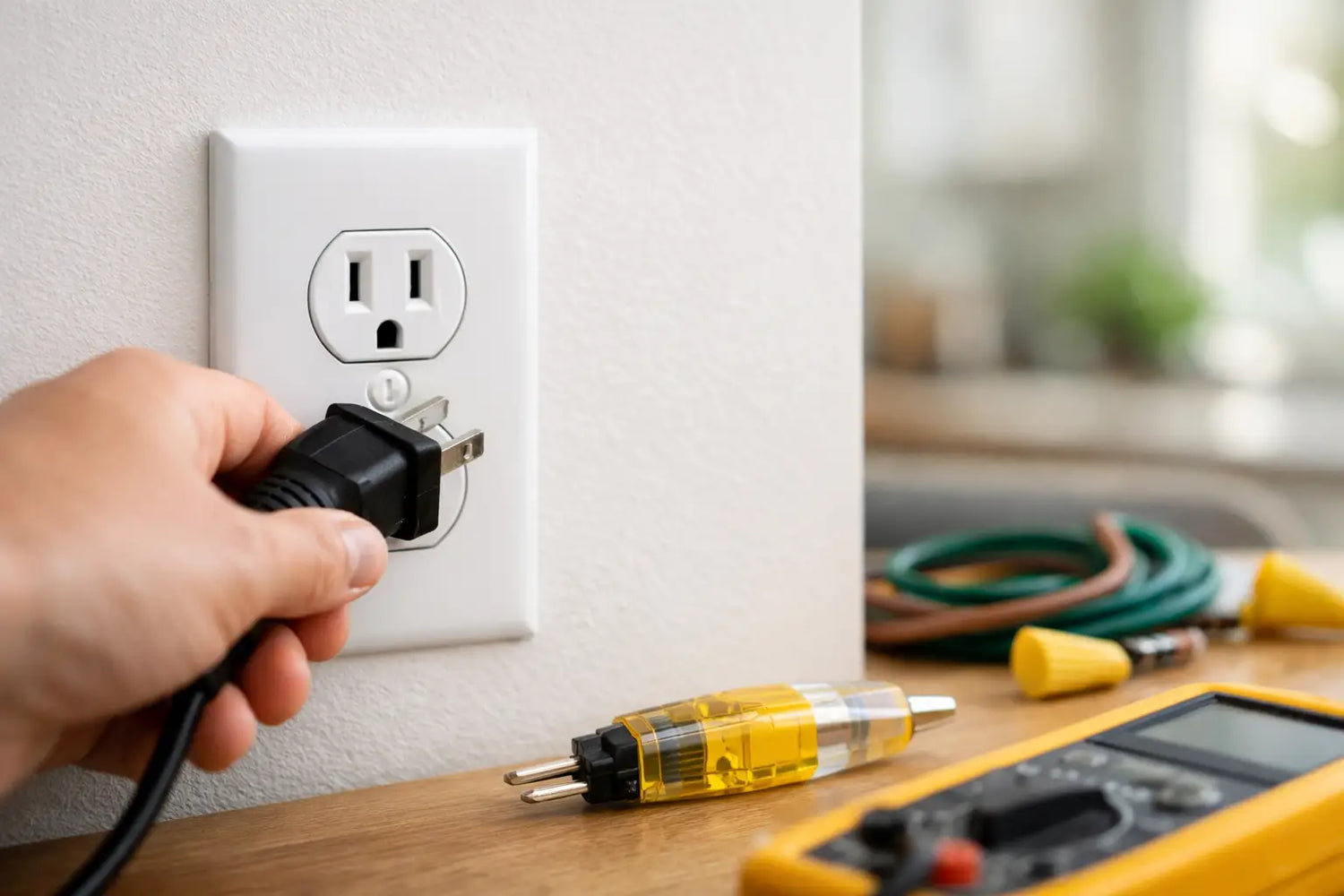
A grounding sheet or mat should connect only to a properly grounded outlet. That simple requirement is why this grounding outlet safety guide starts with the outlet itself, not the product. A correct connection gives your grounding product a path to earth ground. An incorrectly wired, damaged, or ungrounded outlet may not.
For most homes, checking takes only a few minutes. The key is knowing what a basic outlet tester can confirm, what it cannot confirm, and when the safest next step is to stop and call a qualified electrician.
What a grounding product connects to
Grounding products are designed to connect to the earth-ground portion of a compatible electrical outlet, not to the electricity that powers lamps, chargers, or appliances. In a standard three-prong US outlet, the round opening is the ground connection. Grounding product cords are made to use that ground path only.
This distinction matters. A grounding sheet, mat, or sleep pad does not need electrical power to work as intended. It should never be connected to a live electrical terminal, exposed wire, plumbing, a radiator, or a homemade ground connection. Do not modify the cord, plug, or outlet to make a product fit.
When used with a correctly wired grounded outlet and the supplied connection equipment, grounding products are intended for everyday wellness use. They are not medical devices, and they are not a substitute for medical care, sleep habits, or treatment recommended by your clinician.
Start with the outlet, not assumptions
A three-hole outlet is not automatically proof of a working ground. Older homes may have replacement receptacles with three openings even when no grounding conductor is present behind the wall. Renovations, loose connections, and wiring errors can also create problems that are not visible from the front of the outlet.
The most practical first check is a plug-in receptacle tester made for standard US outlets. Insert it directly into the outlet and compare the light pattern with the chart printed on the tester. A result marked “correct” is a useful sign that hot, neutral, and ground are connected in the expected arrangement.
Before testing, inspect the outlet. Stop if the faceplate is cracked, the outlet feels loose, plugs fall out easily, there are burn marks, or you notice heat, buzzing, or a burning smell. Those are electrical repair issues, not grounding-product setup issues.
What an outlet tester can tell you
A basic tester is helpful for identifying several common wiring faults, including an open ground, open neutral, reversed hot and neutral, or an open hot connection. For a grounding product, an “open ground” reading means do not use that outlet for grounding until a qualified electrician has evaluated it.
If the tester indicates correct wiring, you can usually proceed to the next step: connecting the supplied grounding cord and checking your product according to its instructions. If the reading shows any fault, choose another known-good outlet rather than trying to work around the result.
What an outlet tester cannot tell you
A basic tester is a screening tool, not a complete electrical inspection. Some wiring faults can produce a seemingly correct light pattern. One example is a bootleg ground, where neutral and ground have been improperly connected together at the receptacle. A standard tester may not reliably detect this condition.
A tester also cannot confirm that your entire electrical system is safe, that every outlet in the room is correctly wired, or that an outlet can handle a high-power appliance. It is specifically useful here because it provides a quick initial check of the outlet ground path.
If you live in an older property, have recurring breaker trips, or receive an unclear tester result, an electrician can perform more thorough testing. That is especially worthwhile before making a grounding product part of your nightly sleep environment.
Grounded outlets and GFCI outlets are not the same thing
A GFCI outlet is the type with “Test” and “Reset” buttons. It is designed to reduce the risk of electrical shock by shutting off power when it detects an imbalance in current. GFCI protection is valuable in kitchens, bathrooms, laundry areas, garages, basements, and outdoor locations.
However, a GFCI outlet is not automatically a grounded outlet. A GFCI can be installed on an ungrounded circuit and still provide shock protection. It may be labeled “No Equipment Ground.” In that case, it should not be treated as a verified ground source for a grounding product.
If you use a GFCI outlet that has a confirmed equipment ground, it can be appropriate. Test its safety function periodically by pressing the Test button, confirming power shuts off, then pressing Reset. Do this only when you understand which devices may lose power. Never use a GFCI’s buttons as a substitute for confirming the outlet ground.
A safe setup for grounding sheets, mats, and pads
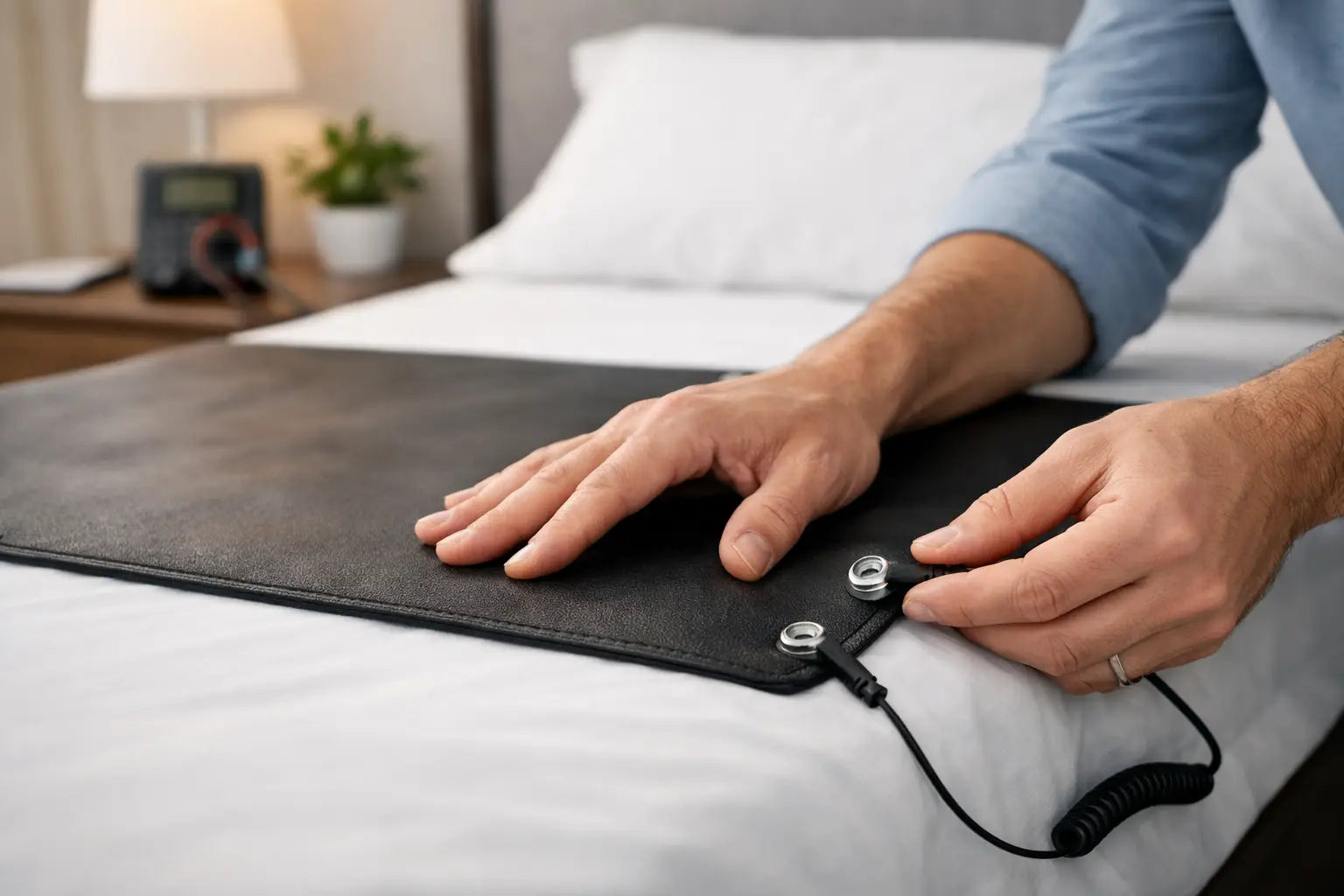
Once you have identified a properly wired outlet, follow the product-specific instructions. The usual process is straightforward: connect the grounding cord to the product’s designated snap or port, then connect the plug to the outlet’s ground connection as designed.
Keep the cord in good condition and route it so it will not be pinched by a bed frame, caught in a reclining mechanism, stretched tightly, or become a tripping hazard. Check it occasionally for cuts, bent connectors, or loose fittings. Replace a damaged cord rather than taping or repairing it yourself.
For a bed setup, place the grounding sheet or mat where it can make comfortable skin contact according to its directions. For a desk or yoga mat, position the product where the connection cord remains protected and does not interfere with normal movement.
Do not use a two-prong adapter, cheater plug, extension arrangement that defeats grounding, or an unverified outlet adapter. A surge protector may have grounded sockets, but it does not create a ground if the wall outlet is not properly grounded. For the clearest setup, connect directly to a tested wall outlet whenever the product instructions allow it.
Test the product separately from the outlet
An outlet tester checks the receptacle. It does not tell you whether the conductive surface of a grounding sheet, mat, or pillowcase is still functioning as intended. That is a separate question.
A continuity tester designed for grounding products can help check the product, cord, and connection points. Follow the tester’s instructions exactly, because the correct contact points differ by product type. Testing is particularly useful after washing a sheet repeatedly, storing a mat for a long period, or replacing a cord.
For conductive fabric products, care instructions matter. Residue from fabric softener, bleach, oily lotions, or unsuitable detergents can affect conductivity over time. Use the manufacturer’s laundering guidance, and allow products to dry fully before reconnecting them.
At Grounding Essentials, product testing guidance is intended to make setup more transparent, not more complicated. If a reading seems inconsistent, first check the outlet, cord connection, and product care steps. Customer support or a qualified electrician can help with the part that falls within their expertise.
When to call an electrician
Electrical work is not a DIY wellness project. Contact a qualified electrician if an outlet tester shows an open ground or other fault, an outlet is damaged or warm, your home has old two-prong receptacles, or you suspect wiring has been altered.
You should also call for help if a breaker trips when you use the outlet, a GFCI will not reset, or your tester result changes from one day to the next. Do not remove an outlet cover, join wires, or try to create your own grounding point unless you are licensed and qualified to do that work.
A professional assessment can feel like an extra step, but it protects both your home and your ability to use grounding products with confidence. It may also identify a broader issue worth addressing, particularly in older homes.
Keep the goal simple
Grounding research is still developing. Some small studies and individual experiences suggest possible effects on sleep, recovery, and relaxation, but results vary and grounding should not be presented as a cure for health conditions. What is not uncertain is the setup principle: use an intact product with a properly grounded outlet.
Check the outlet before your first use, keep cords and conductive surfaces in good condition, and choose professional help whenever the electrical picture is unclear. That small amount of care lets you focus on the part that matters most: building a calmer, more consistent sleep or wellness routine.


Commenta
Questo sito è protetto da hCaptcha e applica le Norme sulla privacy e i Termini di servizio di hCaptcha.