



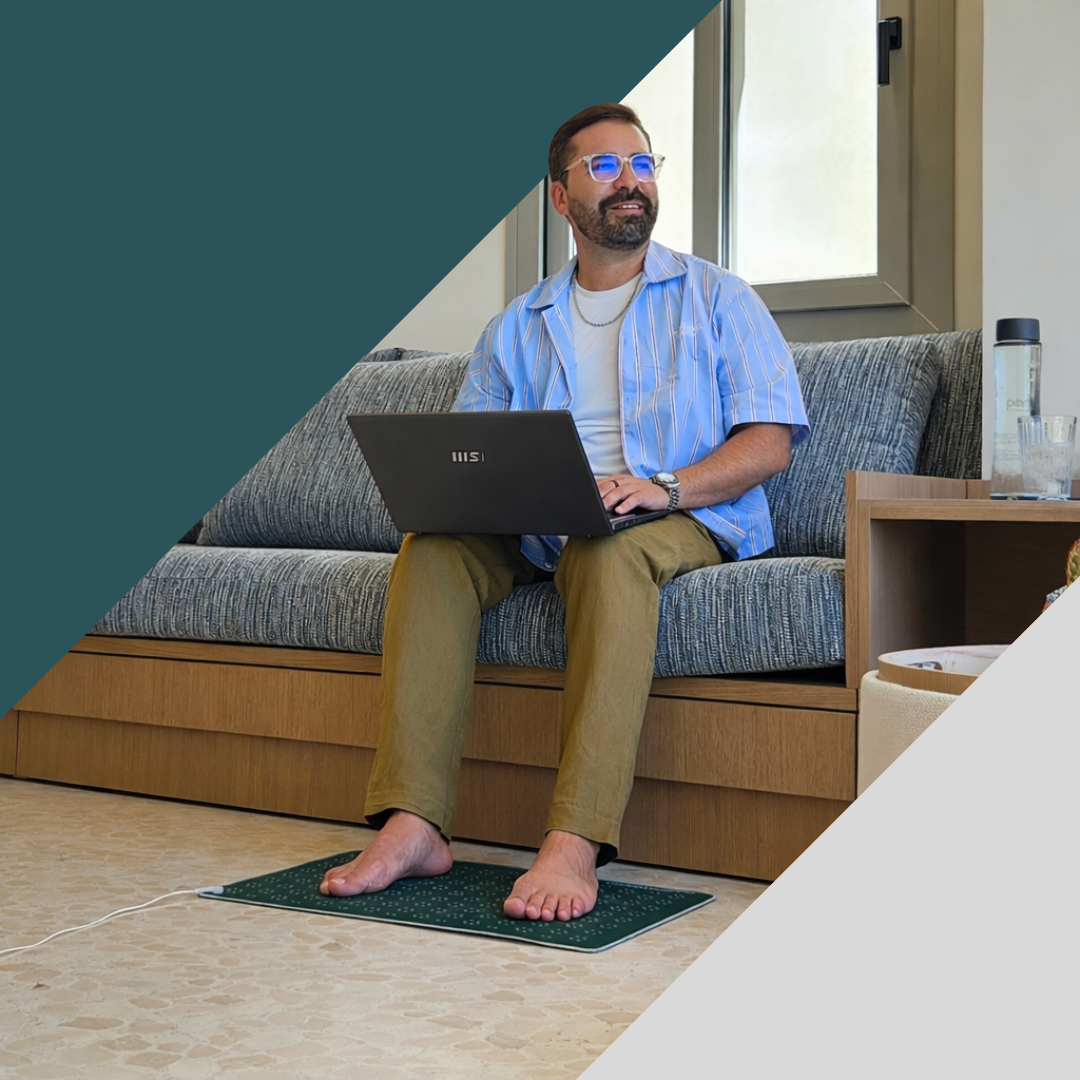
A grounding mat is a conductive surface designed to help you stay connected to the Earth while you work, relax, read, or spend time indoors.
For people who spend most of the day wearing shoes, working at a desk, or living above ground level, a grounding mat provides a practical alternative to walking barefoot outside.
It does not use electricity to power or stimulate your body. Instead, the mat connects to the grounding part of a properly grounded outlet using a grounding cord and plug. When your skin touches the conductive surface, your body becomes connected to that grounding pathway.
Grounding is not a medical treatment, and research into its potential wellness effects is still developing. The most useful way to think about a grounding mat is as a simple indoor wellness tool that can fit into activities you already do.
What Is a Grounding Mat?
A grounding mat, also called an earthing mat, is a conductive mat made for indoor grounding.
The Grounding Essentials Grounding Mat is designed for everyday use at a desk, on the floor, or while relaxing. It connects through the supplied grounding cord and country-specific plug.
Grounding Essentials also offers the Grounding Mat – Midnight Moss, a 40 × 60 cm option made with a copper-infused conductive layer, vegan PU leather surface, reinforced edging, and an anti-slip backing.
Unlike grounding bedding, a Grounding Mat is primarily designed for flexible daytime use. You can place it beneath your feet while working, beside the sofa while relaxing, or wherever bare skin can comfortably remain in contact with the surface.
How Does a Grounding Mat Work?
A grounding mat creates a conductive connection between your body and the grounding system of a properly grounded outlet.
The setup has three basic parts:
Your Grounding Mat provides the conductive surface. A grounding cord connects to the mat. The grounding plug connects that cord to the grounded part of a suitable electrical outlet.
The mat does not draw household electricity from the outlet. It uses the grounding connection rather than the powered electrical contacts.
When your bare skin touches the conductive surface, the setup brings your body's electrical potential closer to ground potential.
This electrical effect can be measured, but a measurable change in body voltage does not automatically prove a particular health benefit. Research into grounding and areas such as sleep, stress, recovery, and comfort remains an evolving field.

Where Can You Use a Grounding Mat?
One of the main advantages of a grounding mat is flexibility.
At Your Desk
Place the mat beneath your bare feet while you work. This allows you to maintain contact without changing the way you use your computer.
If you would rather ground through your hand or wrist, a Grounding Mouse Mat may fit more naturally into your workspace.
While Relaxing
A Grounding Mat can also be used beside a sofa or chair. Rest your bare feet, hands, legs, or forearms against the conductive surface while reading, watching television, or winding down.
For Meditation or Quiet Time
The mat can be placed in an area where you already meditate, breathe, journal, or take a quiet break.
The goal is not to build a special routine around the product. It is to place it somewhere you already spend time.
Do You Need Bare Skin Contact?
Direct skin contact provides the clearest conductive connection with a Grounding Mat.
Common contact points include your feet, hands, wrists, forearms, or legs.
Shoes and thick insulating layers can interrupt contact. Rather than trying to force a particular position, place the mat where bare skin naturally rests.
If you prefer keeping your feet covered, Grounding Essentials also offers conductive Grounding Socks, which are designed to work with compatible grounding products.

Why Do People Use Grounding Mats?
Grounding Mats appeal to people who want an indoor grounding option that does not require changing their bedding or setting aside a separate part of the day.
Many users incorporate a mat into activities such as:
Working at a computer, reading, relaxing after exercise, watching television, meditation, or an evening wind-down routine.
Some people report feeling calmer, more comfortable, or more relaxed when grounding becomes part of their routine. Others may notice little or no obvious difference.
Individual experiences are useful for understanding how people use grounding products, but they are not proof that everyone will experience the same result.
What Does Research Say About Grounding?
Research on grounding has explored areas including sleep, stress, cortisol patterns, pain, circulation, body voltage, heart-rate variability, and inflammation-related processes.
Some studies have reported potentially interesting results, but much of the available research involves small participant groups or study designs that require larger independent replication.
Grounding therefore should not be presented as a proven treatment for insomnia, chronic pain, inflammation, anxiety, or another health condition.
If you are curious about grounding, it is more realistic to view it as one possible addition to a broader wellness routine that already includes sleep, movement, nutritious food, time outdoors, and appropriate healthcare.
How to Set Up a Grounding Mat
Setting up a Grounding Mat is straightforward.
Place the mat where you plan to use it, connect the supplied grounding cord to the product, and attach the correct grounding plug for your country.
Before using a grounded outlet for the first time, it is sensible to confirm that the outlet is properly grounded. A Grounding Socket Tester can be used for this purpose.
Once connected, place bare skin against the conductive surface and use the mat as part of your normal work or relaxation routine.
There is no need to make the setup more complicated than that.
If an outlet fails a grounding test or you are uncertain about your home's wiring, use another verified outlet or ask a qualified electrician.
How Long Should You Use a Grounding Mat?
There is no universally established duration that everyone needs to follow.
You might begin by using your mat during a normal work session, while reading in the evening, or whenever you already spend time sitting comfortably.
Some people prefer shorter sessions, while others leave the mat beneath their feet for longer periods while they work.
Rather than focusing on a specific number of minutes, consider whether the setup is comfortable and easy enough to use consistently.
If grounding becomes another task you constantly need to remember, the product may be in the wrong place. Moving it somewhere it fits naturally into your day can be more useful than trying to follow a rigid schedule.
Grounding Mat vs. Grounding Pad vs. Mouse Mat
These products all provide conductive surfaces, but they suit slightly different routines.
A Grounding Mat offers the most flexibility for daytime use and can work beneath the feet or against other areas of bare skin.
A Grounding Mouse Mat is designed specifically for computer work and allows contact through your hand or wrist.
A Grounding Pad is a compact 40 × 43 cm cotton product with conductive silver fibers. It can be used on a bed, chair, beneath your feet, or wherever a smaller soft conductive surface is more practical.
The best choice depends less on which product is “stronger” and more on where and how you plan to use it.

What About Grounding While Sleeping?
If your main goal is overnight grounding, a product designed specifically for sleep will usually be more practical than a standard Grounding Mat.
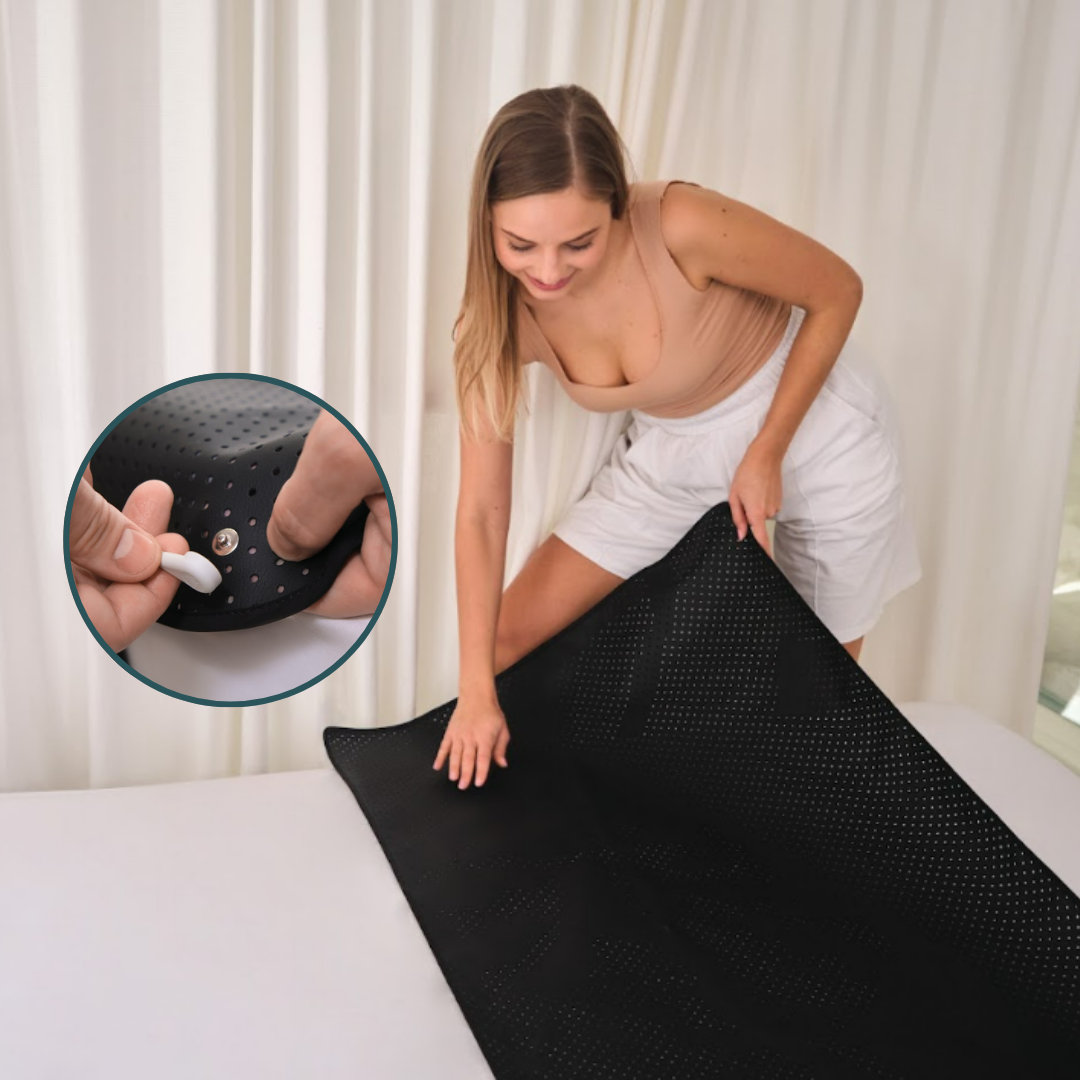
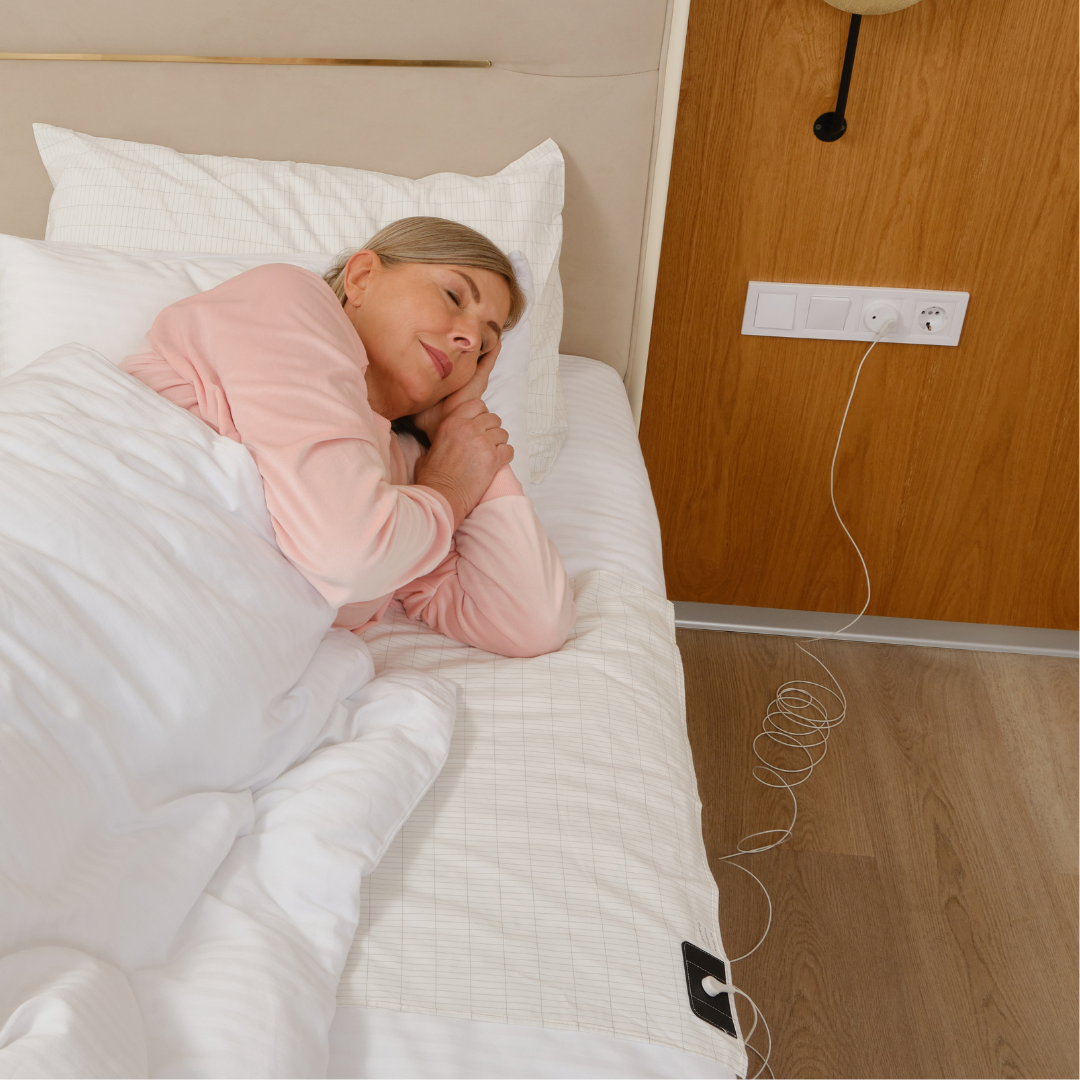
A Grounding Bed Mat is designed to lie across the mattress and can be used underneath a compatible fitted sheet. Grounding Essentials also offers Grounding Bed Sheets, Half Sheets, and Pillowcases for different sleep preferences.
This keeps the standard Grounding Mat focused on what it does best: flexible daytime grounding while working or relaxing.
How to Care for a Grounding Mat
Cleaning requirements depend on the specific mat, so follow the care instructions provided with your product.
For Grounding Essentials mats, regular cleaning helps remove skin oils and residue from the conductive surface.
Disconnect the cord before cleaning and inspect the mat, connector, cord, and plug occasionally for signs of wear.
Avoid treating a grounding mat like ordinary fabric bedding. Its conductive surface and connection components require care appropriate to the product.
Is a Grounding Mat Worth Trying?
A Grounding Mat may suit you if you want a simple way to explore grounding without changing your bed or creating a complicated routine.
It works particularly well for people who spend long periods at a desk, on the sofa, reading, or relaxing indoors.
If you mainly want grounding while working, compare a Grounding Mat with a Grounding Mouse Mat. If you prefer a smaller, softer surface, consider a Grounding Pad. If sleep is your priority, a Grounding Bed Mat or Bed Sheet is likely to be the better fit.
Start with the product that matches the time you already spend indoors. Connect it correctly, place it somewhere comfortable, and see whether it becomes a natural part of your routine.

Leave a comment
This site is protected by hCaptcha and the hCaptcha Privacy Policy and Terms of Service apply.