



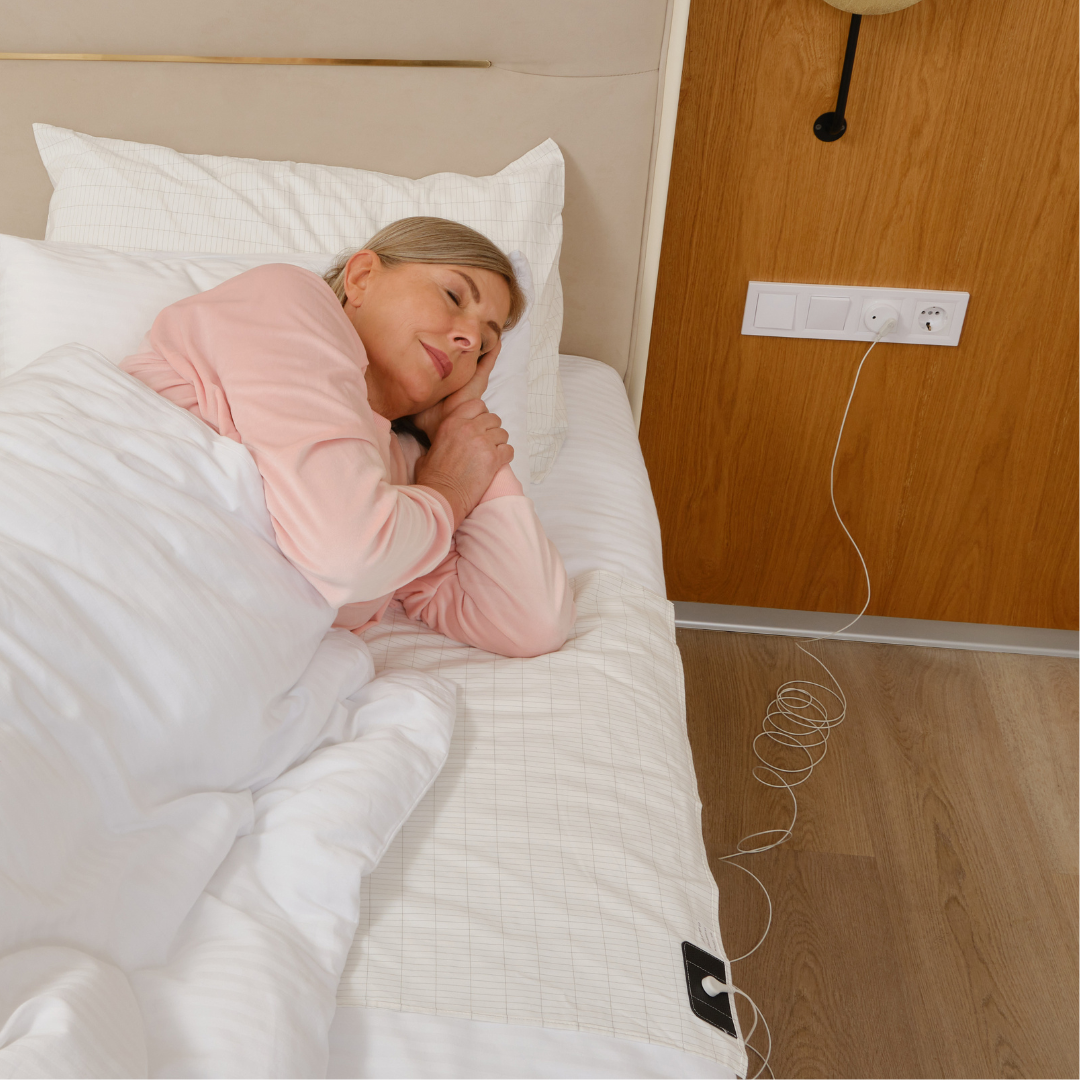
Your bed is one of the easiest places to build grounding into a routine because you already spend several hours there each night. Conductive bedding allows you to maintain a grounding connection while you rest without adding another activity to your day.
Depending on how you sleep and what type of bedding you prefer, you might choose a Grounding Bed Sheet, Grounding Half Sheet, Grounding Bed Mat, or Grounding Pillowcase.
Each works a little differently, so the best option depends on the amount of contact you want, the bedding you already use, and how much maintenance you prefer.
Grounding is best viewed as a wellness practice rather than a treatment for insomnia, pain, or another health condition. Research is still developing, and individual experiences vary.
What Is Conductive Bedding?
Conductive bedding is designed to create a grounding connection while you sleep.
Grounding sheets, half sheets, and pillowcases contain conductive fibers woven into the fabric. Grounding Essentials Bed Sheets, for example, are made with breathable cotton and conductive silver fibers so your skin can maintain contact with the surface while you rest.
A Grounding Bed Mat uses a different type of conductive surface. Instead of replacing your fitted sheet, it sits across the mattress underneath compatible bedding.
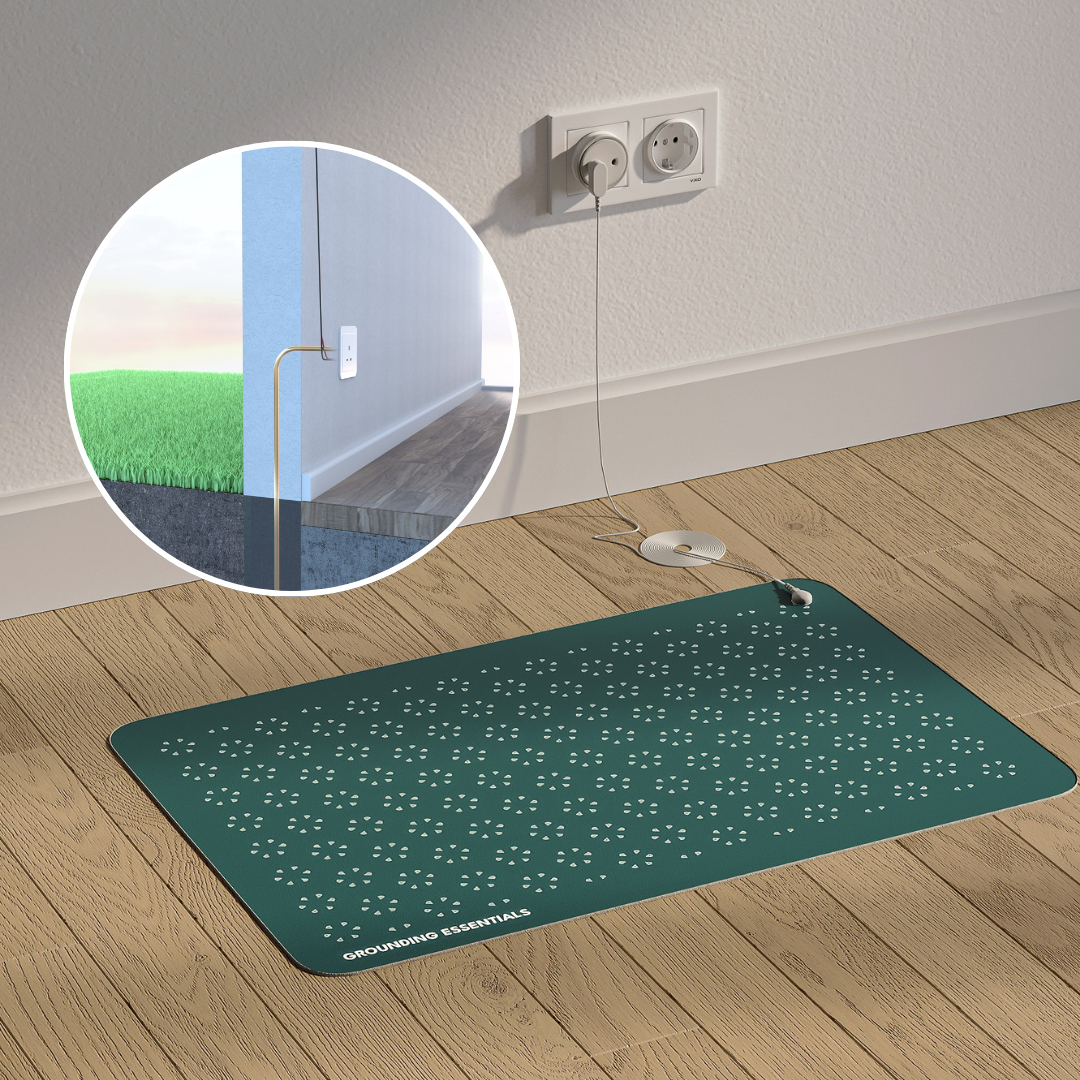
Each product connects through a grounding cord and plug to the grounding part of a properly grounded outlet. The products do not use household electricity to power or stimulate the body.

Which Type of Conductive Bedding Is Right for You?
There is no single best option. The right choice depends on how you normally sleep and how much of your existing bedding you want to change.
Grounding Bed Sheet
A Grounding Bed Sheet replaces your regular fitted sheet and provides a large conductive sleeping surface.
Because conductive silver fibers are distributed throughout the fabric, your legs, feet, arms, or torso can naturally maintain contact as you move during the night.
This can be particularly useful for restless sleepers or anyone who wants broad coverage without thinking too much about where their body is positioned.
A fitted sheet is a good choice if you value a familiar fabric feel and want grounding built directly into your regular bedding.
If you are also interested in combining your sleep setup with another everyday grounding product, the Grounding Bed Sheet Bundle can be worth considering instead of purchasing each item individually.
Grounding Half Sheet
A Grounding Half Sheet provides conductive fabric without replacing your entire fitted sheet.
It lies across your existing bed and is secured around the mattress, giving you a defined contact area while keeping the rest of your bedding unchanged.
A Half Sheet may suit you if you prefer conductive fabric but do not need full-bed coverage, or if you want something easier to move between beds.
Grounding Bed Mat
A Grounding Bed Mat offers a different type of sleep setup.
Instead of replacing your fitted sheet, the mat sits across the mattress underneath your regular sheet. This allows you to continue using bedding you already like.
Natural fabrics such as cotton, linen, bamboo, wool, and silk are generally better suited to this setup than thick synthetic or waterproof layers.
A Bed Mat may appeal to people who want a durable, lower-maintenance product without changing the familiar feel of their bed.
Grounding Pillowcase
A Grounding Pillowcase provides a smaller conductive contact area around the face, neck, hands, or arms.
It can be a simple option for people who want to add grounding to their existing bedding without using a full sheet or mat.
Because the contact area is smaller and depends more on sleeping position, it offers a more targeted setup than a Bed Sheet or Bed Mat.
For people who want several sleep-focused products in one setup, the Recharge While Sleeping Bundle combines grounding bedding and accessories designed around overnight use.
Does Conductive Bedding Require Direct Skin Contact?
For Grounding Bed Sheets, Half Sheets, and Pillowcases, direct skin contact generally provides the clearest conductive connection.
That does not mean your entire body needs to touch the product. Contact through your legs, feet, arms, hands, or another exposed area can be enough to maintain a connection.
Thick pajamas, synthetic layers, mattress protectors, and other insulating materials may reduce conductivity.
A Grounding Bed Mat works differently because it is designed to sit underneath a compatible fitted sheet.
Comfort should guide the setup. You should not need to change your usual sleeping position or make yourself uncomfortable simply to increase contact.
Grounding Socks can be useful with certain compatible daytime grounding products if you prefer keeping your feet covered, but for conductive bedding, the simplest approach is generally direct skin contact or using the product as specifically instructed.

What Does Research Say About Grounding During Sleep?
Research on grounding has explored areas including sleep, stress, cortisol patterns, pain, circulation, recovery, and body voltage.
Some small studies have reported changes in sleep-related measures and other physiological markers. These findings have contributed to interest in nighttime grounding because sleep provides a long period of potential contact.
However, the overall evidence remains limited. Many studies involve small groups, different grounding methods, or outcomes that need larger independent trials before firm conclusions can be made.
Some grounding users report sleeping more comfortably, waking less often, or feeling more relaxed at bedtime. Others notice little or no difference.
These personal experiences may be meaningful, but they should not be interpreted as proof that conductive bedding treats insomnia, pain, inflammation, or another health condition.
How to Set Up Conductive Bedding
The exact setup depends on the product, so follow the instructions supplied with your Grounding Essentials bedding.
For a fitted sheet, place it over the mattress as you would an ordinary fitted sheet and connect the grounding cord to its connection point.
A Half Sheet lies across the bed and is secured according to its product instructions.
For a Bed Mat, position it across the mattress where your body will naturally rest, then place a compatible fitted sheet over it.
The grounding cord connects to the appropriate Grounding Plug for your region.
Before connecting a product to an outlet for the first time, it is sensible to confirm that the outlet is properly grounded. A Grounding Socket Tester can help with this.
There is no need to repeat a complicated testing routine every night. Once your setup has been checked and remains unchanged, focus on using the product comfortably and consistently.

How to Care for Conductive Bedding
Care requirements depend on whether you are using conductive fabric or a Bed Mat.
Grounding Bed Sheets and Half Sheets
Silver-fiber bedding needs more thoughtful care than ordinary sheets.
Use the care instructions supplied with the specific product and avoid bleach, fabric softener, harsh detergents, and other products that may affect the conductive fibers.
Regular washing is important because body oils, lotions, and residue can build up on the fabric over time.
For more detailed care guidance, see the complete guide to washing Grounding Bed Sheets.
Grounding Bed Mat
A Grounding Bed Mat does not need to be washed like fabric bedding.
Clean it according to its product instructions to remove accumulated oils and residue from the conductive surface.
Because it normally remains protected underneath your fitted sheet, it may require less frequent maintenance than conductive bedding that comes into direct skin contact every night.
Think About Maintenance Before Choosing
The amount of care you are comfortable with can help narrow down your options.
A Grounding Bed Sheet offers broad conductive fabric contact but requires regular washing.
A Half Sheet provides a smaller amount of conductive fabric and may be easier to move or maintain.
A Bed Mat lets you continue using your preferred fitted sheet and has a different cleaning routine from textile products.
A Pillowcase offers the smallest change to your existing bedding, but also provides a more targeted contact area.
If you know you want more than one sleep product, a sleep-focused bundle may also offer a simpler way to build the setup rather than choosing each product separately.
How to Evaluate Your Grounding Sleep Setup
Try to judge the setup over time rather than after one unusual night.
Use your chosen product consistently for a few weeks while keeping the rest of your sleep routine reasonably stable.
Pay attention to practical details first. Is the product comfortable? Does it stay in position? Is the care routine manageable? Does the setup fit naturally into the way you already sleep?
You can also notice broader patterns such as how easily you settle at night, how often you wake, and how rested you feel in the morning.
This is not a clinical experiment. The goal is simply to decide whether conductive bedding fits comfortably and consistently into your routine.
Which Conductive Bedding Should You Choose?
If you want broad conductive fabric contact, a Grounding Bed Sheet is the most complete option.
If you prefer a smaller fabric surface, consider a Grounding Half Sheet.
If you want to keep your current fitted sheet and prefer lower maintenance, a Grounding Bed Mat may be the better choice.
If you want a compact addition to your existing bedding, a Grounding Pillowcase provides a more targeted option.
If you already know that you want a more complete overnight setup, the Recharge While Sleeping Bundle may make more sense than starting with one individual sleep product.
There is no need to buy several products simply because they are available. Choose the setup that best matches the way you already sleep, follow the product instructions, and give yourself enough time to decide whether it deserves a regular place in your nighttime routine.
Conductive bedding works best when it remains simple: the right product, a comfortable setup, appropriate care, and realistic expectations.


Leave a comment
This site is protected by hCaptcha and the hCaptcha Privacy Policy and Terms of Service apply.