



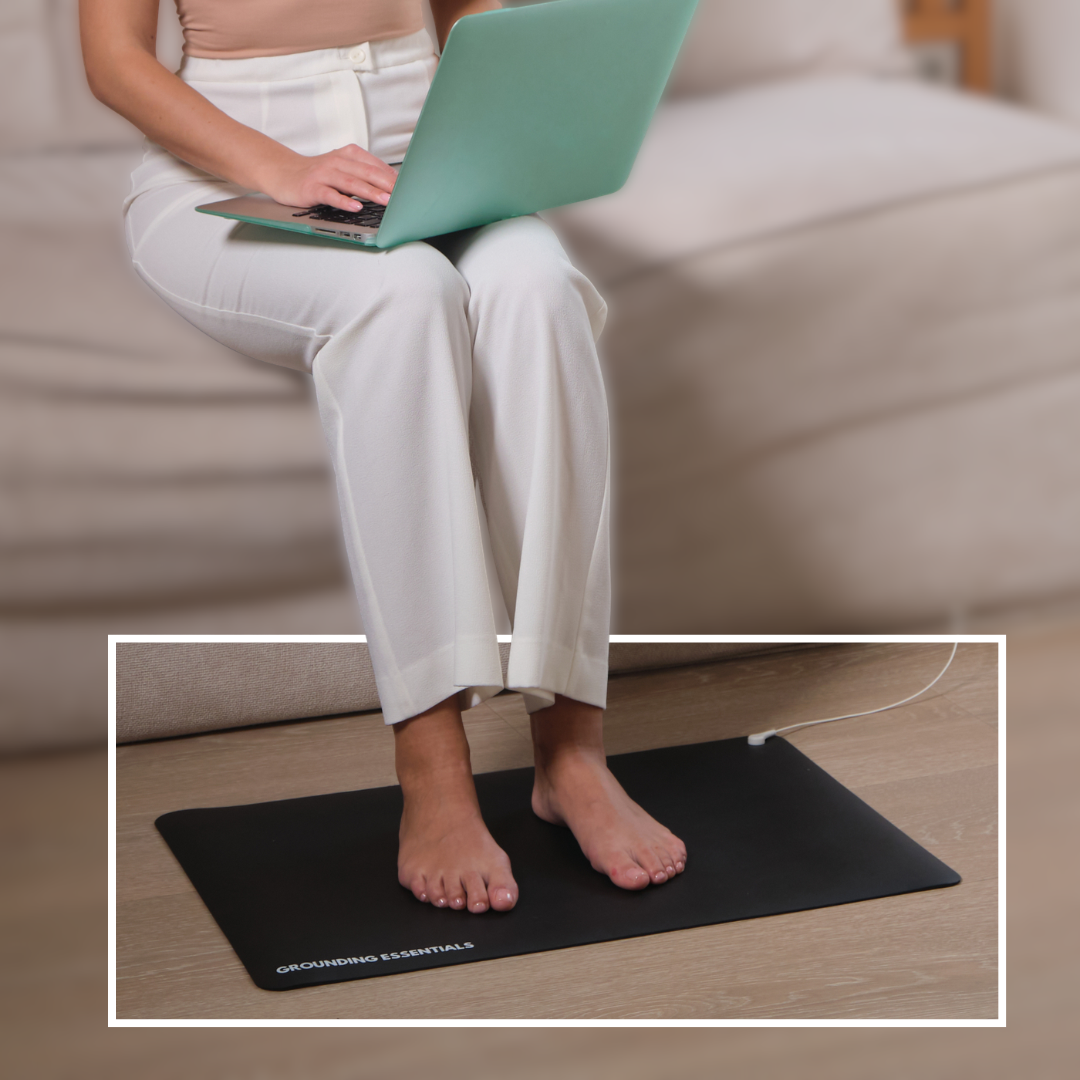
A grounding mat should take only a few minutes to set up, but those minutes matter. A correct grounding mat setup gives the mat a conductive path through a properly grounded outlet. An incorrect setup may mean you are simply using a comfortable mat without a proper grounding connection.
Whether you plan to use a Grounding Mat under your feet at a desk, beside the couch, or while relaxing, the goal is the same: create safe contact between your body, the conductive surface, and a verified grounding connection.
Start with the outlet, not the mat.
What a Grounding Mat Does and Does Not Do
A Grounding Mat is a conductive surface connected by a grounding cord to the grounding part of a properly grounded electrical outlet.
It does not use household electricity to deliver power to your body. The grounding plug is designed to use the outlet's grounding connection rather than the powered electrical slots.
When bare skin touches the conductive mat, your body becomes connected to the grounding pathway.
Some people use grounding products as part of a relaxation, sleep, recovery, or work routine. Early research has explored possible effects related to sleep, stress, pain, and other wellness measures, but the evidence is still developing.
Grounding should not replace medical care, prescribed treatment, or established health habits such as adequate sleep, movement, nutrition, and stress management.
The practical point is simple: your Grounding Mat needs a proper grounding connection and conductive contact to function as intended.
What You Need Before Setting Up Your Grounding Mat
A Grounding Essentials Mat is used with a compatible grounding cord and grounding plug. Check that each part is clean, intact, and suitable for your local outlet type before you begin. Current Grounding Essentials bundles, for example, include the mat, grounding cord, and country-specific grounding plug.
Do not substitute random cables or modify the grounding connection.
You will also need a properly grounded electrical outlet. Because an outlet can look grounded without necessarily having a functioning ground connection, it is best to check it before use.
If your home has older outlets, visible damage, loose sockets, or uncertain wiring, ask a qualified electrician to inspect the outlet.
Step-by-Step Grounding Mat Setup
1. Choose Where You Will Use the Mat
Place your Grounding Mat somewhere that makes direct contact easy and comfortable.
At a desk, you can position it beneath your bare feet. While relaxing, you might use it beneath your feet, legs, hands, or forearms. The Grounding Essentials Mat is designed for flexible daytime use, including floors, desks, workstations, and relaxation areas.
If you want a product specifically for overnight use, a Grounding Bed Mat is the better fit. It is designed to sit across the mattress beneath a compatible fitted sheet rather than being used like the standard daytime Grounding Mat.
Avoid placing your mat where it will be sharply folded, constantly bent, exposed to excessive moisture, or damaged by furniture or pets.

2. Inspect the Mat and Grounding Cord
Before connecting anything, inspect the mat, snap connector, cord, and plug.
Look for:
- Fraying or cuts in the cord
- Loose connectors
- Damage to the grounding plug
- Cracking or damage to the conductive surface
Attach the grounding cord securely to the mat's connection point. It should fit firmly without needing excessive force.
If any part appears damaged, stop using it until the component has been replaced.
3. Check the Outlet With a Grounding Socket Tester
Before connecting your Grounding Mat, use a Grounding Socket Tester to check whether the outlet appears to be properly grounded.
For the Grounding Essentials Socket Tester, the correct result is two green lights on and the red light off.
If you receive another result, choose a different tested outlet or ask a qualified electrician to check the wiring.
A three-prong outlet should not be assumed to have a functioning ground connection based on appearance alone.
4. Connect the Grounding Cord
Once you have confirmed that the outlet is suitable, connect the Grounding Mat to its supplied grounding cord and plug.
Insert the Grounding Plug according to the product instructions.
Keep the cord positioned where it will not become a trip hazard, get trapped underneath furniture, or be pulled tightly.
Use the supplied Grounding Essentials connection system rather than improvising with wires, adapters, or other household objects.

5. Make Contact With the Mat
Place bare skin against the conductive surface.
Common contact points include:
- Bare feet
- Hands
- Wrists
- Forearms
- Legs
You do not need to press firmly against the mat. Comfortable contact is enough.
If you prefer keeping your feet covered, Grounding Essentials also offers Grounding Socks with conductive silver fibers that are designed for use with compatible grounding products.
There is no universally proven amount of time that everyone needs to use a grounding mat. Choose a routine that feels practical and comfortable rather than focusing on a perfect number of minutes or hours.
How to Check Whether Your Grounding Mat Is Conductive
Grounding Essentials uses two different testing tools, and they should not be confused.
The Grounding Socket Tester checks the wall outlet.
The Grounding Conductive Tester checks whether a compatible grounding product and its cord are conductive. Grounding Essentials' own testing guide makes this distinction explicitly.
Once you have confirmed that the outlet is properly grounded, connect your Grounding Mat normally and use the Conductive Tester according to its supplied instructions.

In simple terms:
Socket Tester = checks the outlet
Conductive Tester = checks the grounding product
Do not rely on whether you physically "feel" grounded. Some people notice relaxation or another sensation, while others feel nothing immediately. Neither experience confirms whether the electrical connection is functioning.
Use the testers for the technical check.
Common Grounding Mat Setup Mistakes
One of the most common mistakes is connecting a grounding product to an outlet without checking whether it has a functioning ground connection.
Another is confusing the Socket Tester and Conductive Tester. A conductive product does not automatically mean the wall outlet itself is properly grounded, which is why the two parts should be checked separately.
Contact can also be interrupted by shoes, thick clothing, or other insulating materials. Direct skin contact is generally the simplest option when using a Grounding Mat.
Cord placement matters too. Avoid running the cord across walkways, trapping it underneath heavy furniture, or pulling it tightly from the outlet to the mat.
Finally, do not treat grounding as an all-or-nothing wellness solution. If you are using it as part of a relaxation, sleep, or recovery routine, keep the fundamentals in place too.
Cleaning and Caring for Your Grounding Mat
To keep your Grounding Mat in good condition, follow the care instructions provided by Grounding Essentials.
Hand wash only using mild soap and cold water. After cleaning, allow the mat to air dry completely before using it again.
Do not machine wash, tumble dry, iron, or use bleach.
Before cleaning, disconnect the grounding cord. Avoid sharply folding the mat or placing heavy objects on the cord or connector. Periodically inspect the mat, cord, snap, and plug for signs of wear or damage.
If you suspect the setup is no longer working as expected, check the outlet with a Grounding Socket Tester and the mat with a Grounding Conductive Tester.

A Simple Way to Begin
Set up your Grounding Mat where you are most likely to use it, whether that is underneath your desk, beside your favorite chair, or in a relaxation space.
Start by checking the outlet with a Grounding Socket Tester. Connect the mat using its supplied grounding cord and plug, make comfortable contact with the conductive surface, and use a Grounding Conductive Tester if you want to verify the product itself.
The setup does not need to be complicated.
A verified outlet, a correctly connected Grounding Mat, comfortable contact, and realistic expectations are the most important parts of building a grounding routine you can use consistently.



Leave a comment
This site is protected by hCaptcha and the hCaptcha Privacy Policy and Terms of Service apply.