



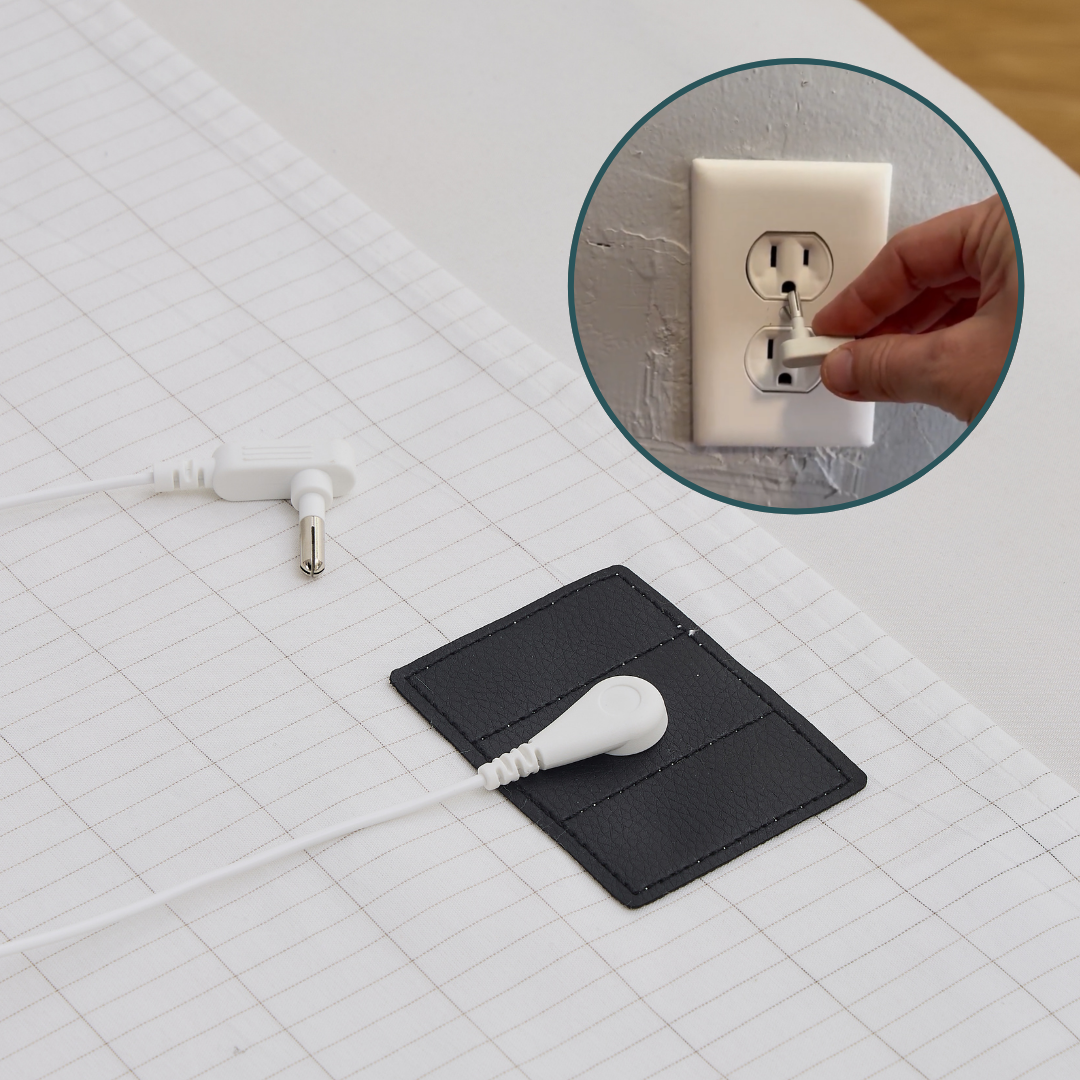
Indoor grounding products depend on one important part of your home: a properly grounded electrical outlet.
A Grounding Bed Sheet, Grounding Bed Mat, or Grounding Mat connects to the grounding part of the outlet, not to the electrical contacts that power household appliances.
That makes checking the outlet an important first step.
This grounding outlet safety guide explains how to identify a suitable outlet, what a Grounding Socket Tester can tell you, what warning signs to watch for, and when an electrician should take over.
What Does a Grounding Product Connect To?
Grounding products do not need household electricity to operate.
Instead, a Grounding Cord and Grounding Plug connect the conductive product to the earth-ground connection of a compatible, properly grounded outlet.
In a standard U.S. three-prong outlet, the rounded opening is associated with the equipment grounding connection. The Grounding Plug supplied for the U.S. market is designed to use this grounding pathway rather than the live electrical contacts.
This distinction is important.
You should never modify a Grounding Plug, connect exposed wires to an outlet, or create your own connection using plumbing, radiators, or other household fixtures.
Grounding products should be used only with the connection equipment intended for them.
A Three-Prong Outlet Is Not Proof of Grounding
An outlet can look completely normal and still lack a functioning ground connection.
This is particularly possible in older properties where a three-prong receptacle may have replaced an older two-prong outlet without the electrical system being fully updated.
Wiring mistakes, renovations, loose connections, or damaged components can also affect an outlet.
For this reason, do not rely on appearance alone.
Before connecting a grounding product to an unfamiliar outlet, check it using a suitable outlet tester.

How to Check an Outlet for Grounding
Grounding Essentials offers a Grounding Socket Tester specifically for checking whether a wall outlet appears properly grounded.
Using it is straightforward.
Insert the Socket Tester directly into the outlet you plan to use and compare the indicator lights with the instructions supplied with the tester.
The tester is designed to identify common wiring conditions and give you a quick indication of whether the outlet appears suitable for grounding.
If the result indicates that the outlet is not properly grounded or shows another wiring issue, do not connect your grounding product to that outlet.
Try another tested outlet or have the electrical installation checked by a qualified electrician.
Inspect the Outlet Before Testing It
Before plugging in a tester, take a quick look at the outlet itself.
Do not use an outlet if you notice:
- Cracks or visible damage
- Burn marks or discoloration
- A loose receptacle
- Plugs that will not stay securely inserted
- Unusual warmth
- Buzzing or crackling
- A burning smell
Those signs can indicate an electrical problem that goes beyond grounding-product setup.
Stop using the outlet and arrange for professional inspection rather than trying to diagnose or repair it yourself.
What Can a Socket Tester Tell You?
A plug-in outlet tester provides a useful first check of common wiring conditions.
Depending on the model, it may identify conditions such as an open ground, open neutral, open hot connection, or certain reversed connections.
For someone setting up a grounding product, the key question is whether a functioning grounding pathway appears to be present.
If the Grounding Socket Tester indicates that the outlet is properly grounded, you can proceed with the normal instructions for your Grounding Essentials product.
If it indicates a fault, use another outlet rather than attempting to work around the problem.
What a Basic Outlet Tester Cannot Tell You
A Socket Tester is useful, but it is not the same as a complete electrical inspection.
Basic plug-in testers are designed to identify common wiring configurations. They cannot diagnose every possible fault hidden inside a property's electrical system.
For example, unusual or improperly altered wiring may require more advanced testing by an electrician.
A tester also does not certify every outlet elsewhere in the property simply because one outlet passes.
Think of the Socket Tester as a practical screening tool for the outlet you intend to use, not a replacement for professional electrical testing.
If your home has older wiring, recurring electrical problems, or results you do not understand, professional inspection is the safer option.

Grounded Outlets and GFCI Outlets Are Different
A GFCI, or ground-fault circuit interrupter, is commonly found in areas such as bathrooms, kitchens, garages, and outdoor spaces.
These outlets usually have Test and Reset buttons.
GFCI protection is designed to reduce electrical shock risk by quickly interrupting power when it detects certain current imbalances.
However, GFCI protection and equipment grounding are not the same thing.
A GFCI receptacle can sometimes be installed on a circuit that does not have an equipment grounding conductor. Such an outlet may be marked to indicate that no equipment ground is present.
For an indoor grounding product, you still need an appropriate grounding connection.
Do not assume that the presence of Test and Reset buttons automatically makes an outlet suitable for grounding.
Socket Tester vs. Conductive Tester
Grounding Essentials has two different testing products, and confusing them is easy.
The Grounding Socket Tester checks the wall outlet.
The Grounding Conductive Tester checks a compatible grounding product.
For example, you might use the Conductive Tester to check whether a Grounding Bed Sheet, Grounding Mat, or another compatible conductive surface is functioning as intended.
A Conductive Tester does not replace the outlet check.
If your main question is whether your wall outlet is grounded, use the Socket Tester first.
More detailed product testing instructions are available in the guide on how to use a Grounding Conductive Tester.
Connecting Your Grounding Product After Testing
Once you have identified a suitable grounded outlet, follow the instructions for the specific product.
For most Grounding Essentials indoor products, the process involves connecting the Grounding Cord securely to the product and then connecting the appropriate Grounding Plug to the tested outlet.
The exact placement then depends on the product.
A Grounding Bed Sheet fits over the mattress.
A Grounding Bed Mat sits on the mattress underneath compatible bedding.
A Grounding Mat can be positioned beneath your feet or where another area of bare skin can comfortably make contact.
A Grounding Mouse Mat provides another option for grounding while working at a computer.
The outlet principle remains the same across these indoor products: use a properly grounded connection and the supplied equipment.
Keep Grounding Cords Safe
Once connected, consider where the cord runs.
Avoid routing it where it can:
- Be pinched beneath furniture
- Get caught in an adjustable bed frame
- Be pulled tightly
- Cross a busy walkway
- Become sharply bent
- Be damaged by chairs or other moving furniture
Check the cord and connector occasionally for visible wear.
If a cord becomes frayed, cracked, damaged, or no longer connects securely, replace it rather than trying to tape or repair it yourself.
The goal is a setup you barely need to think about once it is installed.
Be Careful With Extension Cords and Adapters
An extension cord or power strip cannot create a ground connection if the wall outlet supplying it is not grounded.
Adding more components can also make troubleshooting harder.
Whenever practical and consistent with the product instructions, connecting your Grounding Plug directly to a tested wall outlet provides the clearest setup.
Do not use adapters designed to bypass the grounding connection or alter a Grounding Plug so that it fits an incompatible outlet.
Grounding Essentials provides country-specific connection options because outlet standards differ between regions.
Use the plug intended for your country rather than modifying another version.
What If Your Home Does Not Have a Grounded Outlet?
If the Socket Tester indicates that your outlet is not grounded, simply plugging in a grounding product will not create a working earth connection.
Try another outlet first.
If suitable grounded outlets are not available, a qualified electrician can assess whether the home's electrical system can be updated or repaired.
Grounding Essentials also offers a Grounding Rod for certain setups where connection directly to the Earth is appropriate.
A grounding rod has its own installation requirements and should be used according to its specific instructions. It should not be treated as an improvised substitute for electrical work.

Do Outdoor Grounding Products Need an Outlet?
Not every grounding product uses your home's electrical grounding system.
Grounding Barefoot Shoes and Grounding Sandals, for example, are intended for grounding through suitable conductive outdoor surfaces rather than being connected to a wall outlet.
This is why safety instructions should always match the specific product.
The outlet guidance in this article applies primarily to indoor grounding products that use a Grounding Cord and Plug.
When Should You Call an Electrician?
You do not need to become an electrical expert to use a grounding product.
You do need to know when to stop.
Consider having a qualified electrician inspect the outlet or electrical system if:
- Your Socket Tester indicates a fault
- You have old two-prong outlets
- An outlet is damaged, loose, hot, or discolored
- You notice buzzing or a burning smell
- A GFCI outlet will not reset
- Circuit breakers repeatedly trip
- Tester results are inconsistent
- You are uncertain whether previous electrical work was completed correctly
Do not remove the outlet cover or change household wiring simply to install a grounding product.
Electrical repairs belong with someone qualified to perform them.
A Complete Setup for New Grounding Users
If you are completely new to grounding and want both home and sleep products together with testing tools, a bundle can simplify the initial setup.
The Ultimate Grounding Starter Pack combines grounding products for daytime and nighttime use with both a Grounding Socket Tester and Grounding Conductive Tester.
A bundle is not necessary for safe grounding, however.
If you already have the product you want to use, the important first step is simply confirming that the outlet supplying it is properly grounded.
Keep Grounding Outlet Safety Simple
You do not need a complicated electrical routine every time you use a grounding product.
Check an unfamiliar outlet before your first use. Use the correct Grounding Cord and Plug. Keep the outlet, cord, and connections in good condition. If the electrical setup seems questionable, stop and ask an electrician rather than improvising.
The most important distinction is easy to remember:
The Grounding Socket Tester checks your outlet. The Grounding Conductive Tester checks your grounding product.
Once your outlet has been checked and your product is connected correctly, grounding can become a simple part of your everyday routine rather than something you need to continually troubleshoot.


Leave a comment
This site is protected by hCaptcha and the hCaptcha Privacy Policy and Terms of Service apply.