



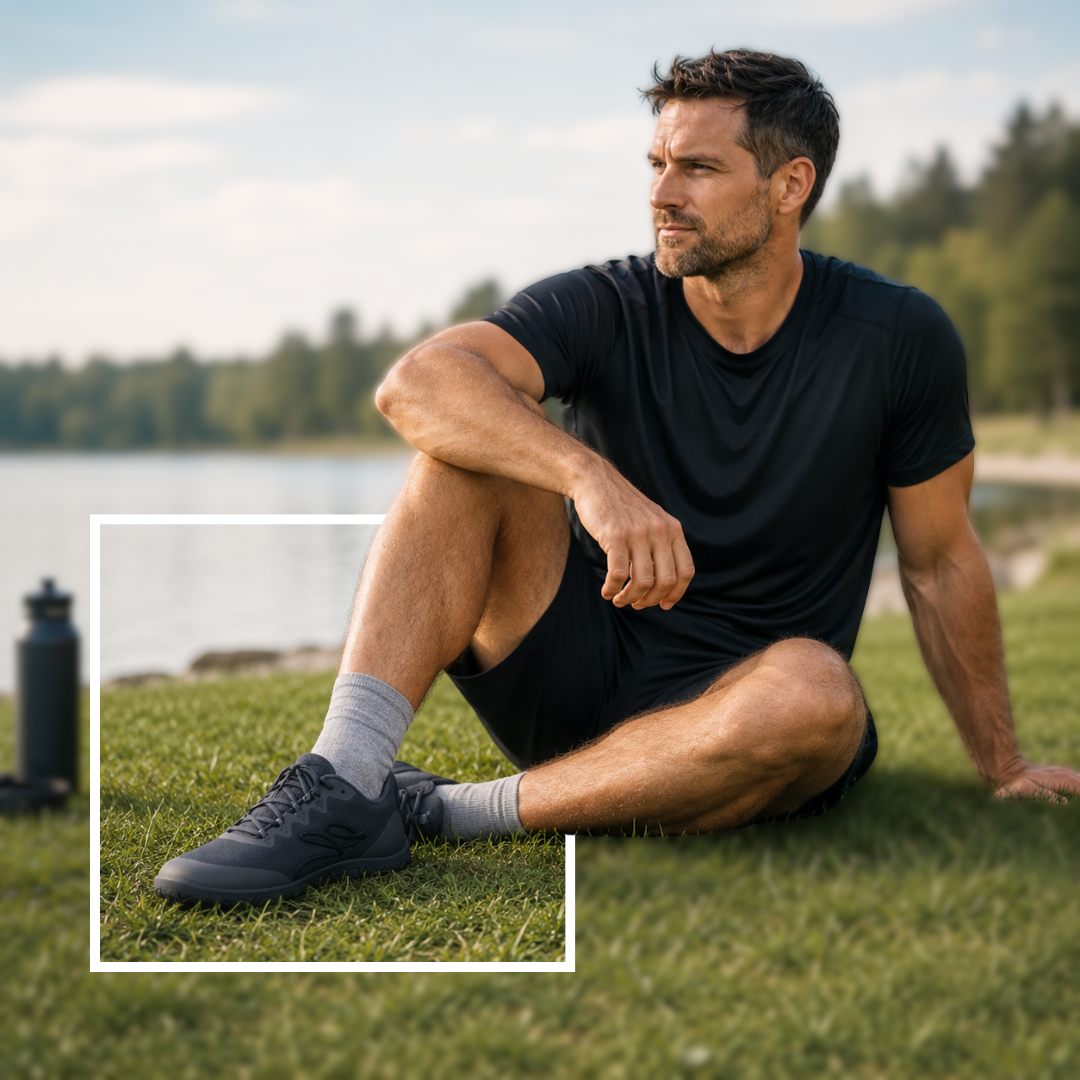
A hard training session can leave you feeling capable one day and stiff getting out of a chair the next. When soreness, poor sleep, and a demanding schedule overlap, it is understandable to look for recovery tools that fit around real life. Grounding for muscle recovery is one option people explore alongside the fundamentals: appropriate training loads, protein-rich meals, hydration, sleep, and rest.
Grounding is not a replacement for medical care, physical therapy, or a well-designed training plan. But early research and individual experiences make it a worthwhile area to understand, especially if you want a low-effort recovery practice that can be used while you sleep, work, walk, or relax.
What Grounding Means in a Recovery Routine
Grounding, also called earthing, means making direct conductive contact with the Earth. Outdoors, this can happen by walking barefoot on grass, soil, sand, or other conductive natural surfaces. Indoors, grounding products are designed to connect your body to the grounding port of a properly grounded electrical outlet.
The basic idea is electrical, not mystical. When your skin makes conductive contact with the Earth or a correctly connected grounding product, your body's electrical potential can move closer to Earth potential.
That measurable electrical change does not automatically prove a muscle-recovery benefit. The more relevant question is whether grounding may influence factors connected with recovery, such as sleep, stress, circulation, inflammation, and perceived soreness.
Research in these areas is still developing, and available studies are generally small. Grounding is therefore best viewed as a complementary wellness practice rather than a proven recovery treatment.

Why Muscle Recovery Is More Than Reducing Soreness
Recovery is not simply the absence of delayed-onset muscle soreness, often called DOMS.
Training places temporary stress on the body. With adequate food, sleep, rest, and appropriate training, the body has time to recover and adapt.
Your recovery can be influenced by:
- Training intensity and volume
- Sleep quality
- Nutrition and hydration
- Stress levels
- Alcohol intake
- Illness
- Age and individual recovery capacity
This is where grounding may fit naturally. It is a passive practice, so it does not require another demanding activity in an already busy routine.
A Grounding Mat during an evening wind-down, Grounding Barefoot Shoes during a walk, a Grounding Mouse Mat while working, or a Grounding Bed Mat overnight can make grounding easier to incorporate consistently.
That is different from claiming grounding can repair an injury or compensate for excessive training.

What Research Suggests About Grounding for Muscle Recovery
A small body of research has examined grounding in relation to exercise-induced muscle damage, soreness, sleep, cortisol rhythms, circulation, and inflammation-related markers.
Some studies have reported differences in subjective soreness, pain ratings, sleep, and certain blood measurements after grounding.
One frequently discussed pilot study examined grounding after intensive eccentric exercise, the type of movement often associated with delayed muscle soreness. Researchers observed differences in some measurements related to muscle damage and recovery between grounded and control participants.
These findings are interesting, but pilot studies cannot establish that grounding reliably speeds muscle repair or improves athletic performance.
Many grounding studies involve small groups, different protocols, and partly self-reported outcomes. Larger, independent, well-controlled research is still needed.
The most balanced interpretation is that grounding has early recovery-related research worth exploring, but individual responses vary and the evidence is not yet strong enough for guaranteed health or performance claims.
Sleep May Be the Most Practical Pathway
For many people, the most practical reason to include grounding in a recovery routine is sleep.
Consistent sleep supports physical recovery, mood, and readiness for your next training session. If grounding helps you create a calmer evening routine or sleep more comfortably, it may complement the other habits that support recovery.
A Grounding Bed Mat can be placed beneath a compatible fitted sheet, while a Grounding Bed Sheet provides direct contact with conductive fabric. A Grounding Half Sheet or Grounding Pillowcase offers additional options for people who prefer a smaller grounding surface.
Grounding should still be only one part of a sleep-supportive environment. A consistent bedtime, morning daylight, comfortable room temperature, and limiting late-night stimulation remain important.

How to Try Grounding After Training
The simplest approach is to choose a setup you can maintain for several weeks.
Barefoot time outdoors can be a pleasant place to begin when the weather, location, and surface are suitable. You might combine it with an easy walk or gentle mobility session after training.
For more consistent use, choose a Grounding Essentials product based on your routine.
For Walking and Active Recovery
Grounding Barefoot Shoes can be a practical option if you want to combine grounding with walking or gentle movement outdoors.
They are designed with a flexible, zero-drop sole and wide toe box to support a more natural barefoot-style walking experience. A conductive pathway through the shoe helps maintain grounding contact when used on suitable conductive surfaces.
If you prefer wearing socks, Grounding Socks are designed with conductive silver fibers and can be worn with Grounding Barefoot Shoes while maintaining conductivity.
Grounding Socks can also be used with compatible Grounding Mats, making them useful for people who prefer not to keep their feet completely bare during indoor grounding.
For Evening Relaxation
A Grounding Mat can be used while sitting, relaxing, or winding down after training. Bare feet, hands, legs, or arms can make direct contact with the conductive surface.
A Grounding Pad is another compact option if you want a smaller conductive surface while seated or relaxing.
Grounding Socks can also be worn while resting your feet on a compatible Grounding Mat if you prefer a covered-foot setup.
For Working During the Day
If much of your recovery day is spent at a computer, a Grounding Mouse Mat can fit naturally into your workspace by maintaining contact through your hand or wrist.
A Grounding Mat can also be placed beneath your desk for contact with bare feet or Grounding Socks.
For Overnight Grounding
If you want longer, consistent contact while you rest, choose a Grounding Bed Mat or Grounding Bed Sheet.
A Grounding Bed Mat sits on the mattress beneath a compatible fitted sheet, while a Grounding Bed Sheet becomes the conductive sleeping surface itself.
Grounding Half Sheets and Grounding Pillowcases provide additional options depending on how much of the bed you want to use for grounding.
Use Grounding Without Losing Sight of the Basics
A recovery practice earns its place when it supports, rather than distracts from, the habits that matter most.
Before judging grounding, consider whether your recovery basics are reasonably consistent:
- Are you eating enough for your training?
- Are you getting sufficient protein?
- Are you drinking enough fluids?
- Are you sleeping enough?
- Are you including easier training or rest days?
If you decide to try grounding, track a few simple signals for two to four weeks. These might include perceived soreness, sleep quality, morning energy, and how prepared you feel for your next workout.
Avoid changing several wellness habits at the same time. If you start grounding while also changing supplements, caffeine intake, sleep schedules, and training volume, it becomes much harder to understand what is making a difference.
Sharp pain, significant swelling, weakness, numbness, or pain that changes how you move should not be treated as normal training soreness. Seek advice from a qualified healthcare professional when symptoms are severe, persistent, or concerning.
Set Realistic Expectations
Some people report feeling more relaxed, sleeping more comfortably, or waking with less stiffness when grounding becomes part of their recovery routine. Others may notice little or no difference.
Both experiences are possible.
If you want to try grounding for muscle recovery, choose a product that fits naturally into your routine. Grounding Barefoot Shoes can complement walking and active recovery, while Grounding Socks can be paired with compatible shoes or mats. A Grounding Mat or Pad can work well during relaxation, a Grounding Mouse Mat can fit into your workday, and a Grounding Bed Mat, Bed Sheet, Half Sheet, or Pillowcase can support an overnight routine.
Give grounding a fair trial, keep the proven recovery fundamentals in place, and let your own experience help determine whether it deserves a lasting place in your routine.



Leave a comment
This site is protected by hCaptcha and the hCaptcha Privacy Policy and Terms of Service apply.