




A desk job can leave you feeling oddly disconnected from your body. Hours of video calls, concentrated screen work, and a chair that seems comfortable until 3 p.m. can add up to mental fatigue, muscle tension, and difficulty winding down later. Grounding for desk workers is a simple wellness practice that may help create a more intentional break in that cycle, especially when combined with movement, daylight, hydration, and a consistent sleep routine.
Grounding, also called earthing, means making conductive contact with the Earth. Outdoors, that can mean standing barefoot on natural ground. Indoors, grounding products are designed to connect to the grounding port of a properly grounded electrical outlet, allowing the body to be connected to the Earth's electrical potential while you work, rest, or sleep.
It is not a replacement for medical care, ergonomic improvements, or regular movement. But for people who spend much of the day indoors, it can be a practical routine worth understanding.

Why desk work can make you feel out of balance
The problem is not simply sitting. It is staying in one position for too long, often while concentrating under artificial light and responding to a steady stream of messages. A well-designed workstation can reduce strain, but even an ergonomic chair cannot replace regular changes in posture, walking, and recovery time.
Many desk workers also spend very little time in direct contact with natural surfaces. Shoes, carpets, office floors, and apartment living make that normal. Grounding products were created as an indoor option for people who want to explore the practice without relying on barefoot time outside.
Some people describe feeling calmer, less restless, or more settled when they use grounding as part of their work routine. These are individual experiences, not guaranteed outcomes. Sleep, stress, workload, caffeine intake, pain, and physical activity can all influence how you feel on any given day.

What research on grounding currently suggests
Grounding research is an emerging area. Small studies and reviews have explored possible effects on sleep, stress markers, pain perception, circulation, and body voltage. Some findings are encouraging, including observations of changes in cortisol patterns and subjective sleep or well-being measures.
At the same time, the evidence has important limits. Many studies have been small, used different methods, or relied partly on self-reported outcomes. More large, independent, high-quality studies are needed before grounding can be considered a proven treatment for any health condition.
That distinction matters. It is reasonable to be curious about grounding and to try it as a low-effort wellness habit. It is not reasonable to expect it to diagnose, treat, cure, or prevent disease. If you have ongoing pain, severe fatigue, sleep problems, circulation concerns, or another health issue, speak with a qualified healthcare professional.
The body voltage question
One measurable effect of an indoor grounding product is a reduction in induced body voltage when it is correctly connected to a properly grounded outlet. This is a physical measurement, not a health outcome by itself. It simply confirms that a conductive connection is being made.
A conductive tester can help verify your outlet and product setup. That is especially useful in older homes, shared offices, or locations where you are unsure whether an outlet is truly grounded. Never assume an outlet is properly grounded based on appearance alone.
How to use grounding at your desk
A grounding product can be easy to incorporate into your workday, especially if you spend several hours at a desk. The best option depends on where you prefer to maintain skin contact.
A Grounding Mat works well under your desk, where you can rest your bare feet on it while working. If you prefer contact through your hand or wrist, a Grounding Mouse Mat is a more natural fit beside your keyboard. A Grounding Pad can also provide a compact option for resting a hand, forearm, or other area of bare skin while seated.
Each product connects with a grounding cord to the grounding port of a properly grounded wall outlet.
Direct skin contact provides the most reliable connection. Socks, shoes, thick clothing, or other layers may reduce conductivity depending on the material. You do not need to press firmly against the product or use it continuously throughout the day.
Start with a routine that feels comfortable and easy to maintain. You might use a Grounding Mat under your feet during focused work, keep a Grounding Mouse Mat under your hand while using your computer, or position a Grounding Pad where it naturally fits your workspace.
The most practical choice is the one that works with the way you already work. A simple, comfortable setup is easier to use consistently than one that requires you to change your posture or routine.

A workday routine that supports recovery
Grounding works best as one part of a broader approach to desk-work wellbeing. A grounding product cannot compensate for an uncomfortable chair, a screen positioned too low, or eight uninterrupted hours of sitting. Pair it with habits that address the demands of your workday directly.
Try this rhythm: use your Grounding Mat, Grounding Mouse Mat, or Grounding Pad during a focused task, then stand up when the task ends, look away from your screen, and walk for a few minutes. Get outdoor light early in the day when possible. Keep your shoulders relaxed, position your screen near eye level, and make time for breaks away from your desk.
These habits may sound simple, but they can have a meaningful impact on how you feel during the workday. Grounding can also serve as a useful reminder to slow your breathing, relax your jaw, and check your posture.
Choosing Between a Grounding Mat, Mouse Mat, Pad, and Bed Setup
The right grounding product depends on when and how you are most likely to use it.
A Grounding Mouse Mat is a natural option for computer work because your hand or wrist can stay in contact with the conductive surface while you use your mouse.
A Grounding Mat offers more flexibility. You can place it under your desk for contact with bare feet or position it elsewhere while relaxing.
A Grounding Pad provides a smaller, portable surface that can work well for a hand, forearm, or other area of bare skin while seated.
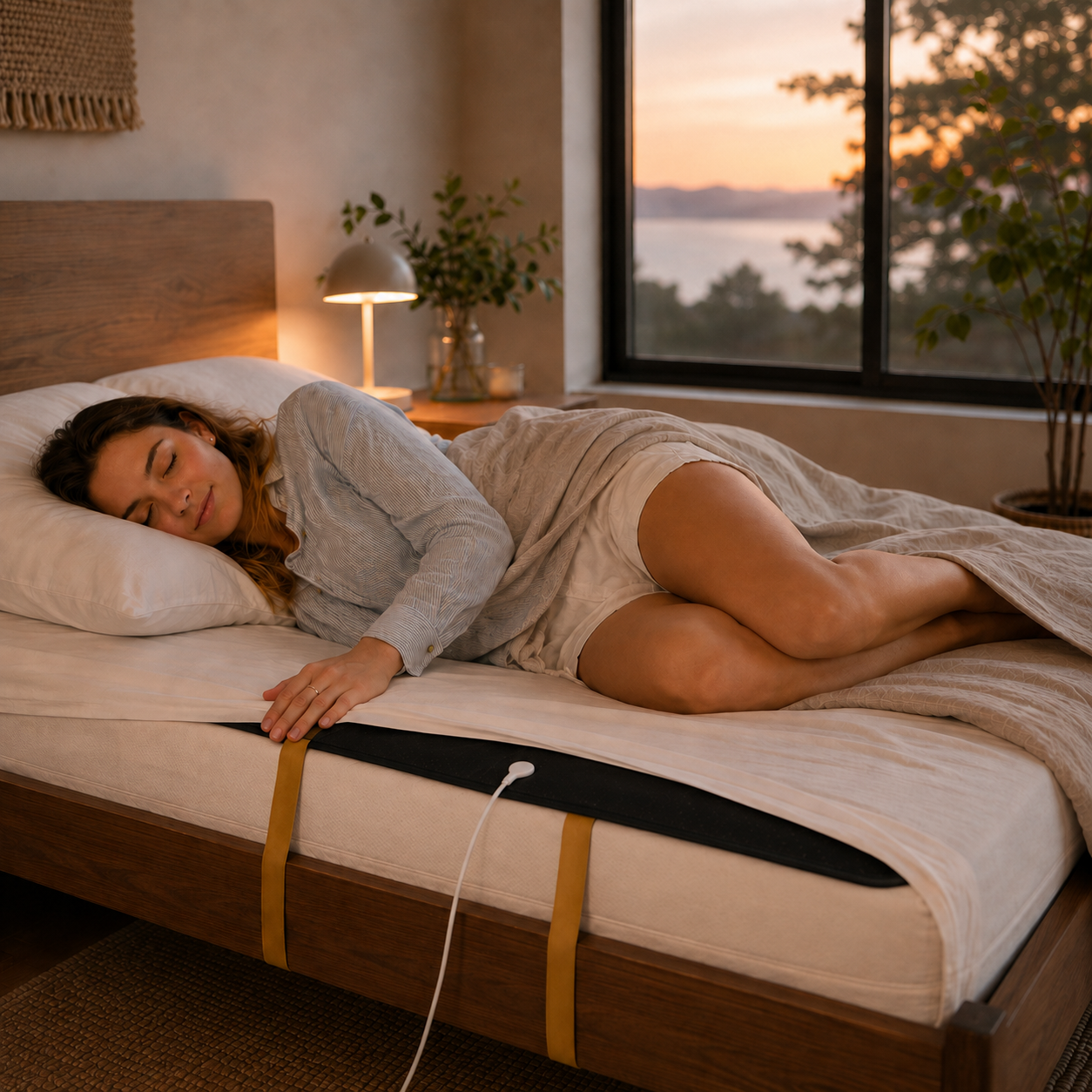
If your daytime schedule is unpredictable, a Grounding Bed Mat or Grounding Bed Sheet may fit more naturally into your routine. Overnight use provides a longer contact window without requiring you to think about grounding throughout the day.
There is no evidence-based rule that says one format is best for everyone. The best option is the one you can use consistently, safely, and comfortably.

Set Up Safely Before You Begin
Grounding products are designed to connect only to the grounding port of a properly grounded electrical outlet. They do not connect to the live electrical slots.
Before use, check the outlet with a Grounding Socket Tester to confirm that it appears to be properly grounded. A Conductive Tester can be used separately to check the conductivity of a compatible grounding product.
Do not use a grounding product with damaged cords, damaged outlets, moisture near the electrical connection, or an outlet that fails a grounding test. If you are uncertain about your home or office wiring, ask a qualified electrician. In a workplace, follow your organization’s electrical and facilities policies before connecting anything to an outlet.
Grounding products are not designed to shield you from electromagnetic fields, replace surge protection, or correct an electrical wiring problem.
How to Evaluate Your Experience Fairly
If you decide to try grounding, give yourself a reasonable trial period and keep the rest of your routine fairly steady.
Pay attention to practical questions:
- Is the product comfortable to use?
- Does it fit naturally into your workday?
- Does it encourage you to take better breaks?
- Do you feel more relaxed after a focused work session?
- Is it easy enough to use consistently?
Avoid judging the experience based on a single afternoon, especially during an unusually stressful week. A brief note on your phone can help you track factors such as sleep, movement, caffeine, work stress, and grounding use.
If you notice skin irritation, discomfort, or any concern about the electrical setup, stop using the product and check the setup before continuing.
Your desk may be where you spend much of your day, but it does not have to be where your body goes unnoticed. Set up your workspace safely, take the breaks you usually postpone, spend time outdoors when you can, and treat grounding as a simple addition to a calmer, more comfortable workday.


Leave a comment
This site is protected by hCaptcha and the hCaptcha Privacy Policy and Terms of Service apply.