



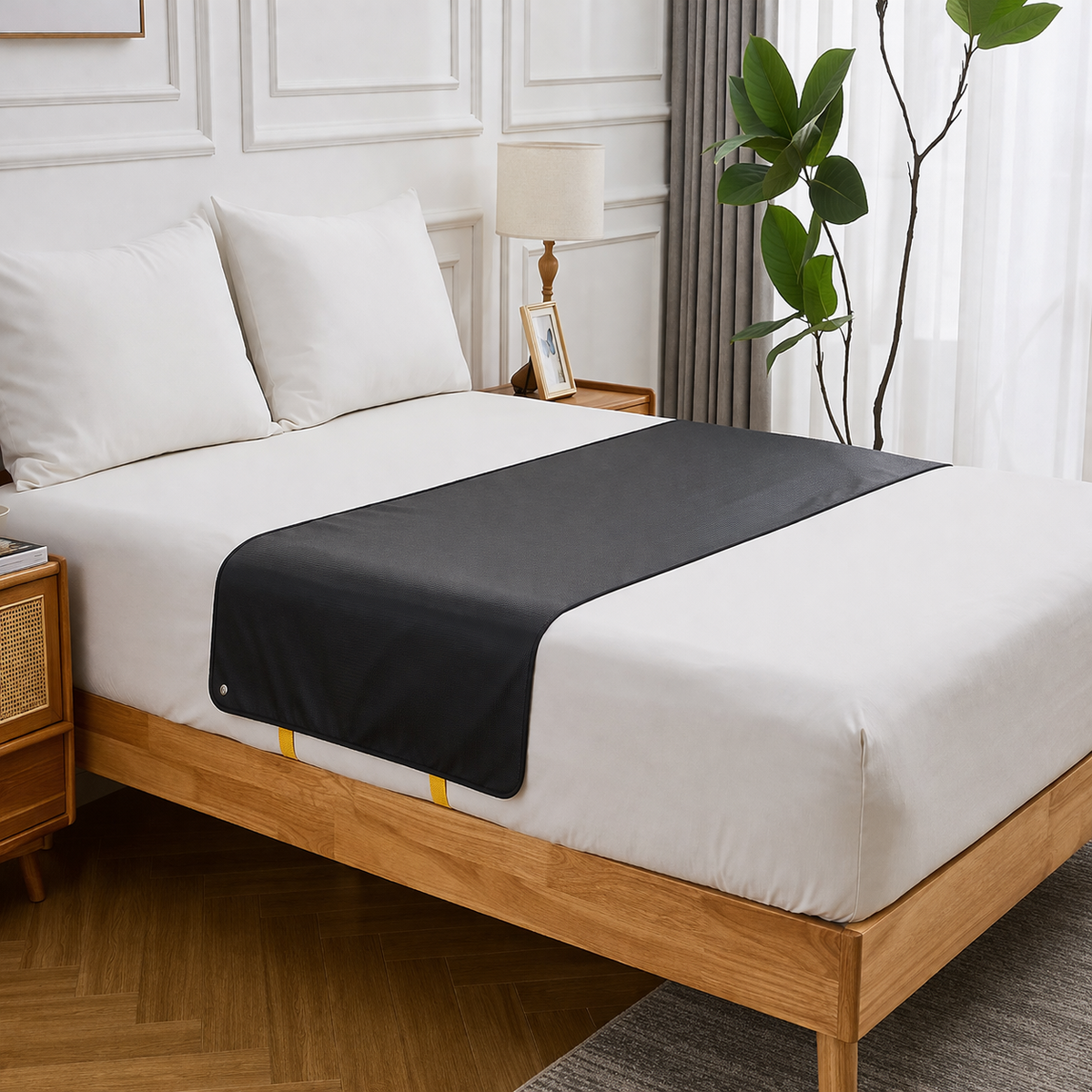
A grounding bed mat offers a simple way to stay connected to the Earth while you sleep without replacing your existing bedding.
Unlike a fitted grounding sheet, a grounding bed mat is placed across the mattress and secured in position with adjustable straps. Your regular fitted sheet can then be placed over it, allowing the mat to remain protected while you sleep.
However, grounding bed mats come in different sizes, and the right choice depends on your mattress, sleeping position, whether you share the bed, and how much coverage you prefer.
This guide explains what to consider before choosing your grounding bed mat.

What Is a Grounding Bed Mat?
A grounding bed mat is a conductive mat designed for use on a mattress.
It connects to the grounded part of a properly grounded wall outlet using a grounding cord and country-specific connection plug. The mat does not use electricity to operate.
Grounding Essentials Bed Mats are designed to sit underneath your fitted sheet. Adjustable straps help hold the mat securely across the mattress, while small perforations support airflow.
Because the mat stays underneath your bedding, it can be a practical option for anyone who wants to continue using their preferred fitted sheets.
Research into grounding and its possible effects on sleep and well-being remains limited, with many available studies involving small participant groups. Individual experiences can therefore vary, and grounding products should not be treated as medical devices or replacements for proven sleep treatments.

Choose the Right Size for Your Bed
Grounding Essentials Grounding Bed Mats are available in four sizes:
- Small: 60 × 165 cm
- Medium: 90 × 185 cm
- Large: 120 × 195 cm
- XL: 140 × 205 cm
When choosing your size, start by checking the width of your mattress.
The mat is designed to run across the width of the bed, with the straps extending around the sides of the mattress. It does not need to cover the entire mattress from the headboard to the foot of the bed.
Small Grounding Bed Mat
The Small mat is best suited to narrower single beds or sleepers who want a more compact contact area.
It may also be suitable for one person using one side of a larger bed.
Medium Grounding Bed Mat
The Medium mat offers more coverage and works well for many single beds, wider single mattresses, and smaller double beds.
It can be a good choice for one person who tends to move during sleep and wants a wider grounding area.
Large Grounding Bed Mat
The Large mat is designed for wider double or queen-size beds.
It provides enough coverage for one person who changes sleeping position frequently or for two people sharing part of the mat.
XL Grounding Bed Mat
The XL mat provides the widest coverage and is the most suitable option for larger beds.
It is a practical choice for couples, wider mattresses, and anyone who wants the grounding surface to extend across most of the bed.
Consider How Much Coverage You Need
Mattress size is important, but it is not the only factor.
Think about how you sleep and how much of your body you want positioned over the mat.
A smaller mat may be enough when:
- One person uses the bed
- You usually remain on one side
- You want the mat beneath your upper body or legs
- You prefer a more compact setup
A larger mat may be better when:
- You move frequently during sleep
- You share a bed with a partner
- You want more freedom in where you lie
- You prefer wider contact across the mattress
The larger the mat, the easier it is to remain positioned over the conductive area while turning during the night.
However, you do not necessarily need the largest option available. Choose a size that suits the mattress and provides comfortable coverage without extending awkwardly beyond the bed.

Think About Where the Mat Will Sit
A Grounding Bed Mat is generally positioned horizontally across the mattress.
Many people place it around the middle section of the bed so it sits beneath the torso, hips, or legs. The exact position can be adjusted based on your sleeping habits.
Before securing it:
- Place the mat flat across the mattress.
- Check that both sides are evenly positioned.
- Wrap the adjustable straps around the mattress.
- Tighten them enough to hold the mat securely.
- Place your fitted sheet over the mat.
Avoid folding, bunching, or sharply creasing the mat.
The grounding cord should be connected securely and routed toward the nearest suitable outlet without being stretched tightly or trapped beneath heavy furniture.
Make Sure Your Outlet Is Grounded
Even the correct bed mat will not provide the intended grounding connection if the wall outlet is not properly grounded.
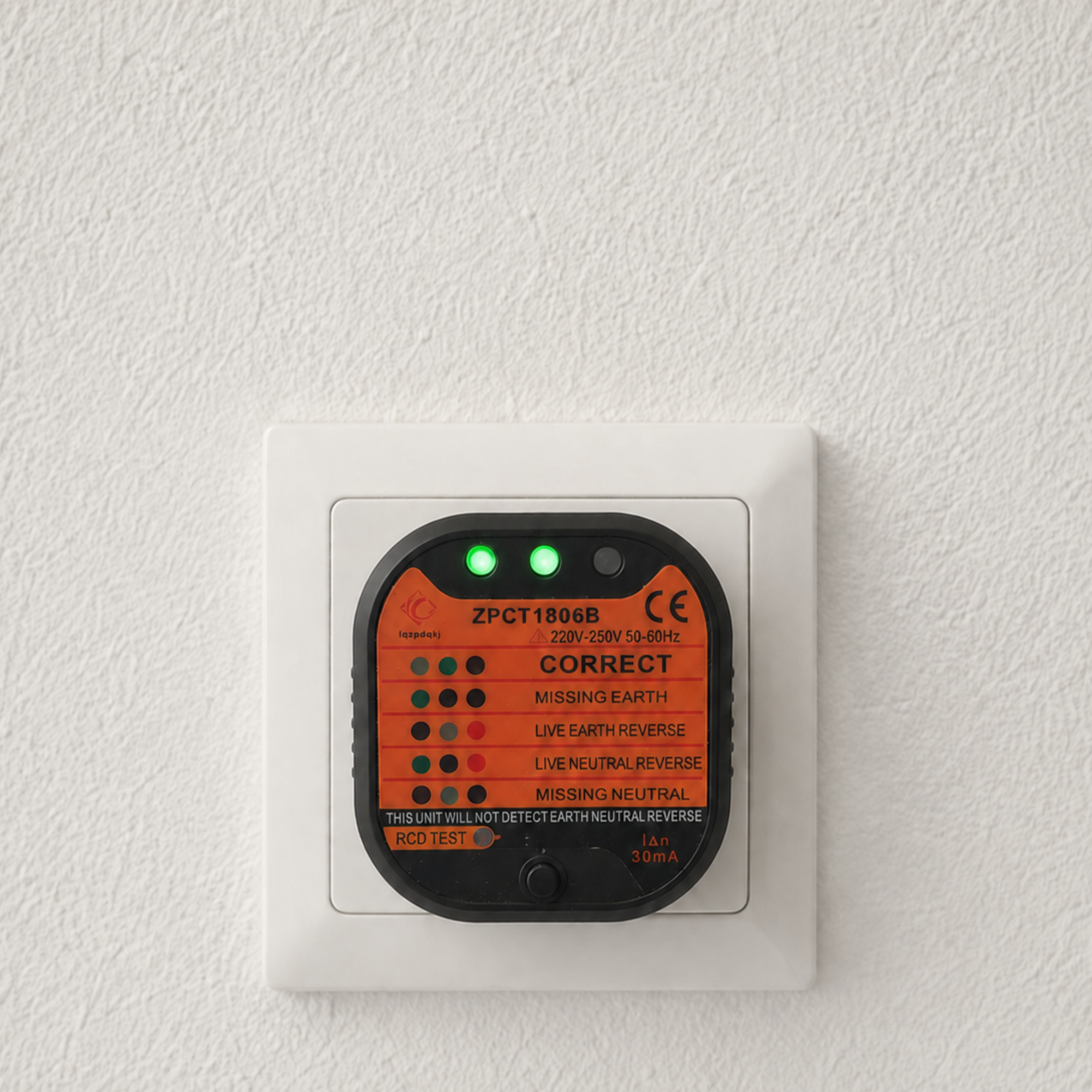
Before setting up the mat, use a Socket Tester to check the outlet you plan to use.
For the Grounding Essentials Socket Tester, the correct result is:
- Two green lights on
- Red light off
Once the outlet has been confirmed, connect the grounding cord to the mat and then to the correct plug for your country.
European and US customers must use the connection plug designed for their local outlet type. Some markets, including Denmark, Switzerland, Italy, the UK, and Ireland, require specific plugs.
Never force a plug into an incompatible outlet or assume an outlet is grounded based only on its appearance.
Grounding Bed Mat vs. Grounding Bed Sheet
Both products are designed for nighttime grounding, but the setup is different.
A Grounding Bed Mat may be a better choice when:
- You want to keep using your current fitted sheet
- You prefer the grounding product to remain underneath your bedding
- You want a durable surface secured with straps
- You prefer choosing from several mat widths
A Grounding Bed Sheet may be better when:
- You want direct skin contact with conductive fabric
- You prefer a soft organic cotton surface
- You want a fitted product covering the full mattress
- You do not want an additional layer beneath your bedding
Neither option is automatically better for everyone. The right choice depends on how you prefer to make your bed and whether you want the conductive surface above or beneath your regular sheet.
Frequently Asked Questions
Should the Grounding Bed Mat match my mattress size exactly?
No. The mat is designed to run across the width of the mattress rather than cover the entire bed from top to bottom. Choose the size that provides suitable width and coverage for your mattress and sleeping position.
Can two people use one Grounding Bed Mat?
Yes, provided the mat is wide enough for both sleepers to remain positioned over it. A Large or XL mat is usually the better choice for couples or wider beds.
Can I place a fitted sheet over the mat?
Yes. The Grounding Bed Mat is designed for use beneath a fitted sheet. Conductivity through the bedding may improve with natural moisture from the body during sleep.
Does the mat need direct skin contact?
The mat can be used beneath a fitted sheet, so direct contact with the mat itself is not required. For the strongest and most consistent contact, use a thin, breathable fitted sheet rather than several thick layers.
How do I know whether the mat is working?
First, test the wall outlet with a Socket Tester. Then use a Conductivity Tester to check the mat and grounding connection. When testing through a completely dry fitted sheet, a small amount of moisture may be needed to demonstrate conductivity.
Conclusion
Choosing the right grounding bed mat comes down to four main factors:
- Your mattress width
- How much coverage do you want
- Whether one or two people will use it
- How much do you move while sleeping
A smaller mat can work well for one person or a narrow bed, while a Large or XL mat gives couples and active sleepers more room to remain positioned over the grounding surface.
Whichever size you choose, install it flat across the mattress, secure the straps properly, test the wall outlet, and use the correct grounding plug for your country.
With the correct size and setup, a Grounding Bed Mat can fit naturally beneath your existing bedding and become a simple part of your nightly routine.

Leave a comment
This site is protected by hCaptcha and the hCaptcha Privacy Policy and Terms of Service apply.