



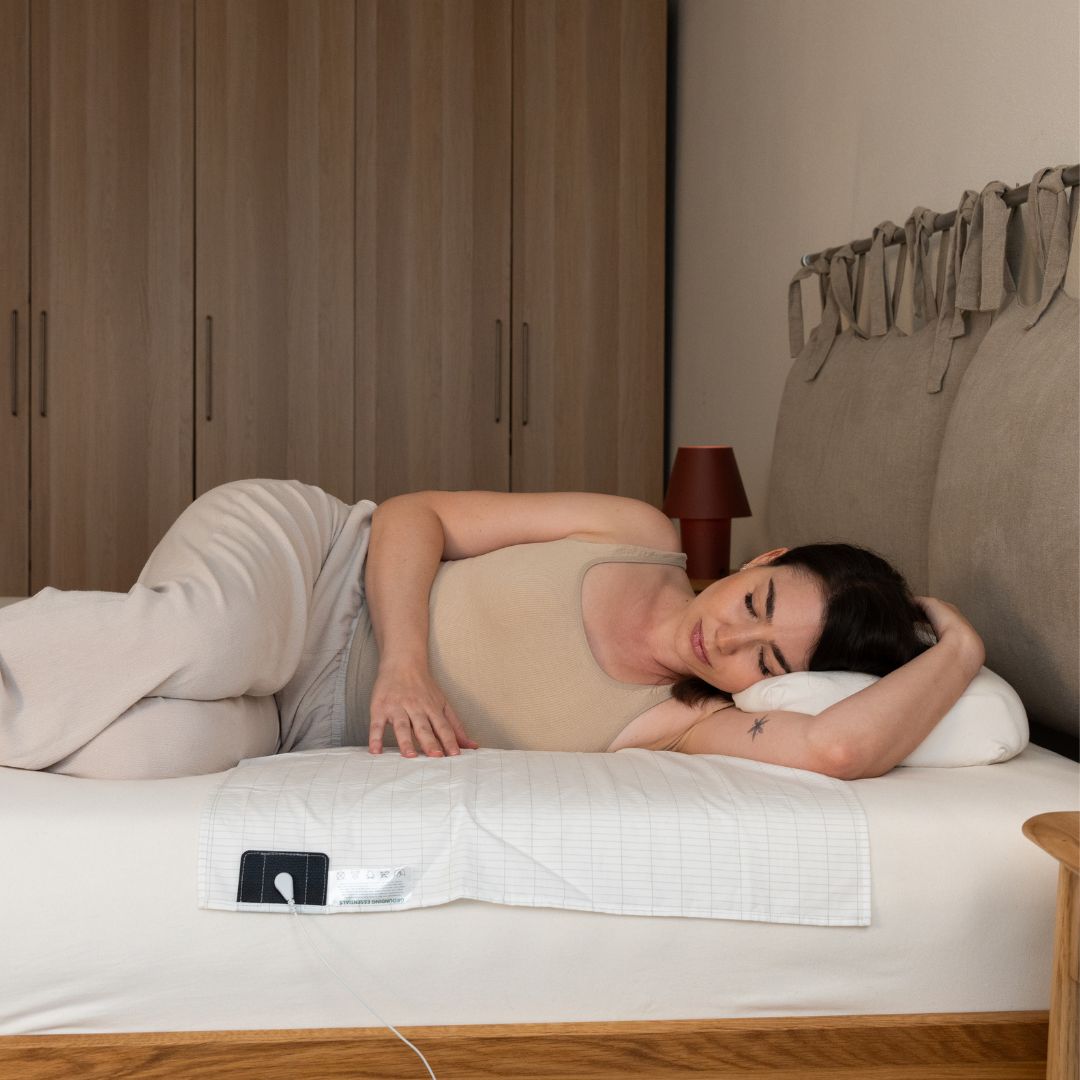
Your bedroom may be several floors above the ground, surrounded by carpet, wood, concrete, and electronics. That does not prevent grounding. Understanding how to ground yourself indoors starts with one key point: an indoor grounding product does not need to touch the soil directly. It creates a controlled connection between your body and the grounding system of a properly wired electrical outlet.
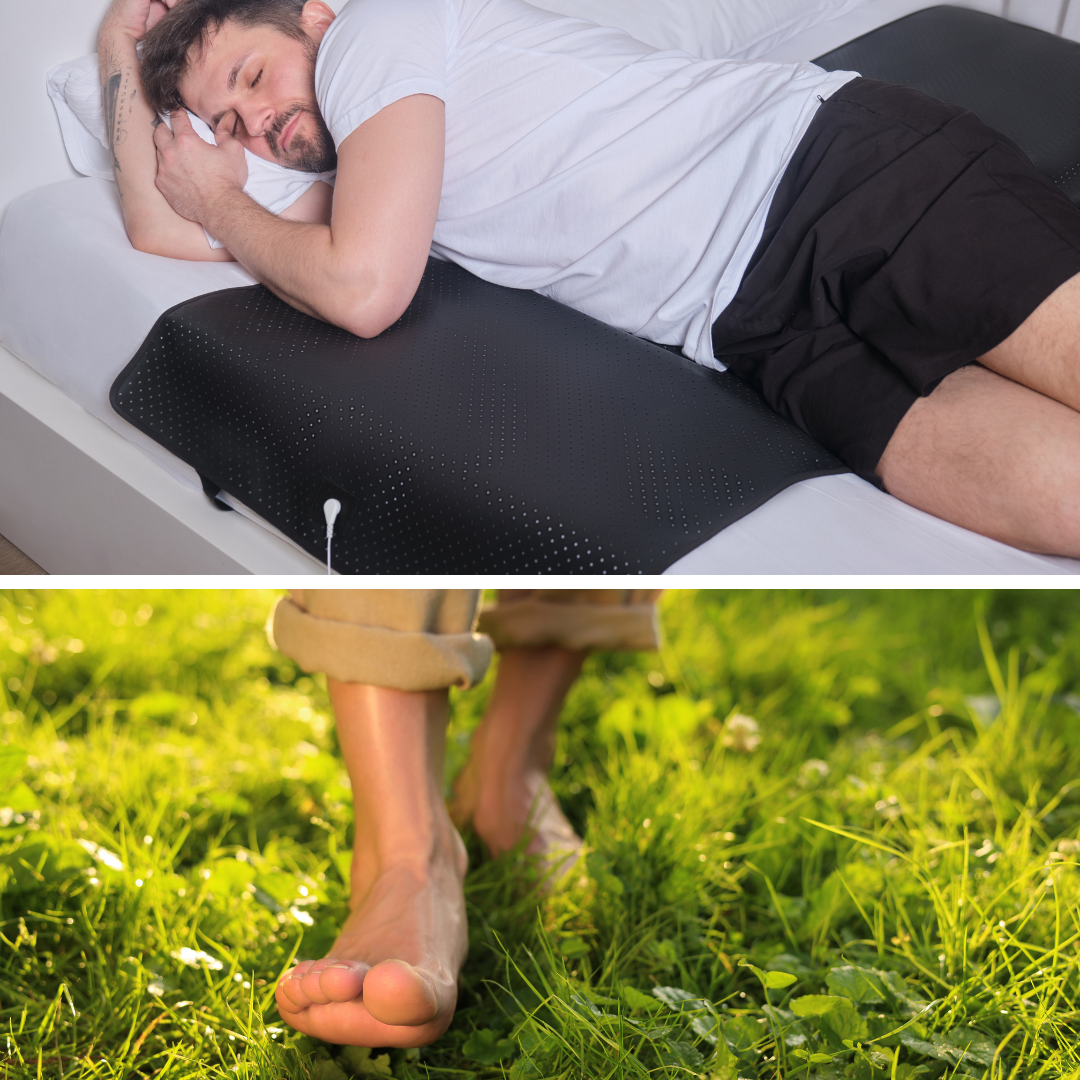
For people who enjoy the calm, connected feeling of walking barefoot on grass or sand, this makes grounding possible while sleeping, working, stretching, or relaxing at home. The setup is simple, but the details matter. A properly grounded outlet, a purpose-built product, and correct use all play a role.
How grounding indoors works
The Earth has a vast supply of free electrons and is commonly used as the electrical reference point for buildings and power systems. In a correctly installed electrical system, the round grounding port in a three-prong outlet is connected to the building's grounding system. Depending on the property, that system may ultimately connect to a ground rod, foundation grounding electrode, or another approved grounding method.
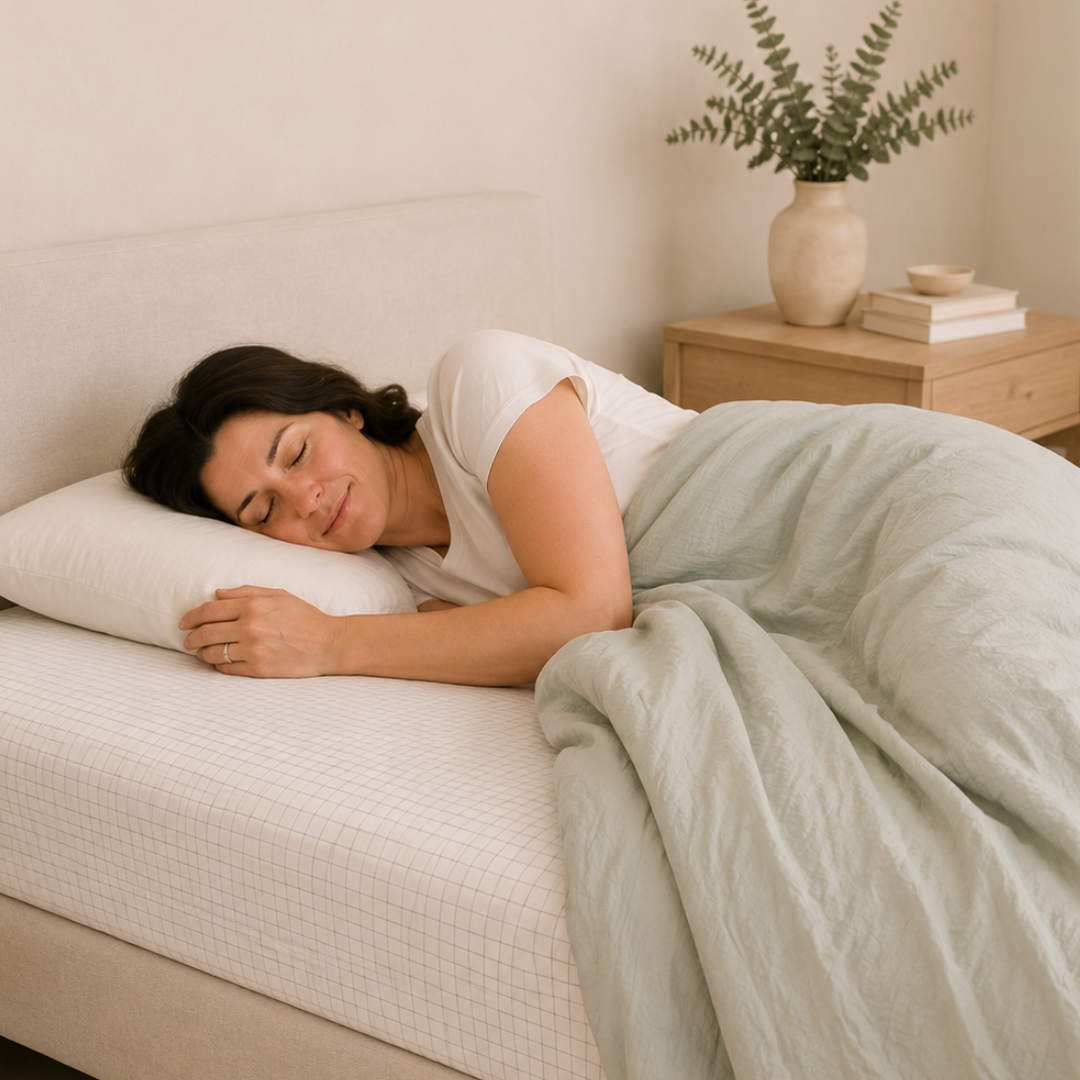
Indoor grounding products use this grounding path. A grounding sheet, grounding mat, grounding bed mat, or grounding pillowcase contains conductive material, often silver fibers or conductive carbon. A cord connects the product to the ground port of a properly grounded outlet. When bare skin touches the conductive surface, the body is connected to electrical ground through the product.
This is not the same as plugging your body into household electricity. Purpose-designed grounding cords connect only to the outlet's ground port, not the live electrical contacts. They also typically include a built-in safety resistor. Never improvise with wires, adapters, or damaged cords, and never place anything into an outlet other than an approved grounding plug.

What the connection can change
One of the most measurable effects of indoor grounding is a reduction in induced body voltage. Electrical fields from wiring and appliances can induce a small alternating voltage on the body. When a person is grounded, their body voltage relative to Earth often drops substantially. This can be checked with an appropriate body-voltage meter and a verified outlet.
That measurement explains the electrical connection. It does not, by itself, prove a health outcome. The research into grounding and wellness is still developing. Small studies and observational reports have explored sleep, perceived stress, pain, recovery, cortisol patterns, and blood-related measures, but many studies are limited by sample size, study design, or the difficulty of blinding participants.
The most accurate takeaway is encouraging but measured: grounding has plausible mechanisms and early research worth following, yet it should be viewed as a complementary wellness practice rather than a treatment for a medical condition.
Why the floor is usually not enough
A common question is whether standing on an indoor floor provides the same effect. Usually, it does not. Carpeting, rugs, laminate, vinyl, hardwood finishes, tile adhesives, socks, slippers, and shoes are generally insulating materials. Even bare feet on a concrete floor may not provide a reliable ground connection, particularly if there is flooring, vapor barrier material, paint, or sealant between you and the concrete.
Some buildings may have conductive flooring or unusual construction details, but guessing is not useful. A grounding product offers a known conductive path when it is connected correctly. That consistency is one reason people use a bed sheet or mat instead of relying on the floor beneath them.
The same principle applies outdoors. Bare feet on damp soil, grass, sand, or unsealed concrete can be conductive, while rubber-soled shoes and dry, insulated surfaces often interrupt the connection. Grounding in cold weather can therefore be less practical, which is why grounding in the winter often shifts indoors.

Choosing an indoor grounding setup
Your best option depends on when you want to use grounding. For overnight use, a grounding fitted sheet, grounding half sheet, grounding bed mat, or grounding pillowcase can provide extended skin contact while you rest. A grounding mat is often more practical under bare feet at a desk, beside a sofa, or during a short relaxation routine, while a grounding mouse mat offers a convenient way to stay connected while working at a computer.
For anyone wondering how to do grounding in the winter, a sheet can be especially convenient because it becomes part of an existing indoor sleep routine. Most people place it on top of the mattress and sleep with bare skin in contact with it. Thin natural-fiber pajamas may still allow some contact, but direct skin contact is generally the most reliable approach. Heavy clothing, synthetic fabrics, and additional bedding between your skin and the conductive surface can reduce conductivity.
With a desk mat, bare feet or forearms can touch the surface. A brief daily session may suit someone who does not want to change their sleep setup. On the other hand, sleep is a long, consistent window, which is why many people prefer a bed-based product.
Grounding Essentials designs products for these different routines, but the principle remains the same: choose the format you can use comfortably and consistently.
Set up grounding safely at home
Before connecting a product, confirm that your outlet is actually grounded. A three-prong outlet is not automatically proof of a working ground connection, particularly in older homes or after electrical modifications. A simple outlet tester can help identify common wiring issues. For more certainty, ask a qualified electrician to inspect the outlet.
Use the cord and adapter supplied for the product, following its instructions. Connect it only to the grounding port of a properly functioning outlet or to an approved grounding point. Do not use extension cords, travel adapters, multi-plug converters, or outlet configurations unless the manufacturer explicitly confirms they are suitable.
Keep the cord intact and away from areas where it can be pinched, pulled, chewed by pets, or become a trip hazard. Replace a product if the cord, plug, or conductive surface is visibly damaged. If you are unsure about your home's electrical wiring, pause the setup until it has been checked.
People with implanted medical devices, complex medical conditions, or concerns about electrical exposure should discuss new wellness practices with a qualified healthcare professional. Grounding products are not intended to replace prescribed care, medication, or medical advice.
What you may notice - and what you may not
Some users report feeling more relaxed at bedtime, sleeping more comfortably, or finding it easier to settle after a demanding day. Others notice little at first. Individual responses can vary with sleep habits, stress levels, activity, room environment, expectations, and how consistently the product is used.
It also helps to avoid changing everything at once. If you begin grounding at the same time as changing your mattress, supplements, workout plan, bedtime, and diet, it becomes difficult to know what is helping. Try one change at a time and pay attention to practical markers such as bedtime consistency, how often you wake, perceived muscle recovery, and how rested you feel in the morning.
A simple two- to four-week trial is often more useful than judging one night. Keep your routine otherwise stable where possible. This approach respects both the possibility of a meaningful personal experience and the reality that wellness results are rarely identical from person to person.
Make grounding part of a better sleep environment
Grounding is most useful when it supports, rather than distracts from, the basics. Keep your room comfortably cool, reduce bright light before bed, maintain a predictable sleep schedule, and give yourself a short wind-down period. If you use a grounding sheet or mat, clean it according to the care instructions. Harsh detergents, bleach, fabric softener, and high heat can damage conductive fibers over time.

If you want to verify that your system is working, start with the outlet. A properly grounded outlet and an undamaged product matter far more than a complicated routine. Then choose a setup that fits your day: a mat for focused work or relaxation, or a sleep product for consistent overnight contact.
The most helpful next step is a modest one: verify one outlet, set up one purpose-built grounding product correctly, and give yourself enough time to observe how it fits into your routine. Better sleep and recovery rarely come from a single habit, but calm, repeatable habits can make a meaningful difference over time.

Leave a comment
This site is protected by hCaptcha and the hCaptcha Privacy Policy and Terms of Service apply.