




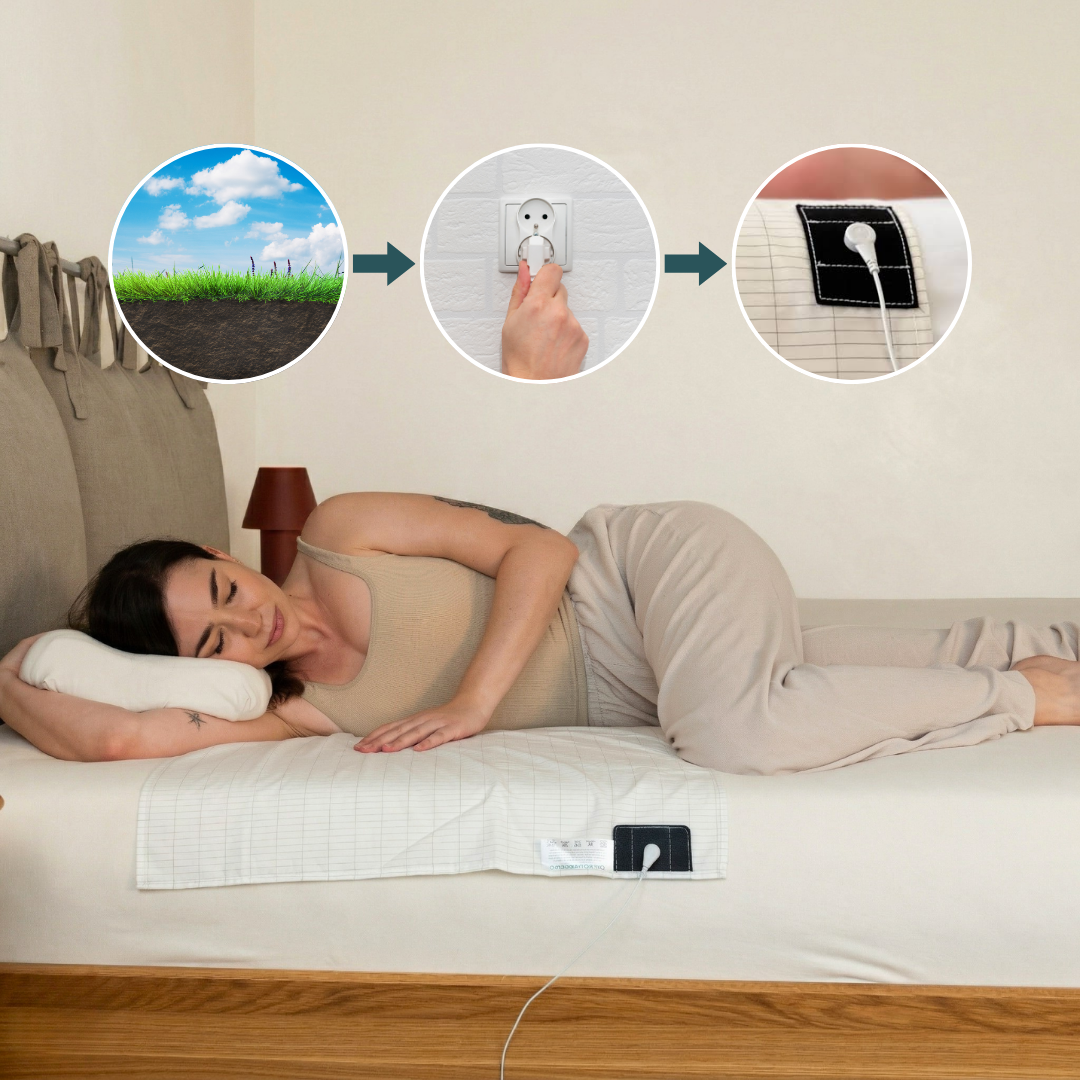
A Grounding Bed Mat is designed for the hours when your body can maintain the most consistent contact with a grounding product: while you sleep. Instead of trying to spend more time barefoot outdoors, the mat connects to the grounding port of a properly grounded wall outlet, creating a conductive connection between your body and the Earth while you rest.
For people focused on sleep, recovery, and winding down after demanding days, that simplicity is part of the appeal. However, a Grounding Bed Mat is not a medical device or a replacement for professional treatment for insomnia, pain, or any other health condition. It is a wellness tool worth understanding clearly before deciding whether it belongs in your sleep routine.
What Is a Grounding Bed Mat?
A Grounding Bed Mat is a conductive mat designed for use on a mattress.
The Grounding Essentials Grounding Bed Mat has a smooth, copper-infused PU leather surface with breathable perforations. Adjustable straps help keep it securely positioned across the mattress.
The mat connects to a grounding cord, which attaches to the grounding port of a correctly wired wall outlet. In homes without grounded outlets, it may also be used with a compatible outdoor Grounding Rod.
It is designed to sit horizontally across the mattress underneath a fitted sheet. Depending on its size and position, your legs, feet, back, or another area of your body can remain over the mat while you sleep.
Unlike an electric blanket or heating pad, a Grounding Bed Mat does not use the live electrical current from the outlet. It does not generate heat, deliver electrical stimulation, or provide medical treatment. Its purpose is to create a conductive connection to earth ground.

Why Grounding at Night Makes Practical Sense
Outdoor grounding can be as simple as walking barefoot on grass, soil, or wet sand. However, weather, footwear, work schedules, and urban living can make regular outdoor contact difficult.
Sleep offers a long and predictable opportunity for grounding. Once the Grounding Bed Mat is installed beneath your fitted sheet, you can use it throughout the night without adding another task to your day.
That does not mean more hours automatically produce greater results. Individual experiences vary. Some customers report feeling more rested, experiencing less morning stiffness, or developing a calmer bedtime routine. Others may notice only subtle changes or no clear difference.
Sleep is influenced by stress, caffeine, light exposure, room temperature, exercise, health conditions, and many other factors. A Grounding Bed Mat is therefore best viewed as one possible part of a broader sleep and recovery routine.
How Does a Grounding Bed Mat Work?
The Earth’s surface has a naturally maintained electrical potential. When a conductive grounding product is correctly connected to earth ground, it creates a conductive pathway between the product and the Earth.
The copper-infused surface of the Grounding Bed Mat is designed to maintain conductivity across the mat. When the mat is connected and your body remains over it, the conductive pathway can continue through a thin fitted sheet.
Conductivity through the sheet may improve after you have been lying in bed for several minutes. Normal moisture from the body can help create a better conductive connection through the fabric.
Research into grounding has explored areas such as sleep, cortisol rhythms, discomfort, muscle recovery, circulation, and inflammation-related markers. Some small studies and pilot research have reported promising findings. However, the research remains limited, and larger independent studies are needed before firm clinical conclusions can be made.
Grounding should not be presented as a proven cure or guaranteed solution. Your experience may be positive, subtle, or different from someone else’s.

How to Set Up a Grounding Bed Mat Safely
Correct setup is essential. The mat can only connect to earth ground if the outlet’s grounding port is properly grounded.
Start by checking your outlet with a Grounding Socket Tester. Do not assume an outlet is grounded simply because it has a grounding connection. Older homes, apartments, and renovated buildings may contain incorrectly wired or ungrounded outlets.
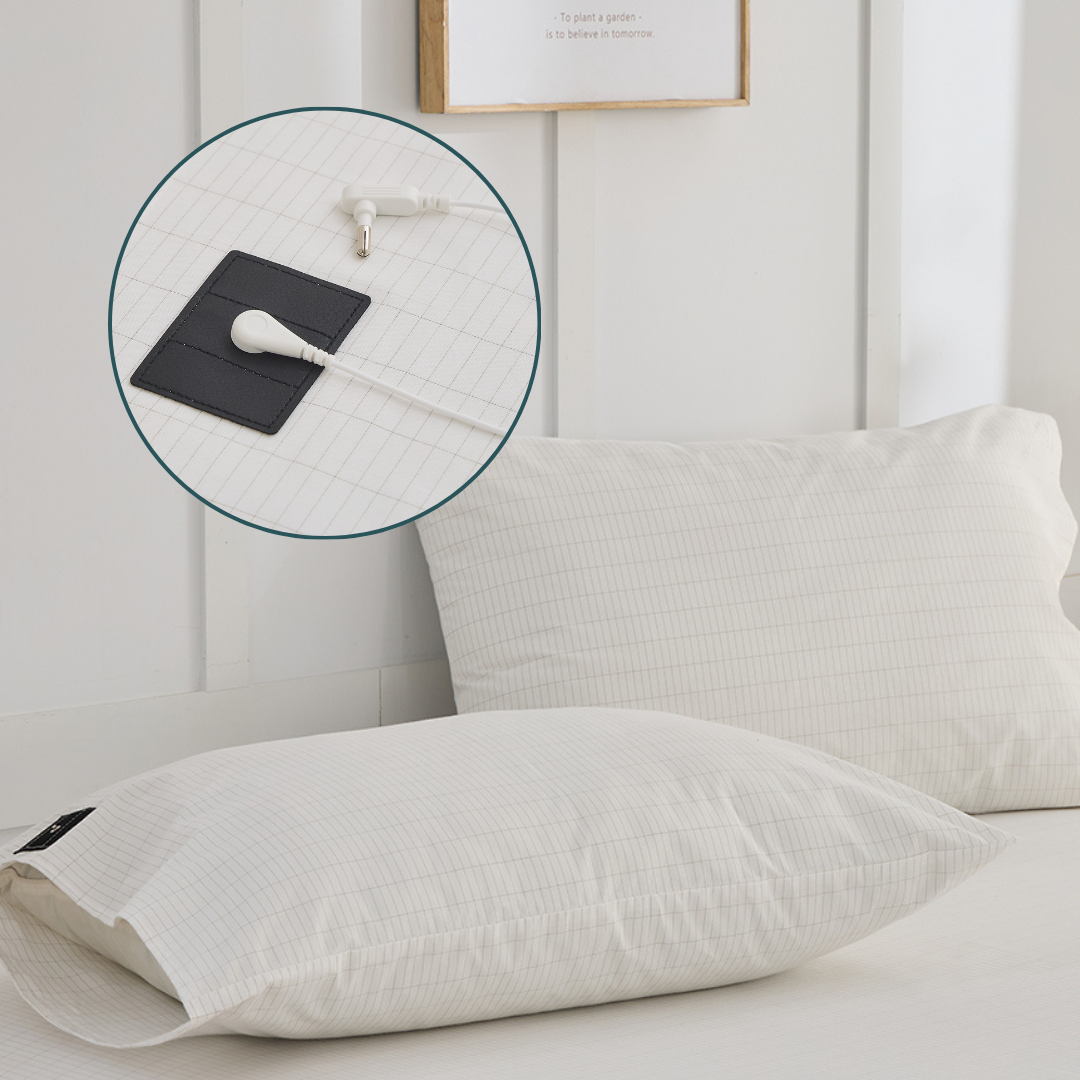
Place the mat horizontally across the mattress and adjust the straps to keep it secure. Put your fitted sheet back over the mat, connect the grounding cord to the mat, and attach the other end to the grounding plug. Insert the plug into the tested grounded outlet.
Run the cord safely along the side of the bed. Keep it away from areas where it could be pulled, pinched, trapped under furniture, or damaged.
Only use the cord and plug designed for the product. Do not modify the plug, insert the cord into a live electrical slot, or use damaged equipment. If you are uncertain about your home’s wiring, consult a qualified electrician.

Should the Grounding Bed Mat Go Under or Over the Sheet?
The Grounding Essentials Grounding Bed Mat is designed to sit underneath a fitted sheet.
A thin, breathable fitted sheet made from a natural material such as cotton is generally the most suitable option. The mat can conduct through the sheet once normal body moisture helps create a pathway through the fabric.
You do not need to sleep directly on the PU leather surface. Placing the mat under the sheet creates a softer sleeping surface and helps protect it from direct friction, body oils, and everyday wear.
Thick bedding, waterproof mattress protectors, synthetic fabrics, and multiple layers between your body and the mat may reduce or prevent conductivity.
How to Check That the Mat Is Working
Two testing tools can help you check your setup.
A Grounding Socket Tester confirms whether the wall outlet is correctly wired and properly grounded before you connect the mat.
A Grounding Conductive Tester checks whether conductivity is present across the connected Grounding Bed Mat. Test several areas of the surface rather than only beside the connection point.
When testing through a fitted sheet, conductivity may not register immediately. Lie over the mat for around 10 minutes before testing so normal body moisture can improve conductivity through the fabric.
Choosing the Right Grounding Bed Mat Size
The Grounding Essentials Grounding Bed Mat is available in four sizes:
-
Small: 60 × 165 cm
-
Medium: 90 × 185 cm
-
Large: 120 × 195 cm
-
XL: 140 × 205 cm
A smaller size may provide enough contact for one sleeper or a compact mattress. A larger mat offers broader coverage and may suit people who move frequently during the night.
The adjustable straps help secure the mat across different mattress sizes. The right option depends on your bed dimensions, sleeping position, and preferred level of coverage.
Compared with a fitted grounding sheet, a Grounding Bed Mat requires less washing and works beneath your existing bedding. This makes it a practical option for people who want nighttime grounding without replacing their fitted sheet.

How to Care for Your Grounding Bed Mat
The PU leather surface is simple to maintain and does not need to be machine washed.
Wipe it gently with a soft damp cloth and allow it to dry completely before replacing the fitted sheet.
Avoid bleach, harsh cleaning products, oils, lotions, or anything that may leave a coating on the conductive surface. These substances may gradually affect conductivity.
Check the mat, cord, plug, and connection point occasionally for visible wear or damage. Do not continue using a damaged cord or plug.
What You May Notice and What Not to Expect
People often try a Grounding Bed Mat because they want to support sleep, recovery, relaxation, or morning comfort.
Some customers report falling asleep more easily, waking less often, feeling more refreshed, or experiencing less stiffness in the morning. These are individual experiences rather than promises of a particular result.
It is also normal not to notice anything dramatic. Changes in sleep and recovery may be subtle and can be influenced by factors unrelated to grounding.
Use the mat consistently for several weeks before evaluating your experience. Avoid changing several other habits at the same time. You may find it helpful to make brief notes about bedtime, nighttime wake-ups, morning energy, stiffness, and recovery.
If you experience persistent sleep problems, significant pain, unusual fatigue, or other concerning symptoms, speak with a qualified healthcare professional. Grounding may be used as a complementary wellness practice, but it should not delay appropriate care.
Make the Grounding Bed Mat Part of a Better Sleep Environment
A Grounding Bed Mat works best as part of a supportive sleep routine.
Keep your bedroom cool, quiet, and dark. Aim for a consistent bedtime and wake time. Get natural daylight early in the day and reduce bright screens before bed when possible. Consider limiting caffeine later in the day and alcohol close to bedtime if either affects your sleep.
Then use the Grounding Bed Mat consistently and comfortably. Test your outlet, position the mat securely beneath the fitted sheet, maintain regular contact, and evaluate your experience without expecting an overnight miracle.
The Grounding Essentials Grounding Bed Mat comes with a 100-night risk-free trial, giving you time to introduce it into your routine and decide whether nighttime grounding is right for you.

Leave a comment
This site is protected by hCaptcha and the hCaptcha Privacy Policy and Terms of Service apply.