



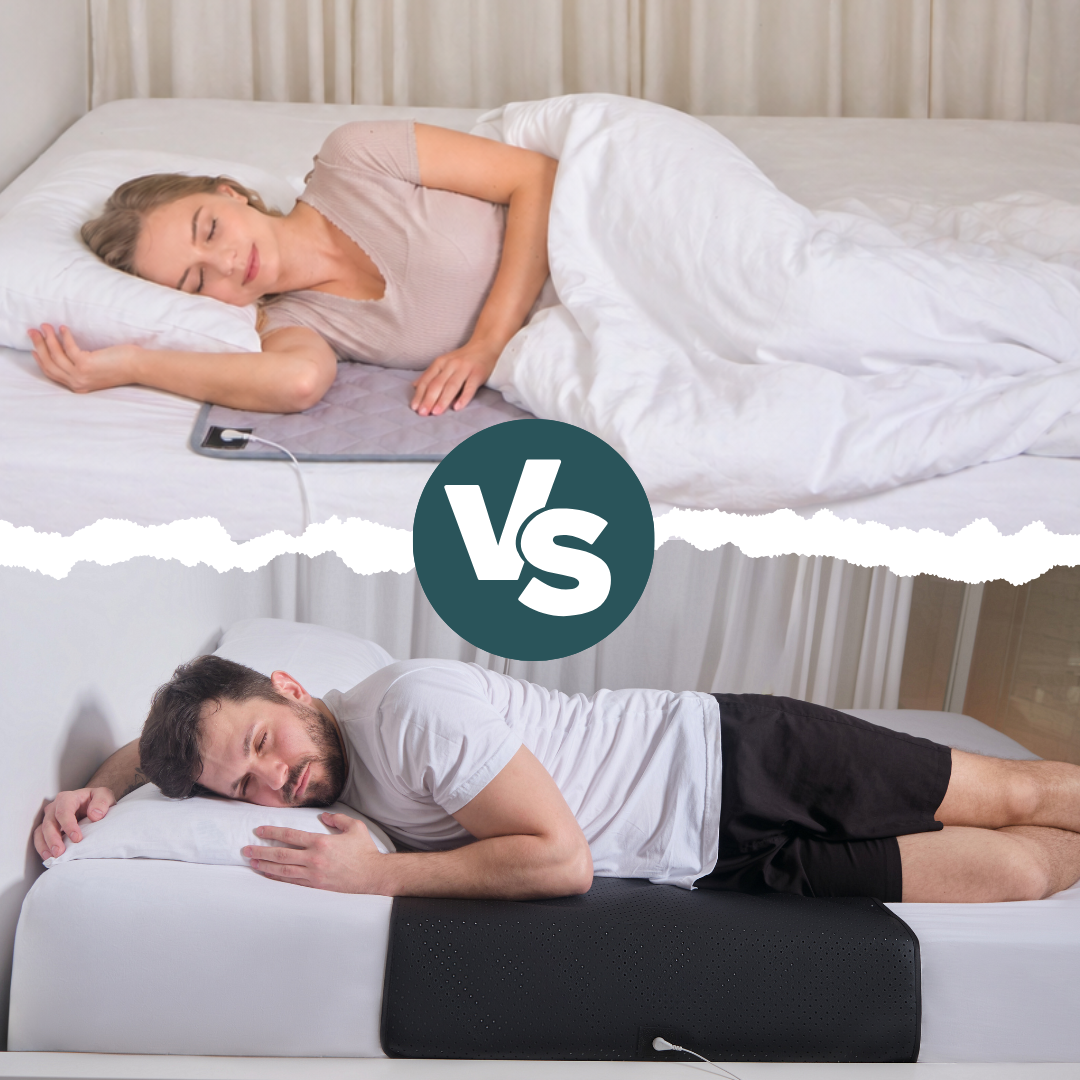
If you are choosing between a Grounding Pad and a Grounding Bed Mat, the main difference comes down to flexibility versus dedicated sleep coverage.
The Grounding Pad is compact, soft, and easy to move between your bed, desk, and chair. The Grounding Bed Mat is larger and designed specifically to stay on your mattress for overnight grounding.
Both can be practical options, but they suit different routines.
The best choice is the one that fits naturally into how you already sleep, work, or relax.
Grounding Pad vs. Grounding Bed Mat at a Glance
The easiest way to compare them is by intended use.
Grounding Pad: best for flexible use while sleeping, sitting, working, or relaxing.
Grounding Bed Mat: best for a dedicated overnight grounding setup with broader mattress coverage.
The Grounding Pad measures 40 × 43 cm and is made with soft organic cotton and conductive silver fibers. It is designed for use on a bed, desk, chair, or other relaxation area.
The Grounding Bed Mat is larger, uses adjustable elastic straps to stay secured to the mattress, and is designed to sit under your regular bedsheet. It can be positioned either lengthways or sideways depending on your preferred setup.

What Is the Grounding Pad?
The Grounding Pad is a compact conductive fabric product designed to move easily between different parts of your routine.
It is made from breathable organic cotton with conductive silver fibers woven throughout the pad. The current size is 40 × 43 cm, making it small enough to use without significantly changing your existing setup.
You can use it:
- On your bed while sleeping
- On a chair while sitting
- Beneath your feet while working
- While relaxing on a sofa
- In other places where a smaller conductive surface feels practical
Its main advantage is versatility.
You are not committing the product to one room or one activity.
If you want grounding at your desk during the day and on your bed at night, the Grounding Pad can move with your routine.
What Is the Grounding Bed Mat?
The Grounding Bed Mat is designed specifically for the mattress.
It provides a much larger conductive area than the Grounding Pad and is built to remain secured in place throughout the night.
Adjustable elastic straps help keep the mat positioned on different mattress types, and it can be placed either sideways or lengthways depending on where you want the conductive area.
The Bed Mat is intended to sit beneath your regular bedsheet. Grounding Essentials recommends natural fabrics such as cotton, linen, bamboo, hemp, or silk when using the mat beneath bedding.
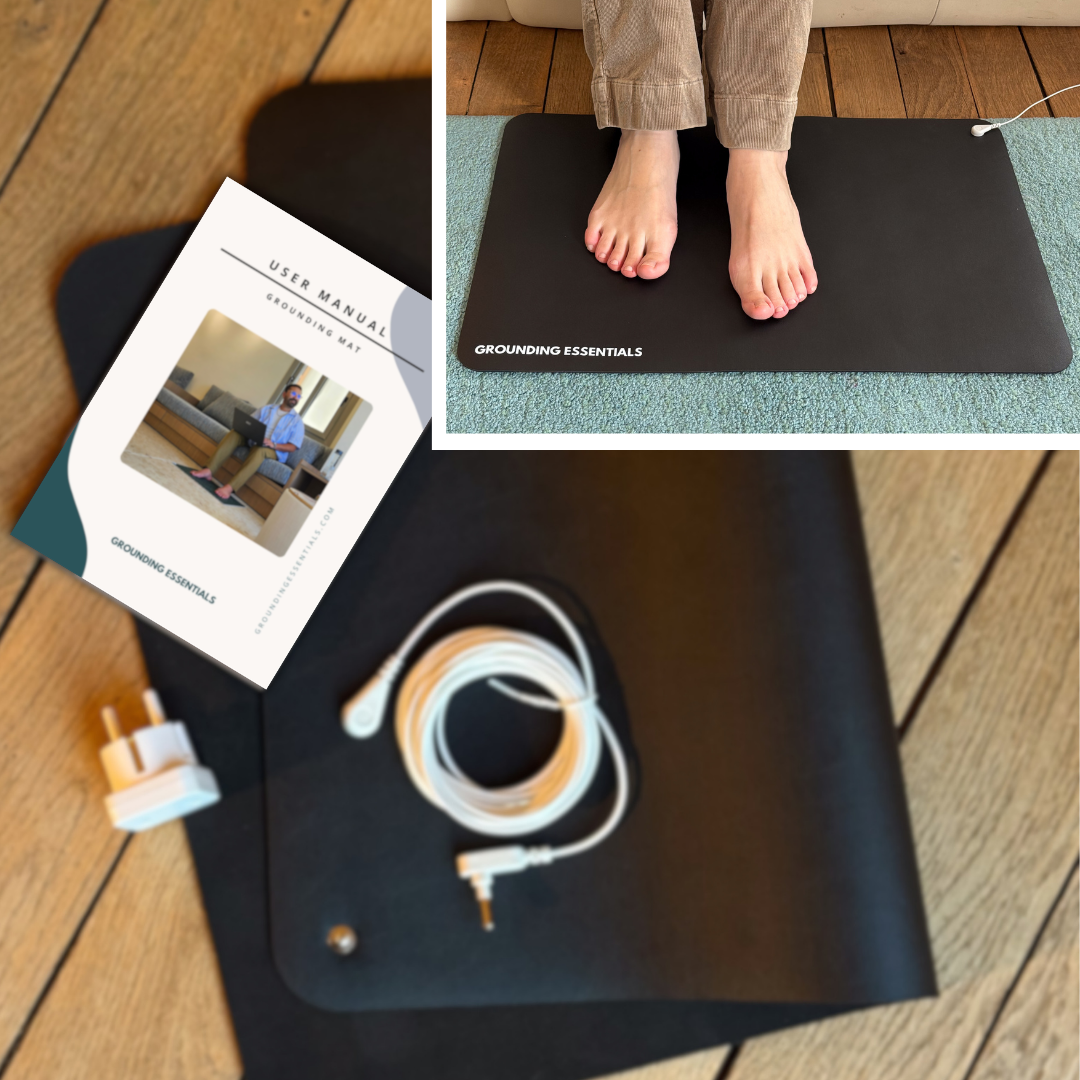
It also includes a 5-meter grounding cord, country-specific grounding plug, and user manual.
The Bed Mat is therefore a more permanent solution for someone whose main priority is overnight grounding.

Which Is Better for Sleeping?
Both products can be used while sleeping, but the experience is different.
Grounding Pad for Sleep
The Grounding Pad gives you a smaller, more targeted conductive area.
You can place it where your body naturally rests, such as beneath your legs, feet, back, or another comfortable area.
This can work well if you:
- Usually sleep in a fairly consistent position
- Want a smaller conductive surface
- Prefer soft conductive fabric
- Want something that can also be used outside the bedroom
Because the Pad is compact, positioning matters more.
If you move significantly across the mattress during the night, you may move away from the conductive area.
Grounding Bed Mat for Sleep
The Bed Mat provides more surface area, making it easier to maintain coverage as you change sleeping positions.
It is better suited to people who:
- Move frequently during sleep
- Want more mattress coverage
- Prefer leaving their grounding setup installed
- Want to continue using their normal fitted sheet
- Do not want to reposition the product regularly
If sleep is your main reason for grounding, the Bed Mat is generally the more dedicated option.
If you want one product that can move between sleep and daytime activities, the Pad is more flexible.

Which Is Better for Sitting and Working?
The Grounding Pad is the stronger fit for this use case.
Its compact 40 × 43 cm format allows it to be moved easily between a bed, desk, and chair. Grounding Essentials specifically positions it for sleep, work, and relaxation.
You might place it:
- Beneath your bare feet at a desk
- On an office chair
- On a lounge chair
- Beside you while relaxing
- On the bed while using a laptop
The Grounding Bed Mat is not designed for this type of frequent movement.
Its larger size and adjustable straps make more sense when it remains attached to the mattress.
If computer work is your main focus, you may also want to compare the Pad with a Grounding Mouse Mat or Grounding Mat.
Coverage: How Much Do You Actually Need?
A larger grounding surface is not automatically better.
The practical benefit of additional coverage is simply that you have more room to move while remaining over the conductive area.
For sleep, this can matter if you change position frequently.
The Grounding Pad provides targeted contact in a much smaller area.
The Bed Mat gives you more flexibility across the mattress.
Think about your actual routine.
If you tend to stay in one position, the Pad may provide enough coverage.
If you move around considerably, the Bed Mat may feel easier because you do not need to pay as much attention to placement.
Materials and Comfort
The products also feel different because they use different materials.
Grounding Pad
The Grounding Pad uses organic cotton with conductive silver fibers, creating a soft, breathable textile surface.
This can make it appealing if you prefer fabric contact or want something soft enough to use on a chair or bed.
Grounding Bed Mat
The Grounding Bed Mat uses a copper-infused conductive mat surface and is designed to sit underneath your regular bedsheet.
Because your usual sheet remains on top, you can keep the familiar texture of your preferred bedding.
This makes the choice partly about personal preference.
Choose the Pad if you prefer a soft conductive fabric.
Choose the Bed Mat if you prefer grounding beneath the bedding you already use.
Which Is Easier to Move?
The Grounding Pad wins easily on portability.
Its compact dimensions make it much easier to:
- Move between rooms
- Use in different chairs
- Carry between a bedroom and office
- Store when not in use
- Bring along when appropriate
The Bed Mat is intended to stay attached to the mattress.
Its adjustable straps are an advantage for sleep because they help keep the surface secure, but that also makes it less convenient to move several times a day.
If your grounding routine changes throughout the day, the Pad is likely to fit better.
Which Requires Less Maintenance?
The two products also have different care requirements.
The Grounding Pad is a conductive textile product, so it should be cared for according to its specific fabric instructions.
The Bed Mat uses a wipe-clean mat surface rather than a conductive cotton textile.
This can be convenient if you prefer to avoid adding another frequently washed fabric product to your routine.
Your decision may therefore come down partly to whether you prefer:
Soft fabric and portability, or
larger coverage and easier surface cleaning.
What About Grounding Bed Sheets and Half Sheets?
If sleep is your priority, these are not the only options.
A Grounding Bed Sheet provides broad conductive fabric coverage and replaces your ordinary fitted sheet.
A Grounding Half Sheet provides a smaller conductive textile area across part of the bed.
That gives you several distinct sleep setups:
Grounding Pad: small and highly flexible, suitable for sleeping, sitting, or working.
Grounding Bed Mat: larger mat-style product designed specifically for the mattress.
Grounding Half Sheet: partial conductive bedding coverage.
Grounding Bed Sheet: broad conductive fitted-sheet coverage.
Each product suits a different combination of coverage, feel, portability, and maintenance.

Which Product Fits Different Lifestyles?
Choose the Grounding Pad if you:
- Want one product for several activities
- Plan to use grounding while sleeping and working
- Prefer a soft cotton surface
- Have limited space
- Want something easy to reposition
- Prefer targeted contact
Choose the Grounding Bed Mat if you:
- Primarily want overnight grounding
- Move around while sleeping
- Want broader mattress coverage
- Prefer keeping your regular fitted sheet
- Want the product to remain installed
- Prefer adjustable straps that hold the mat in place
Neither product needs to be considered universally better.
They simply solve different practical problems.
Do You Need Both?
Not necessarily.
If you are new to grounding, starting with one product usually makes the most sense.
Choose the Pad if flexibility is your priority.
Choose the Bed Mat if sleep is clearly your priority.
If you eventually want dedicated grounding products for both daytime and nighttime use, you can expand your setup later.
The Essential Grounding Bundle, for example, combines a Grounding Bed Mat with a Grounding Mat for people who want separate sleep and daytime options.
But buying more products is not necessary simply to get started.
What About Setup?
Both products need the appropriate grounding connection when used indoors.
Connect the supplied grounding cord and plug according to the product instructions and use a properly grounded outlet.
If you are unsure about an unfamiliar outlet, a Grounding Socket Tester can help confirm whether it appears properly grounded.
The important distinction between these products is not their electrical setup. It is how and where you use them.
Grounding Pad vs. Bed Mat: Which Should You Choose?
Choose the Grounding Pad if you want a small, soft, versatile product that can move between your bed, desk, and chair.
Choose the Grounding Bed Mat if you want a larger, dedicated sleep setup that stays securely attached to your mattress.
For sleeping alone in one consistent position, the Pad may be enough.
For restless sleepers or people who prefer wider coverage, the Bed Mat may be more convenient.
For someone who wants grounding throughout different parts of the day, the Pad offers significantly more flexibility.
The best choice is not simply the larger product. It is the one that matches how you actually spend your time and is easy enough to use consistently.


Leave a comment
This site is protected by hCaptcha and the hCaptcha Privacy Policy and Terms of Service apply.