



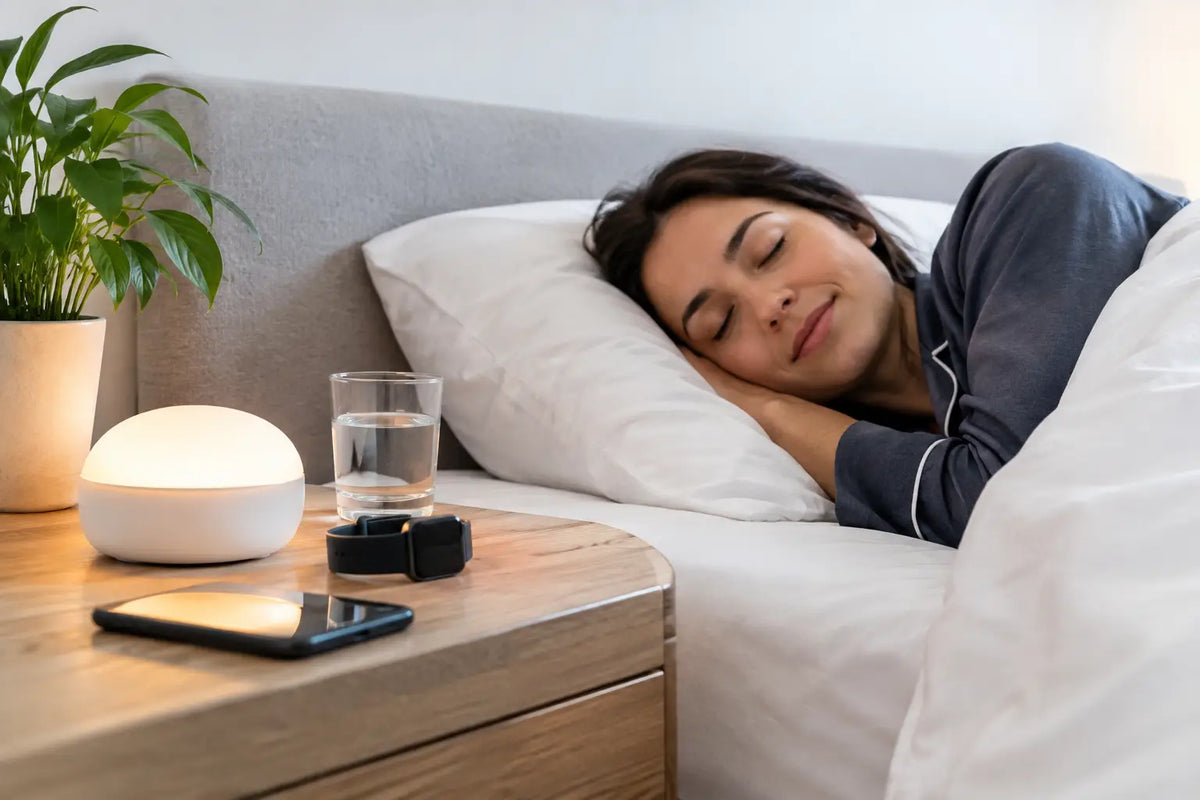
A smart sleep setup should make your evenings calmer, not turn bedtime into another performance project. The most useful sleep biohacking trends are not necessarily the most expensive or technical. They are the practices that help you protect your circadian rhythm, reduce disruption, and notice what genuinely improves your rest over time.
Wearables, temperature-controlled mattresses, red-light devices, mouth tape, supplements, and grounding sheets all compete for attention. Some have solid practical reasoning behind them. Others are promising but still need stronger independent research. The difference matters, especially when sleep problems are persistent or affecting your daytime health.
Start With the Sleep Biohacking Trends That Matter Most
The foundation is less exciting than a new gadget, but it is also where the largest gains tend to come from. Sleep is governed by a coordinated system involving light exposure, timing, body temperature, activity, stress, and environment. A device may support that system, but it cannot fully compensate for a highly irregular schedule or a bedroom that is too bright, hot, or noisy.
Circadian rhythm is becoming the main focus
One of the strongest trends is a shift away from simply chasing eight hours toward supporting a consistent body clock. Morning outdoor light, regular wake times, and dimmer light in the evening are practical ways to reinforce the brain's day-night signals.
Bright light late at night, especially close-range light from phones and tablets, can delay melatonin release for some people. That does not mean every screen must disappear after sunset. It means the timing, brightness, and content of your evening screen use deserve attention. A relaxing show at low brightness may affect you differently than an hour of stressful work messages in bed.
Try setting a stable wake time first. Then get outside for natural light soon after waking, even on cloudy mornings. This simple habit is often more valuable than adding another sleep product.
Cooling the bedroom, not just the pillow
Your body naturally lowers its core temperature as it prepares for sleep. This helps explain the popularity of cooling mattresses, breathable sheets, fans, and temperature-controlled sleep systems. Research on sleep physiology supports the idea that a cooler environment can help many people fall asleep and stay asleep more comfortably.
The best temperature is personal. Many adults sleep well in a room around 60 to 67°F, but bedding, humidity, hormones, clothing, and individual preference all change the equation. Rather than aiming for a perfect number, make gradual adjustments and pay attention to whether you fall asleep faster or wake less often.
A low-cost experiment can be enough: lighter bedding, better ventilation, or a warm shower one to two hours before bed. A warm shower may sound counterintuitive, but the cooling that follows can support the body’s natural temperature drop.
Wearables: Useful Data, With Limits
Sleep trackers remain one of the biggest biohacking categories. Watches, rings, and under-mattress sensors estimate sleep duration, movement, resting heart rate, heart rate variability, and sleep stages. They can reveal patterns that are hard to see otherwise, such as a later bedtime after alcohol, elevated nighttime heart rate after a heavy meal, or consistently short sleep on workdays.
But consumer devices do not measure sleep the same way a clinical sleep study does. Most infer sleep stages from movement and cardiovascular signals rather than directly measuring brain activity. Their trends can be informative, while their precise stage-by-stage scores should be treated cautiously.
There is also a downside known informally as orthosomnia: becoming so focused on sleep scores that the data itself creates anxiety. If checking your readiness score makes you feel tired before the day begins, the tool is no longer serving you.
Use wearable data as a weekly pattern finder, not a nightly verdict. Look at bedtime consistency, total sleep time, and how you feel and function during the day. Those signals usually matter more than whether an app labeled 22% of your night as deep sleep.
The Return of Low-Tech Nervous System Support
The most durable sleep biohacking trends often look surprisingly simple: breathing exercises, gentle stretching, journaling, and reducing stimulation before bed. These practices are gaining attention because stress and hyperarousal are common reasons people feel tired but cannot settle.
A short wind-down routine gives the nervous system a repeated cue that the day is ending. It could be ten minutes of reading, slow breathing, a warm drink without caffeine, or writing tomorrow’s tasks on paper so they are not rehearsed in your mind at 2 a.m.
The method matters less than repetition. Avoid turning relaxation into another metric to optimize. If a technique feels forced, choose one that is easier to keep doing.
Grounding as a sleep-environment experiment
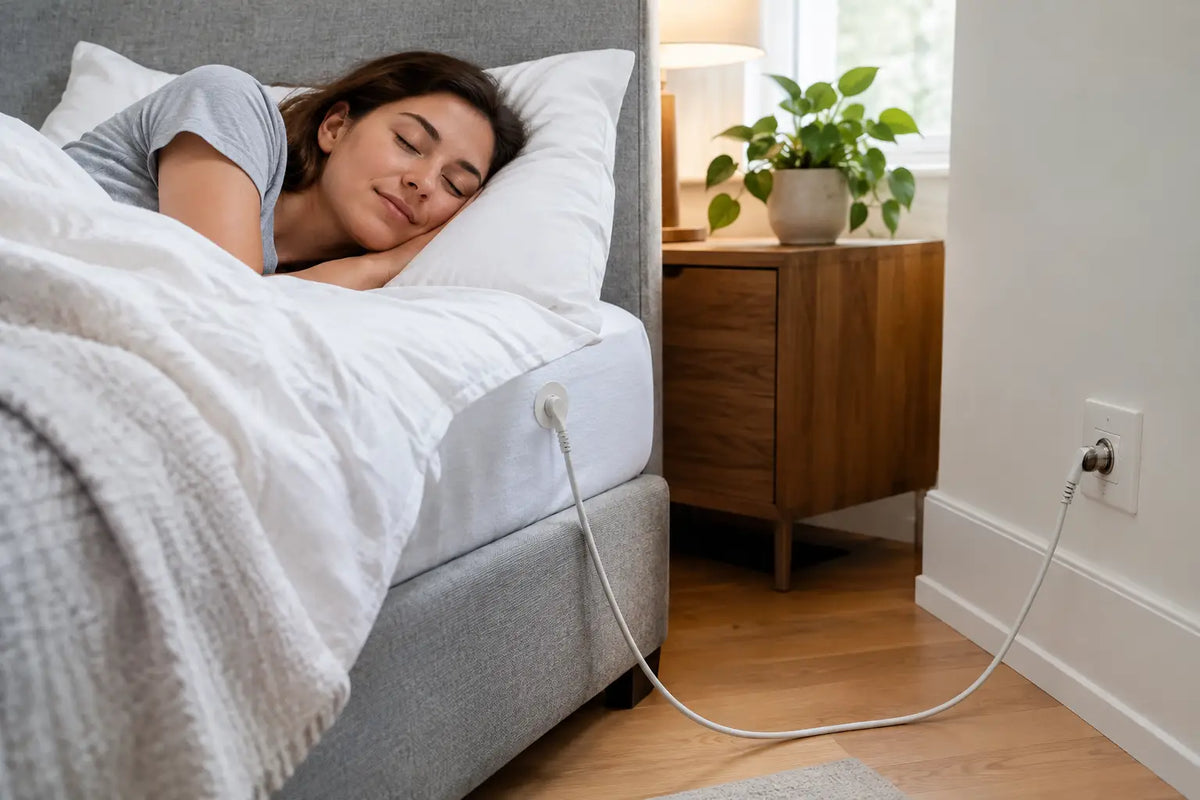
Grounding, also called earthing, is receiving growing interest among people who want a non-pharmaceutical addition to their recovery and sleep routine. Grounding products connect the body to the earth through a properly grounded outlet, allowing the user to remain connected while resting indoors.
Small studies and early research have explored grounding in relation to sleep, stress markers, pain, and recovery. Some findings are encouraging, but the body of research is still limited in size and quality. It is not appropriate to view grounding as a treatment for insomnia, chronic pain, or any medical condition.
Still, it can be a reasonable personal experiment for adults who are curious, especially because it fits naturally into an existing bedtime routine. A grounding sheet, bed mat, or sleep pad is designed for regular skin contact while you rest. Correct setup is essential: use a properly grounded outlet and follow the product instructions, ideally confirming the outlet with a tester if you are unsure.
At Grounding Essentials, we encourage customers to approach grounding with curiosity and realistic expectations. Track your experience over several weeks, keep the rest of your routine fairly stable, and focus on practical observations such as bedtime comfort, relaxation, and perceived sleep quality. Individual experiences vary.
Supplements and Sleep Devices Need More Caution
Magnesium, melatonin, glycine, and herbal products remain popular, but “natural” does not always mean appropriate for everyone. Supplement quality varies, and some ingredients can interact with medications or worsen certain conditions. Melatonin is particularly easy to misuse: it is primarily a timing signal, not a sedative, and higher doses are not automatically better.
Talk with a qualified clinician or pharmacist before using supplements if you are pregnant, managing a health condition, or taking medication. This is especially important if sleep changes suddenly, includes loud snoring or breathing pauses, or leaves you dangerously sleepy during the day.
Other trends deserve a similar level of care. Mouth taping may be risky for people with nasal obstruction, sleep apnea, respiratory conditions, or anxiety around breathing. Red-light devices may create a relaxing ritual, but claims about dramatic sleep effects often run ahead of the evidence. More technology is not always better technology.
Build a Routine Before You Build a Collection
The most effective approach is to test one change at a time. Start with a consistent wake time and morning light. Next, improve bedroom darkness, temperature, and noise. Then add a wind-down practice that feels genuinely sustainable. If you want to explore a wearable, grounding product, or other tool, introduce it after the basics are in place.
Keep a brief record for two weeks. Note your bedtime, wake time, caffeine timing, alcohol use, exercise, and a simple morning rating of how restored you feel. This is enough information to spot useful patterns without making sleep feel like a laboratory project.
If you regularly struggle to fall asleep, wake frequently, snore loudly, gasp during sleep, or feel unrefreshed despite adequate time in bed, seek medical guidance. Sleep apnea, restless legs syndrome, depression, medication effects, and other issues deserve proper assessment rather than endless self-experimentation.
Tonight, choose one adjustment that lowers friction: put your phone outside the bedroom, open the curtains for morning light, cool the room slightly, or prepare your sleep environment before you feel exhausted. The best sleep biohack is the one you can repeat calmly, night after night.


Commenta
Questo sito è protetto da hCaptcha e applica le Norme sulla privacy e i Termini di servizio di hCaptcha.