



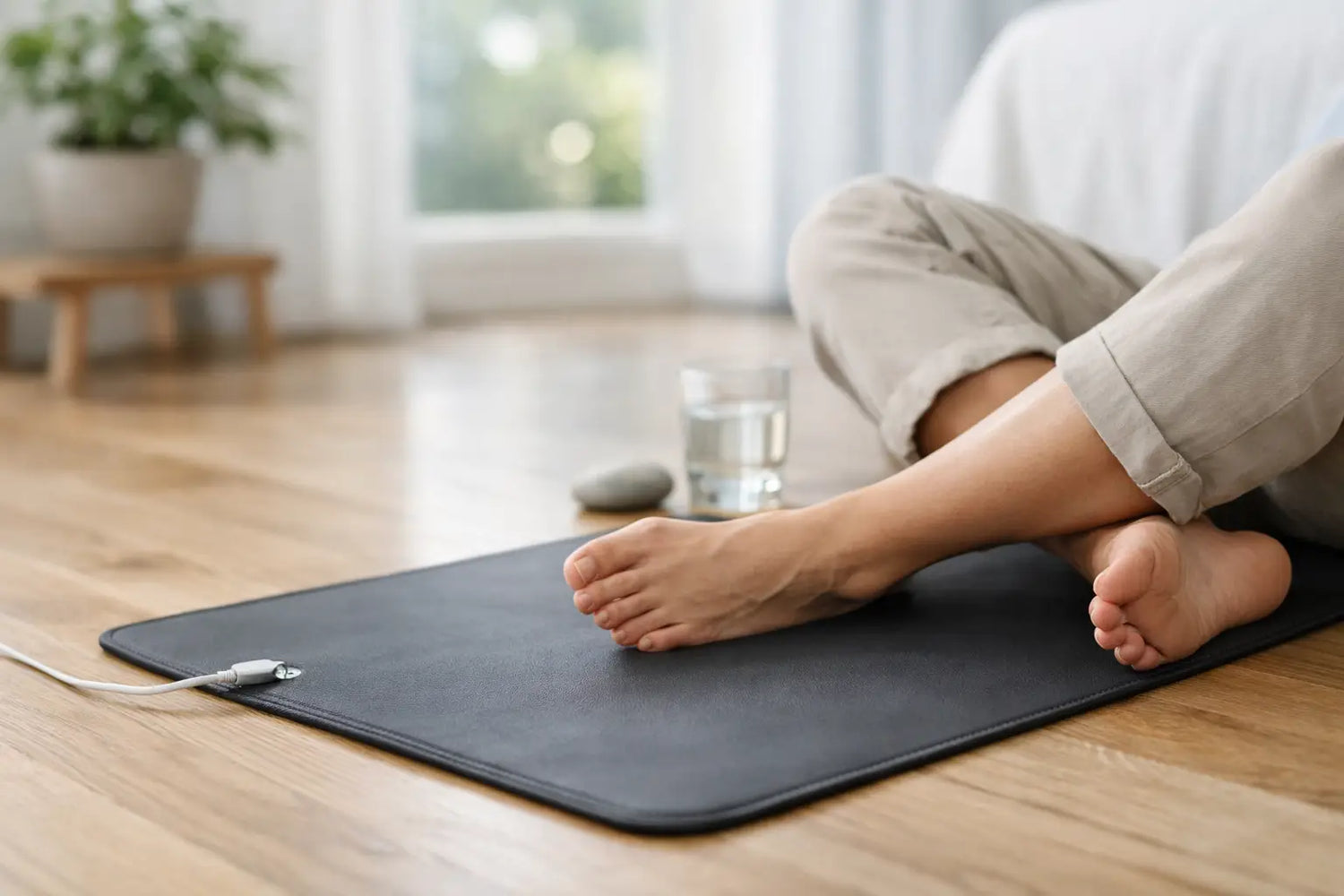
A grounding mat is designed to bring one simple part of being barefoot outdoors into your home, office, or bedroom: direct contact with the Earth's electrical potential. For people who spend most of the day in shoes, on upper floors, or indoors, it offers a practical way to explore grounding without changing their entire routine.
The concept is straightforward. The experience and the research are more nuanced. A grounding mat is not a medical device, and it should not replace care for pain, sleep problems, or any health condition. But when it is made well, connected correctly, and used consistently, it can be a useful addition to a broader wellbeing routine.
What is a grounding mat?
A grounding mat, sometimes called an earthing mat, is a conductive mat that connects to the ground port of a properly grounded electrical outlet. The mat itself does not use electricity to power, heat, stimulate, or charge your body. Instead, it provides a conductive path between your skin and the Earth's natural electrical potential.
Most indoor grounding mats have a conductive surface made with materials such as carbon or conductive silver fibers. A cord connects the mat to the ground port in an outlet through a dedicated grounding plug. In some setups, a grounding rod placed in soil outdoors can be used instead, provided it is installed according to the product instructions.
When bare skin touches the conductive surface, the setup is intended to recreate the electrical connection that occurs when you stand barefoot on grass, soil, sand, or unpainted concrete that is in contact with the Earth.
How does a grounding mat work?
The Earth is a vast electrical conductor with a stable electrical potential. When your body makes direct contact with it, your body voltage relative to ground can change. This is measurable with a body-voltage meter and is one reason people are interested in indoor grounding products.
A properly connected grounding mat extends that ground reference indoors. It does not send household current through the mat. The cord connects only to the outlet's grounding port, not to the live electrical contacts. That distinction matters.
In practical terms, the mat works only when three conditions are met: the outlet is actually grounded, the cord is securely connected, and bare skin touches the conductive surface. Socks, thick clothing, blankets, and placing the mat beneath a nonconductive surface can reduce or prevent contact.
Grounding is also not the same as EMF shielding. A grounding mat may affect the electrical potential of your body while you are touching it, but it is not a complete solution for reducing every electrical field in a room.
Why do people use grounding mats?
Many people first try a grounding mat because they want better sleep, a calmer wind-down routine, or support for recovery after demanding days. Others use one beneath their feet at a desk, on the couch while reading, or in bed overnight.
The appeal is partly practical. Walking barefoot outside can be enjoyable, but it is not always convenient in cold weather, urban settings, apartment buildings, or during long workdays. A mat gives you a consistent indoor option.
Individual experiences vary. Some users report feeling more relaxed or sleeping more comfortably, while others notice little or no obvious difference. Customer experiences can be valuable personal feedback, but they are not proof that a product will create the same outcome for everyone.
What does the research say about grounding?
Research on grounding is promising in some areas, but it remains an emerging field. Small clinical studies and pilot studies have explored potential effects on sleep, stress markers, pain perception, blood flow, heart-rate variability, cortisol rhythms, and inflammation-related processes. Some findings suggest that grounding may influence physiological measurements, including body voltage and certain markers associated with stress and recovery.
However, many published studies are small, use different protocols, or need replication in larger, well-controlled trials. That means it is too soon to make broad medical claims or treat grounding as a cure for insomnia, chronic pain, inflammation, anxiety, or any other condition.
A balanced view is the most useful one: grounding is a low-effort wellness practice with a plausible electrical mechanism and an evolving research base. It may be worth trying if you are curious, especially alongside well-established habits such as a consistent sleep schedule, regular movement, daylight exposure, nutritious meals, and appropriate medical care.
How to use a grounding mat safely
Setup matters more than most people realize. Before using a grounding mat, test the outlet with an outlet checker designed to confirm that the ground connection is functioning correctly. Older homes, damaged outlets, extension cords, and certain adapters can affect grounding. Never assume that an outlet is grounded simply because it has a three-prong shape.
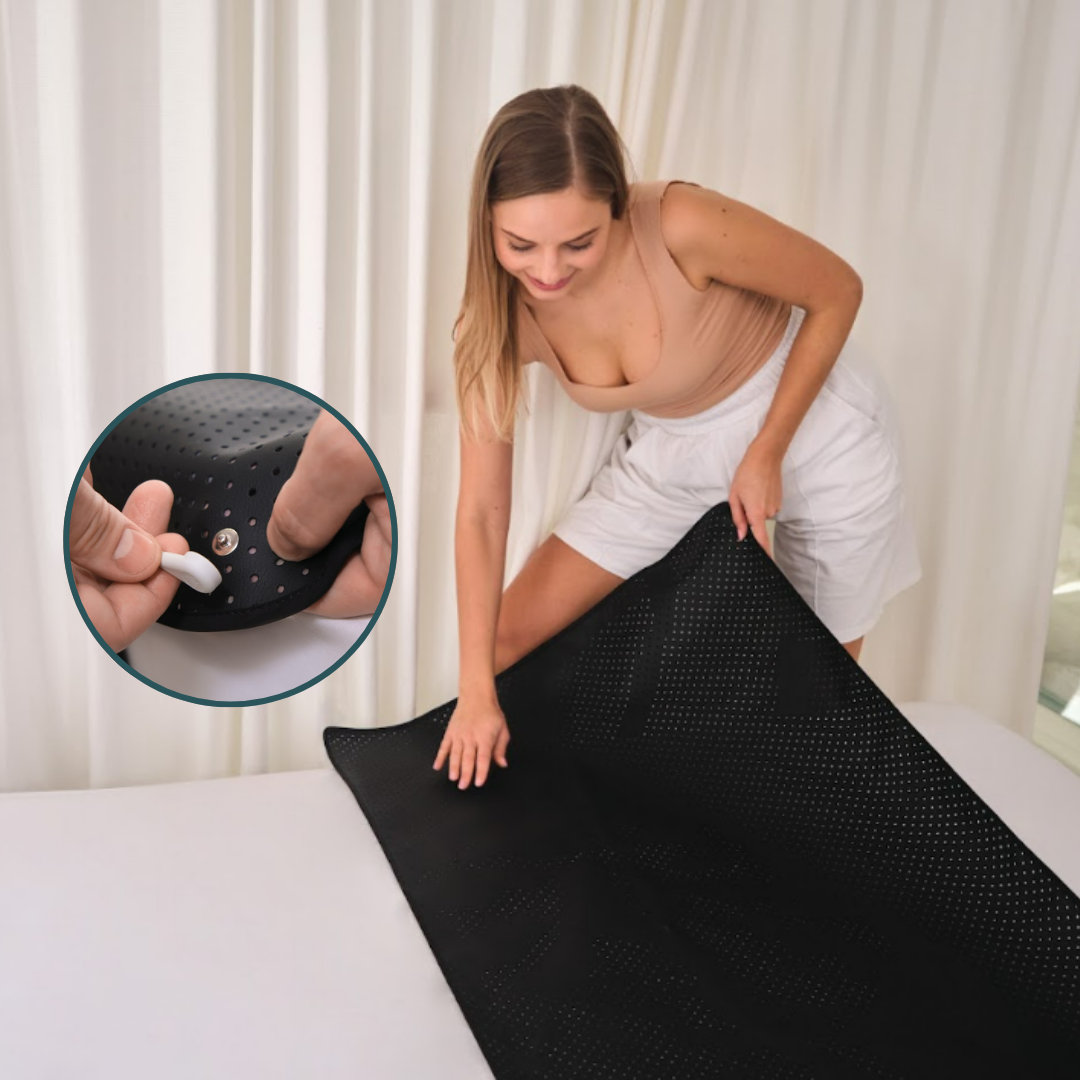
Connect the grounding cord to the mat, then insert the grounding plug into the outlet's ground port as instructed. The product should be designed specifically for grounding use. Do not improvise with exposed wires, alter plugs, or connect a mat to electrical components that are not intended for this purpose.
For a desk setup, place the mat where your bare feet, hands, or forearms can touch it comfortably. For relaxation, use it beneath bare feet while sitting. For sleep, a bed mat or sleep pad is usually more practical than a small desk mat because it is designed to stay in contact with your body through the night.
Start with a simple routine. Try 20 to 30 minutes while working, reading, or relaxing, then decide whether you want to use it longer. There is no universally proven “correct” duration. Consistency is more useful than chasing a perfect number of hours.
If you use a pacemaker, implanted medical device, or have concerns about electrical products in your environment, speak with a qualified healthcare professional before use. And if a symptom is new, severe, persistent, or worsening, seek medical advice rather than relying on a wellness product.
Choosing the right grounding mat
Not every grounding product suits every routine. A compact mat can be ideal for a home office, especially if you want contact during computer work. A larger floor mat may work better for stretching, meditation, or time on the couch. If sleep is your main focus, look for a purpose-built grounding sleep pad, fitted sheet, or pillowcase that can maintain comfortable skin contact overnight.
Quality is worth considering because grounding products are often used daily. Look for durable conductive materials, clear connection instructions, a cord built for your region's outlets, and a way to test the setup. Grounding Essentials includes compatible connection options and conductive testers to help users verify that their setup is working as intended.
Also consider care requirements. Conductive fabrics and mats generally need gentle cleaning. Harsh detergents, bleach, fabric softeners, and oily lotions can leave residues or affect conductivity over time. Follow the specific care instructions supplied with your product rather than treating it like an ordinary yoga mat or blanket.
A practical way to find out if it fits your routine
The best way to evaluate a grounding mat is to make the experiment simple and personal. Use it at the same time each day for two or three weeks, such as during your evening reading routine or while sitting at your desk. Keep brief notes on sleep, relaxation, soreness, or how easy it feels to stick with the habit.
Try not to change ten other parts of your routine at once. Wellness changes are easier to understand when you can see what is actually helping. A grounding mat may become a calming, consistent part of your day, or you may decide that barefoot time outdoors is the approach you prefer. Either way, start with a properly grounded setup, realistic expectations, and attention to how you genuinely feel.

Dejar un comentario
Este sitio está protegido por hCaptcha y se aplican la Política de privacidad de hCaptcha y los Términos del servicio.