




A grounding product can be easy to choose until you are standing beside your bed, wondering whether a smaller sleep pad will be enough or whether a larger mat makes more sense. In the sleep pad versus bed mat decision, the best option is rarely the biggest one. It is the one you will set up correctly, keep in contact with your body, and use consistently.
Both products are designed to connect you to the ground through a properly grounded outlet. They are not medical devices, and they should not replace medical care, sleep treatment, movement, or the other fundamentals of a healthy routine. But for people exploring grounding as a practical wellness habit, the right format can make nightly use far more comfortable.
Sleep Pad Versus Bed Mat: The Core Difference
The terminology is not always consistent between brands, so check the listed dimensions and materials rather than relying on the name alone. Generally, a grounding sleep pad is a compact conductive pad intended for direct skin contact while you sleep. It often sits beneath your fitted sheet, positioned under the torso, hips, legs, or feet.
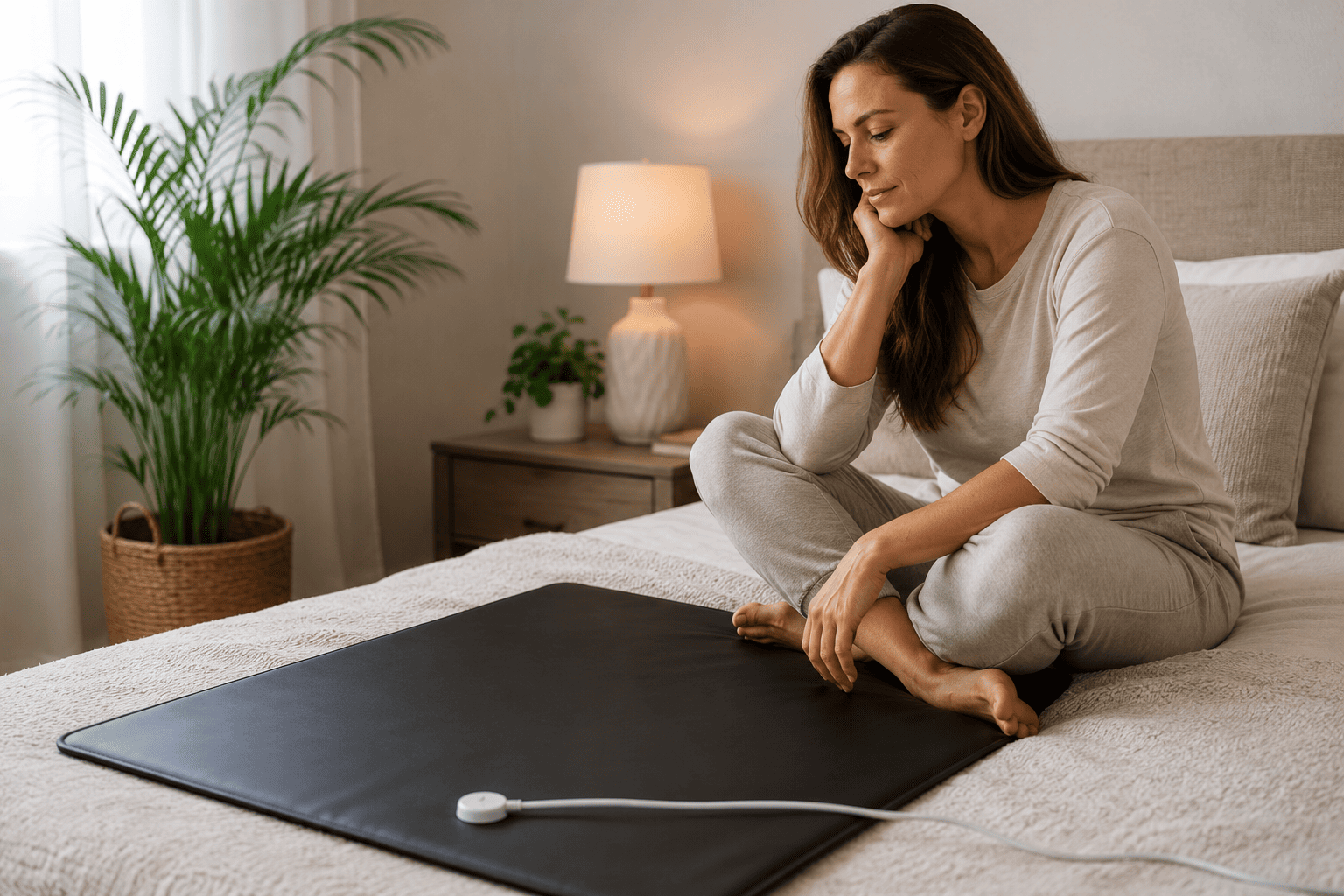
A grounding bed mat is usually a broader format that covers more of the mattress surface. It may be made to fit one side of a bed, a substantial section of a mattress, or nearly the full sleeping area. More coverage means more flexibility in where you sleep, but it can also mean more material to clean, store, and position.
Neither design is automatically more effective for every person. Grounding depends on conductive skin contact and a verified grounding connection, not on covering every inch of the mattress. A smaller pad can be a sensible choice when it stays in place under the area where you naturally sleep.
When a Sleep Pad Is the Better Choice
A sleep pad suits people who want a focused, low-profile setup. If you sleep mostly in one position and tend to stay on one side of the bed, you may only need coverage beneath your hips, back, calves, or feet. This is particularly useful for solo sleepers, people using a smaller bed, or anyone who prefers to test a grounding routine before changing their entire sleep surface.
The smaller footprint has practical advantages. It is easier to reposition, simpler to pack for travel, and usually requires less maintenance. Many people also find it less noticeable beneath a fitted sheet. If your mattress already has a texture, topper, or carefully chosen bedding system, a compact pad can introduce grounding without changing the overall feel of the bed.
There is a trade-off. A pad offers less room for movement. If you turn frequently, sleep diagonally, or share a bed with a partner, you may wake up outside its coverage area. That does not make the pad ineffective. It simply means consistent contact may be less predictable.
When a Bed Mat Makes More Sense
A bed mat is often the more convenient answer for restless sleepers and people who want broader coverage without thinking about placement each night. If you regularly shift from your back to your side, move toward the edge of the mattress, or share a larger bed, extra surface area can make the experience feel more effortless.
This option may also appeal to couples. Depending on the mat's size and placement, two people may be able to use the same grounded surface. Check the exact dimensions before assuming it will cover both sides of a mattress. A product described as a bed mat may still be designed primarily for one sleeper.
The main consideration is comfort. Larger mats can be more noticeable under thin bedding, especially if the material has a firmer or smoother feel than the mattress. Most people place a fitted sheet over the mat, but the sheet must be thin enough to allow conductive contact. Thick mattress pads, waterproof protectors, and multiple heavy layers between your body and the mat can reduce or prevent contact.
Coverage Matters, but Contact Matters More
It is easy to assume that a larger mat is inherently the stronger choice. In practice, the priority is reliable skin contact. A conductive grounding product works by allowing the body to connect with the grounding path provided by the cord and a properly grounded outlet.
You do not need to sleep naked or remove all bedding. A thin, natural-fiber fitted sheet is commonly used over a grounding pad or mat. Sweat and normal skin moisture can support conductivity, although individual conditions vary. Heavy synthetic bedding and thick insulating layers are more likely to interfere.
If you are unsure whether your setup is working, use a conductive tester according to its instructions and verify the outlet before connecting the product. A tester cannot diagnose a home electrical system, but it can help confirm whether an outlet appears properly grounded. If an outlet shows a fault, do not use it for grounding until a qualified electrician has addressed the issue.
What the Research Can and Cannot Tell You
Interest in grounding has grown because small studies and preliminary research have explored possible effects on sleep, stress, pain perception, inflammation markers, cortisol patterns, and body voltage. Some people also report feeling more relaxed at night or noticing changes in their recovery routine.
That research is interesting, but it is not yet strong enough to promise a particular outcome. Many studies are small, methods differ, and more independent, high-quality clinical research is needed. Individual experiences can also be influenced by changes that often happen alongside a new bedtime routine, such as more consistent sleep hours, less late-night screen time, or greater attention to recovery.
A balanced approach is to treat grounding as one supportive habit to explore, not a cure or a substitute for professional care. If you have persistent insomnia, significant pain, a chronic condition, or concerns about medication, speak with a qualified healthcare professional. People with implanted electrical medical devices should also seek medical guidance before using grounding products.
Choose Based on How You Actually Sleep
Before buying, consider the last week of your sleep rather than your ideal bedtime routine. Do you stay in one spot, or do you migrate across the bed? Do you sleep alone, with a partner, or with a child or pet who may shift the bedding? Do you use a thick mattress protector? These details matter more than product labels.
Choose a sleep pad if you want a discreet, flexible option and usually sleep in a consistent position. Choose a bed mat if you want wider coverage, move often, or prefer a setup that needs less precise placement. If you share a bed, measure the usable area of the mattress and compare it with the mat dimensions before making a decision.
Material preferences matter too. Some grounding products use conductive carbon or silver-based fabrics, while others use conductive leatherette-style surfaces. Fabric options may feel softer, while wipe-clean mats can be convenient for some households. Follow the product-specific care instructions carefully. Harsh chemicals, bleach, fabric softener, and high heat can damage conductive materials over time.
Set Up Either Option Correctly
A well-chosen product still needs a sound setup. Place the sleep pad or bed mat on the mattress, connect the grounding cord firmly to the product, and plug the other end into the grounding port of a verified grounded outlet. The cord does not supply household electricity to your body. It is designed to provide a grounding connection only.
For the best chance of consistent contact, keep the conductive surface beneath a thin fitted sheet and avoid adding thick insulating layers over it. Make sure the cord is routed where it will not create a trip hazard or become strained when the bed moves. Check the cord and connector periodically for visible damage.
A simple first-week routine can help you evaluate the experience fairly:
- Use the product for several consecutive nights rather than judging it after one night.
- Keep your normal sleep schedule, caffeine habits, and bedding as consistent as possible.
- Notice practical factors first, including comfort, temperature, movement, and whether the setup stays in place.
- Keep brief notes on your own sleep and recovery experience without expecting a specific result.
Start by measuring your bed, checking your outlet, and choosing the level of coverage that matches how you sleep tonight. A comfortable, correctly connected setup gives you the clearest way to decide whether grounding belongs in your own evening routine.

Leave a comment
This site is protected by hCaptcha and the hCaptcha Privacy Policy and Terms of Service apply.