



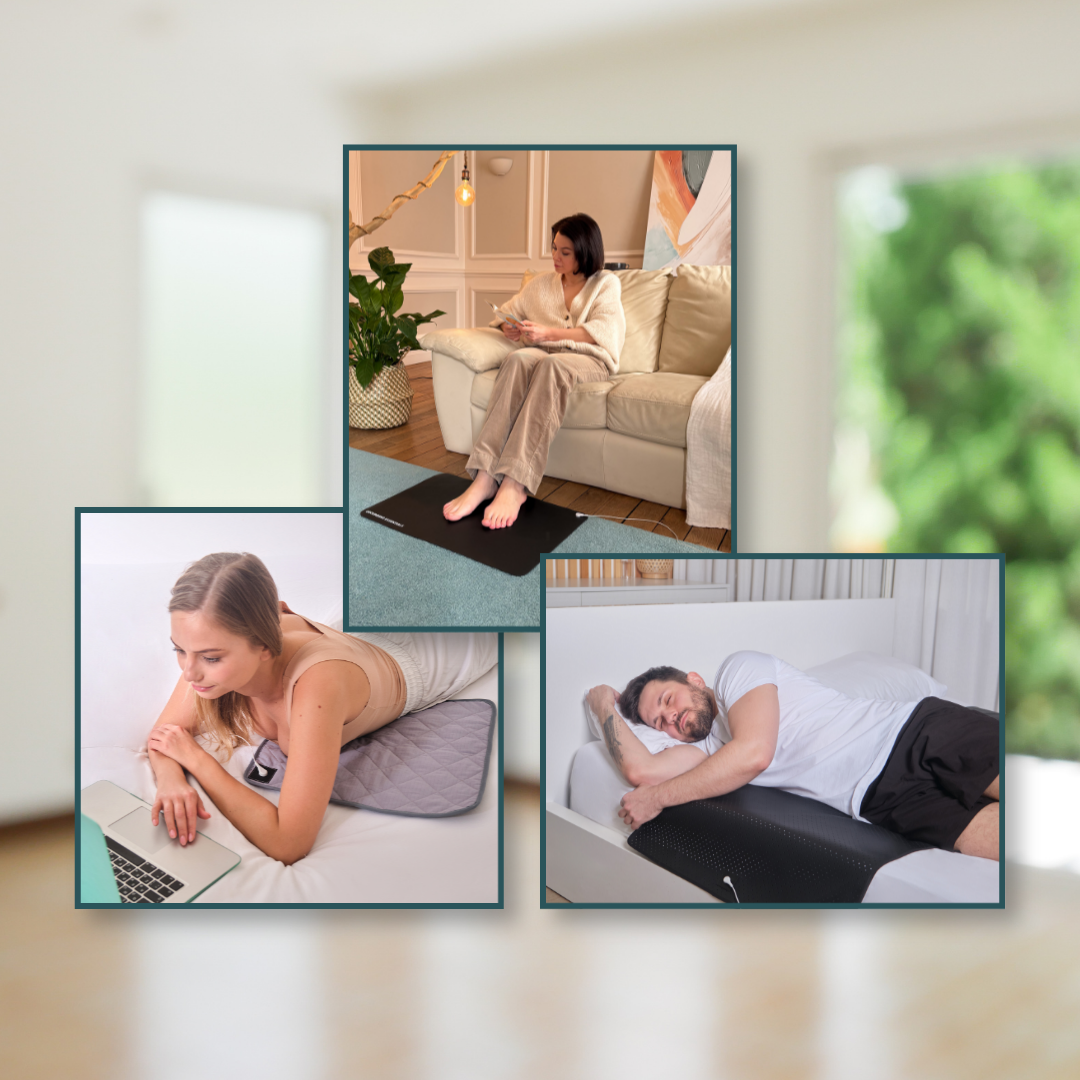
The best grounding product is not necessarily the largest, most expensive, or most popular option. It is the one that fits naturally into the part of your day you can repeat consistently.
For someone focused on sleep, a Grounding Bed Sheet or Grounding Bed Mat may make the most sense.
For someone who spends long hours at a desk, a Grounding Mat, Grounding Mouse Mat, or Grounding Pad may fit more naturally.
And if you prefer grounding outdoors, Grounding Barefoot Shoes, Sandals, or Socks may suit your routine better than another indoor product.
The goal is simple: start with where you already spend your time, then choose the product that makes grounding easy to maintain.
Grounding research is still developing, and individual experiences vary. These products should be viewed as wellness tools rather than treatments for sleep problems, pain, inflammation, or another health condition.
Start With Your Routine, Not the Product
Before comparing materials, sizes, or bundles, ask one question:
When am I most likely to use grounding consistently?
You might already have an obvious answer.
If you want grounding to happen while you sleep, start with bedding.
If you work from home for several hours a day, start with a desk-friendly product.
If you are active outdoors, grounding footwear may be more useful.
If you want both daytime and nighttime options, a bundle may make more sense than buying individual products separately.
Choosing by routine helps prevent a common problem: buying a product that seems useful but does not fit naturally into daily life.

Best for a Consistent Nighttime Routine: Grounding Bed Sheet
A Grounding Bed Sheet is one of the simplest choices for people who want grounding built directly into their sleep routine.
It replaces your regular fitted sheet and provides a broad conductive surface through silver fibers woven into the fabric.
Because the conductive area covers much of the mattress, you do not need to remain in one exact sleeping position throughout the night.
A Grounding Bed Sheet can be a good fit if you:
- Sleep in the same bed most nights
- Prefer grounding through conductive fabric
- Want broad contact while sleeping
- Do not mind following specific washing and care instructions
The main trade-off is maintenance. Conductive bedding needs more thoughtful washing than an ordinary cotton sheet because bleach, fabric softeners, and certain residues can affect conductivity.
For detailed care instructions, see the Grounding Bed Sheet washing guide.
If you already want a sheet together with other grounding products, the Grounding Bed Sheet Bundle may also be worth comparing before buying products individually.
Best for Overnight Grounding Without Replacing Your Sheet: Grounding Bed Mat
A Grounding Bed Mat may be a better choice if you want to keep using your existing fitted sheet.
The mat sits across the mattress underneath compatible bedding and is secured with adjustable straps.
Unlike conductive fabric sheets, the Bed Mat has a wipe-clean conductive surface, so its care routine is different from laundering grounding bedding.
This option may suit you if you:
- Want to keep the familiar feel of your existing sheets
- Prefer a lower-maintenance sleep product
- Want a product that stays secured to the mattress
- Share a bed but do not necessarily want a full conductive fitted sheet
Natural fabrics such as cotton, linen, bamboo, wool, or silk are generally better suited for use over the Bed Mat than thick synthetic or waterproof layers.
If you are deciding between the two options, see the comparison of Grounding Bed Sheets vs. Grounding Bed Mats.
Best for Partial Bed Coverage: Grounding Half Sheet
A Grounding Half Sheet offers conductive fabric without replacing the entire fitted sheet.
It provides a defined grounding area across part of the bed, making it useful for people who want a smaller sleep setup.
A Half Sheet may be a good fit if you:
- Want conductive fabric but not a full fitted sheet
- Prefer a smaller area of contact
- Want something easier to remove and move between beds
- Are looking for a more compact sleep option
This can also be useful for people who travel regularly and prefer bringing a familiar grounding bedding product with them, although any unfamiliar outlet should be checked before use.
Best for a Small Sleep Upgrade: Grounding Pillowcase
A Grounding Pillowcase is one of the least disruptive ways to add grounding to your existing bedding.
Instead of changing the entire bed, you replace or add a conductive pillowcase that allows contact around the face, neck, hands, or arms while sleeping.
This can make sense if you:
- Want to start with a smaller sleep product
- Prefer not to change your fitted sheet
- Naturally sleep with your hand or arm near your pillow
- Want an easy-to-pack product for travel
Because the conductive area is smaller, your contact will depend more on how you sleep.
That does not make a Pillowcase better or worse than a full sheet. It simply suits a different routine.

Best for Desk Work and Everyday Daytime Use: Grounding Mat
A Grounding Mat is one of the most flexible ways to introduce grounding during the day.
You can place it beneath your bare feet while working, beside a sofa while relaxing, or wherever your hands, legs, or other exposed skin can make comfortable contact.
Grounding Essentials also offers the Grounding Mat – Midnight Moss, a 40 × 60 cm mat designed for home and work use. The current product range includes both standard Grounding Mats and the Midnight Moss version.
A Grounding Mat may suit you if you:
- Work from home or spend long periods at a desk
- Want one product that can move between different rooms
- Prefer daytime rather than overnight grounding
- Want something easy to wipe clean and reposition
For many first-time users, this is one of the simplest ways to see whether grounding fits naturally into everyday life.
Best for Computer Work: Grounding Mouse Mat
If most of your day is spent using a computer, a Grounding Mouse Mat provides a smaller, more targeted option.
Instead of keeping your feet on a larger mat, you maintain contact through your hand or wrist while using your mouse.
This can be more practical for people who:
- Wear shoes or socks while working
- Do not have enough floor space for a larger mat
- Want a grounding product integrated directly into their workstation
- Prefer hand contact rather than foot contact
The Mouse Mat is currently part of the Grounding Essentials Shop All range alongside the larger Grounding Mats and Grounding Pad.
Best for Flexible, Smaller Contact: Grounding Pad
A Grounding Pad provides another compact option.
It can be positioned beneath your feet, on a chair, on a bed, or wherever a smaller conductive surface is useful.
Compared with a Mouse Mat, it is less tied to computer use. Compared with a full Grounding Mat, it is easier to reposition.
This makes it a practical option for people who want a flexible product without committing to a larger surface.

Best for Outdoor Grounding: Barefoot Shoes and Sandals
Not every grounding routine needs to happen indoors.
Grounding Barefoot Shoes are designed for people who want barefoot-style footwear while walking outdoors.
They combine a wide toe box and flexible, zero-drop design with a conductive pathway intended to maintain contact with suitable conductive ground surfaces.
Grounding Sandals offer a more open alternative for warm weather or casual outdoor use.
These options make the most sense if:
- You already walk outdoors regularly
- You prefer movement over sitting with a grounding mat
- You enjoy barefoot-style footwear
- You want grounding to fit into walks, travel, or everyday outdoor activities
They are not intended to replace an indoor grounding sheet or mat. They simply offer another way to fit grounding into a different part of your day.
Where Grounding Socks Fit
Grounding Socks are best viewed as a supporting product rather than the starting point for most people.
They contain conductive silver fibers and can be paired with compatible grounding footwear or grounding surfaces.
For example, they may be useful if you want to keep your feet covered while using compatible Grounding Shoes, Sandals, or mats.
If bare-foot contact is already comfortable for you, you may not need them.
That is why Grounding Socks make more sense as an accessory to an existing routine than as the first grounding product most people buy.

Grounding Product Recommendations by Goal
If your main goal is nighttime grounding, start with a Grounding Bed Sheet, Half Sheet, Bed Mat, or Pillowcase.
If you want the broadest conductive fabric coverage, choose the Bed Sheet.
If you want to keep your existing fitted sheet and simplify maintenance, the Bed Mat is likely the better fit.
If you want partial sleep coverage, consider a Half Sheet.
If you want the smallest change to your bed, start with a Pillowcase.
For desk work, choose between a Grounding Mat and Mouse Mat based on whether foot or hand contact feels more natural.
For relaxation around the home, a Grounding Mat or Grounding Pad offers more flexibility.
For walking and outdoor routines, Barefoot Shoes or Sandals make more sense than another indoor mat.
And if you know from the beginning that you want grounding in several parts of your day, consider whether a bundle provides a better starting point.
When a Bundle Makes More Sense
Bundles are most useful when the products inside them already match the routine you want.
The Essential Grounding Bundle currently combines a Grounding Bed Mat for nighttime use with a Grounding Mat for daytime use, plus the necessary connection accessories.
That makes it a logical choice for someone who wants one setup in bed and another at a desk or relaxation area.
The Recharge While Sleeping Bundle is much more sleep-focused. It currently includes a Grounding Bed Sheet, two Grounding Pillowcases, a Socket Tester, Conductive Tester, cords, plugs, and a user manual.
The Ultimate Grounding Starter Pack offers the broadest setup. It combines a Large Grounding Bed Mat, Grounding Mat, two Pillowcases, both testing tools, cords, plugs, and a user manual, covering both daytime and nighttime grounding.
A bundle is not automatically the best value for everyone.
If you know you only want grounding while you work, buying a Mat or Mouse Mat alone may make more sense.
Choose a bundle because you will genuinely use its components, not simply because it contains more products.
What to Check Before Buying
Once you know which format fits your routine, compare the practical details.
Size
For bedding, check your actual mattress size before ordering.
For mats, measure the area where you plan to use the product.
A Grounding Mat that fits neatly beneath your desk is more useful than a larger one that constantly gets moved out of the way.
Materials
Look at how the conductive material is incorporated into the product.
Grounding bedding typically uses conductive silver fibers, while mats use conductive surfaces designed for repeated contact.
Materials also affect comfort and care requirements, so choose based on more than conductivity alone.
Maintenance
Ask yourself what level of care feels realistic.
Conductive fabric bedding needs regular laundering according to its care instructions.
A Bed Mat or Grounding Mat can be simpler if you prefer a wipe-clean surface.
Setup
Indoor grounding products depend on an appropriate grounding connection.
If you are unsure about your outlet, a Grounding Socket Tester can help confirm whether it appears properly grounded.
Detailed electrical and tester explanations are not necessary when choosing between products. The important thing is simply knowing that your indoor setup needs a suitable ground connection.
Start With One Routine
It is easy to assume that more grounding products will produce a better experience.
That is not necessarily true.
Starting with one clear routine makes it easier to judge whether the product is comfortable, convenient, and something you actually use.
You might begin with your Bed Mat every night, your Mouse Mat during the workday, or your Grounding Shoes during regular walks.
Use the product consistently for a while rather than switching between several setups immediately.
Some users report feeling more relaxed, sleeping more comfortably, or noticing changes in their recovery routine. Others notice little or no obvious difference.
Grounding research is still developing, so the goal should not be to force a particular result.
Which Grounding Product Is Best for You?
A simple way to decide is to match the product to the place where grounding can happen with the least effort.
For sleeping: Grounding Bed Sheet, Half Sheet, Bed Mat, or Pillowcase.
For working: Grounding Mat or Grounding Mouse Mat.
For flexible contact around the home: Grounding Mat or Grounding Pad.
For walking and outdoor use: Grounding Barefoot Shoes or Sandals.
For keeping your feet covered with compatible products: Grounding Socks.
For both daytime and nighttime grounding: Essential Grounding Bundle or Ultimate Grounding Starter Pack.
For a more complete sleep setup: Recharge While Sleeping Bundle or Grounding Bed Sheet Bundle.
There is no need to build an entire grounding collection immediately.
Choose the product that fits the part of your day you already repeat. A grounding setup is most useful when it becomes something you can use comfortably without having to reorganize your life around it.


Leave a comment
This site is protected by hCaptcha and the hCaptcha Privacy Policy and Terms of Service apply.