



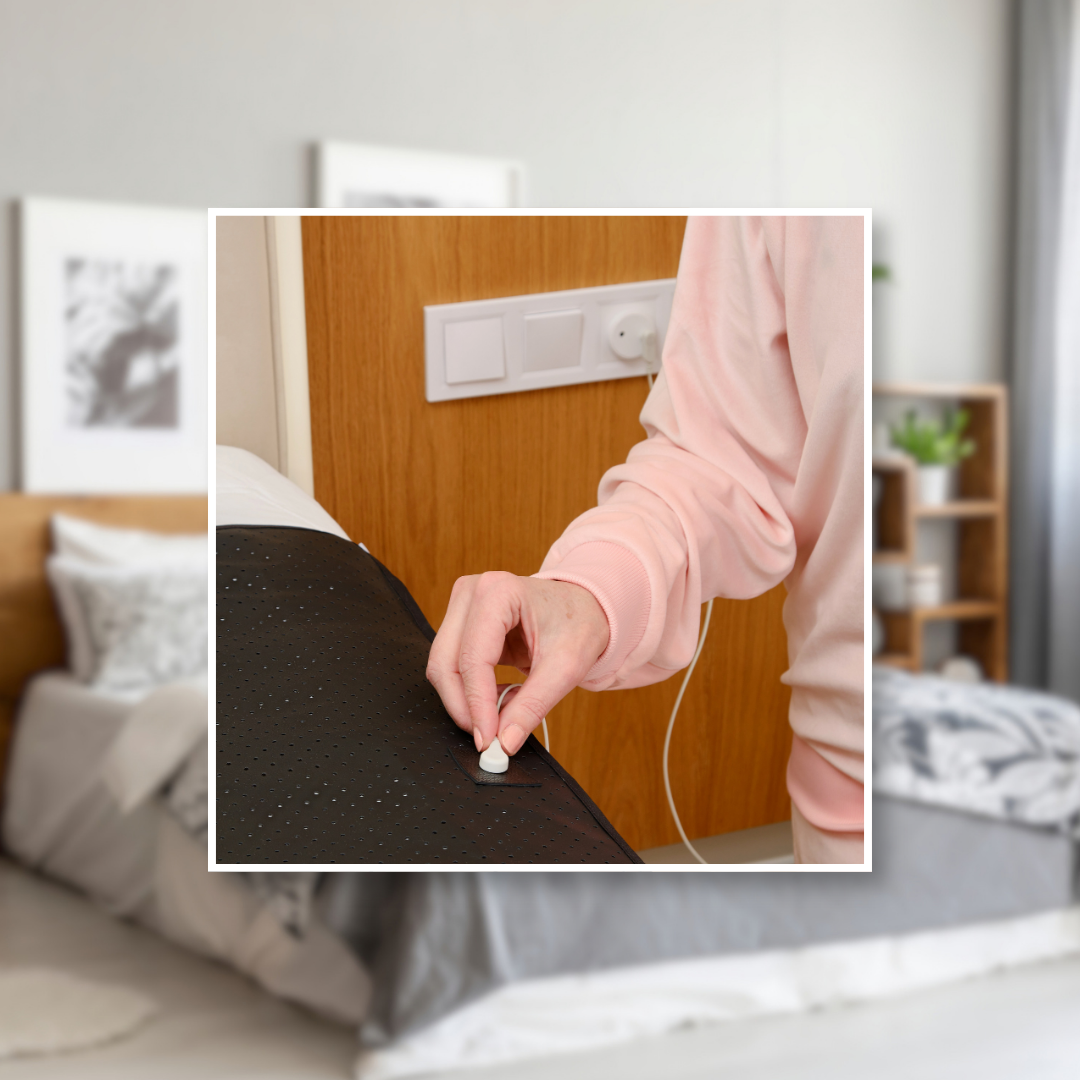
Grounding products should feel simple to use at home.
Whether you are using a Grounding Bed Sheet, Grounding Bed Mat, Grounding Mat, or Grounding Pad, a safe setup comes down to a few practical basics.
Use a properly grounded outlet. Keep the cord and product in good condition. Follow the instructions for the specific product. Keep connections dry and position cords where they will not become damaged or create a trip hazard.
Grounding does not need to become a complicated electrical routine.
Once the basics are checked, the product should fit quietly into your sleep, work, or relaxation routine.
Start With a Properly Grounded Outlet
Indoor grounding products rely on the grounding connection of a properly wired electrical outlet.
They do not use household electricity to power or stimulate the body. Instead, the supplied Grounding Cord and Plug connect to the grounded part of the outlet.
Before using an unfamiliar outlet, look at its physical condition.
Avoid outlets that are:
-
Cracked or loose
-
Discolored
-
Unusually warm
-
Buzzing or crackling
-
Damp
- Giving off a burning smell
These signs point to an electrical issue rather than a grounding-product problem.
If you have not checked the outlet before, a Grounding Socket Tester can help confirm whether it appears properly grounded.
For more detailed instructions, see the Grounding Outlet Safety Guide.

Use the Correct Grounding Plug
Outlet types differ between countries, so use the Grounding Plug designed for your region.
The plug should fit normally and securely without being forced.
Avoid modifying the cord, removing grounding components, or using adapters that bypass the intended grounding connection.
If you are unsure whether an outlet or plug is suitable, use another verified setup or ask a qualified electrician.
This is especially relevant when traveling, moving home, or using a grounding product in an unfamiliar property.

Inspect the Grounding Cord
The grounding cord is easy to check and worth inspecting occasionally.
Look for:
-
Fraying
-
Cuts
-
Cracked insulation
-
Sharp bends
-
Loose connectors
-
Damage near the plug
- Areas crushed by furniture
The connector should fit securely into the grounding product without needing to be forced.
If the cord becomes damaged, replace it with a compatible grounding cord rather than repairing it with tape or substituting an unrelated cable.
Route Cords Where They Will Stay Protected
A safe grounding setup should also be practical.
Think about where the cord will sit during normal use.
In the Bedroom
For a Grounding Bed Sheet, Half Sheet, Pillowcase, or Grounding Bed Mat, route the cord toward the side of the bed where it can reach the outlet without crossing a busy walkway.
Avoid placing it where it could:
-
Become trapped beneath the bed frame
-
Get caught in adjustable bed components
-
Be pulled tightly
-
Be crushed by furniture
- Create a trip hazard
The Grounding Bed Mat includes a 5-meter grounding cord, which provides flexibility when positioning it relative to a nearby outlet.

At a Desk or While Relaxing
For a Grounding Mat, Grounding Mouse Mat, or Grounding Pad, position the cord where chair wheels, feet, and furniture are unlikely to catch it.
The Grounding Pad can be used while sleeping, sitting, or working, so the best cord position may change depending on where you use it.
A setup that constantly needs adjusting is more likely to become inconvenient or damaged over time.
Keep Connections Dry
Grounding products designed for indoor use should be used in normal dry conditions.
Do not connect the product while the cord, plug, connector, or conductive surface is wet.
If you clean a product, disconnect it first and allow it to dry fully according to its care instructions before reconnecting.
Keep drinks and other sources of moisture away from grounding connections and electrical outlets.
For bedroom setups, be mindful of bedside water bottles, humidifiers, or other items that could introduce moisture near the connection point.
Follow the Care Instructions for Each Product
Grounding Essentials products use different conductive materials, so one cleaning method does not apply to everything.
Grounding Bed Sheets, Half Sheets, and Pillowcases
Conductive bedding contains silver fibers woven into the fabric.
These products require more thoughtful washing than ordinary bedding. Avoid bleach, fabric softeners, and other harsh products that may affect the conductive fibers.
For detailed care guidance, see How to Wash Grounding Bed Sheets.

Grounding Bed Mat and Grounding Mat
Mat-style products use conductive surfaces rather than conductive fabric.
The Grounding Bed Mat can be cleaned gently with soap and water to remove skin oils and residue.
Do not machine wash a mat unless its specific instructions say that it is suitable.
Grounding Pad
The Grounding Pad is made with conductive fabric and is suitable for sleeping, sitting, or working.
Because its material differs from the Grounding Bed Mat, follow the Pad's own care instructions rather than treating both products the same way.
Check Conductivity When It Is Useful
You do not need to test your grounding product every day.
However, conductivity testing can be useful after extended use, repeated washing, long periods of storage, or when you suspect a product may no longer be functioning as expected.
The Grounding Conductive Tester checks compatible grounding products.
It serves a different purpose from the Socket Tester:
Grounding Socket Tester = checks the outlet
Grounding Conductive Tester = checks the product
For detailed instructions, see the guide


Leave a comment
This site is protected by hCaptcha and the hCaptcha Privacy Policy and Terms of Service apply.