



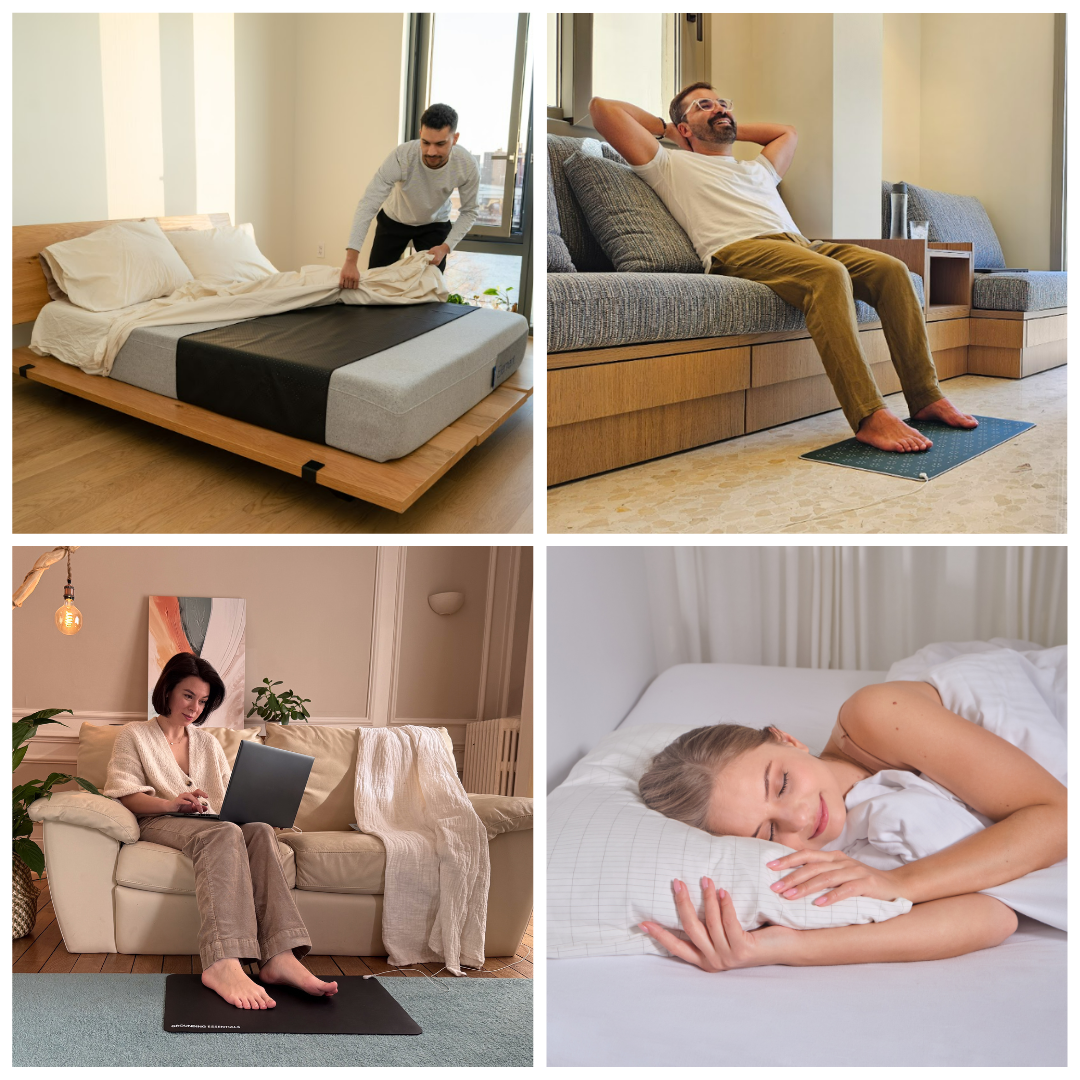
Choosing an indoor grounding product is less about finding the “best” product and more about finding the one that fits naturally into your routine.
Someone who wants to ground while sleeping has different needs from someone who spends eight hours at a computer. The amount of contact you want, how much maintenance you are comfortable with, and where you spend most of your time all influence which option makes sense.
This indoor earthing product buying guide compares the main Grounding Essentials options so you can choose based on how you actually live.
Start With Where You Will Use It
Before comparing materials or sizes, think about the part of your day where grounding would require the least extra effort.
If you already spend several hours sleeping, a bed-based product may be the easiest option to use consistently. If most of your day happens at a computer, a Grounding Mouse Mat or Grounding Mat may make more sense. If you want something compact for occasional use, a Grounding Pad may be enough.
The easiest product to use regularly will usually be more practical than a larger product that stays stored away.

For Overnight Grounding
Grounding Essentials offers several options designed around sleep, including Grounding Bed Sheets, Half Sheets, Bed Mats, and Pillowcases.
Grounding Bed Sheet
A Grounding Bed Sheet is suited to people who want a large conductive sleeping surface and prefer the feel of traditional bedding.
Grounding Essentials sheets use cotton with conductive silver fibers, providing direct fabric contact while you sleep. Because the sheet becomes part of your regular bedding, it can work especially well for people who move frequently during the night.
The trade-off is maintenance. Conductive bedding needs more careful washing than an ordinary sheet.
Consider a Bed Sheet if you value: soft fabric, broad coverage, direct contact, and a familiar bedding setup.
Grounding Bed Mat
A Grounding Bed Mat is a better match if you want to keep using your preferred fitted sheet.
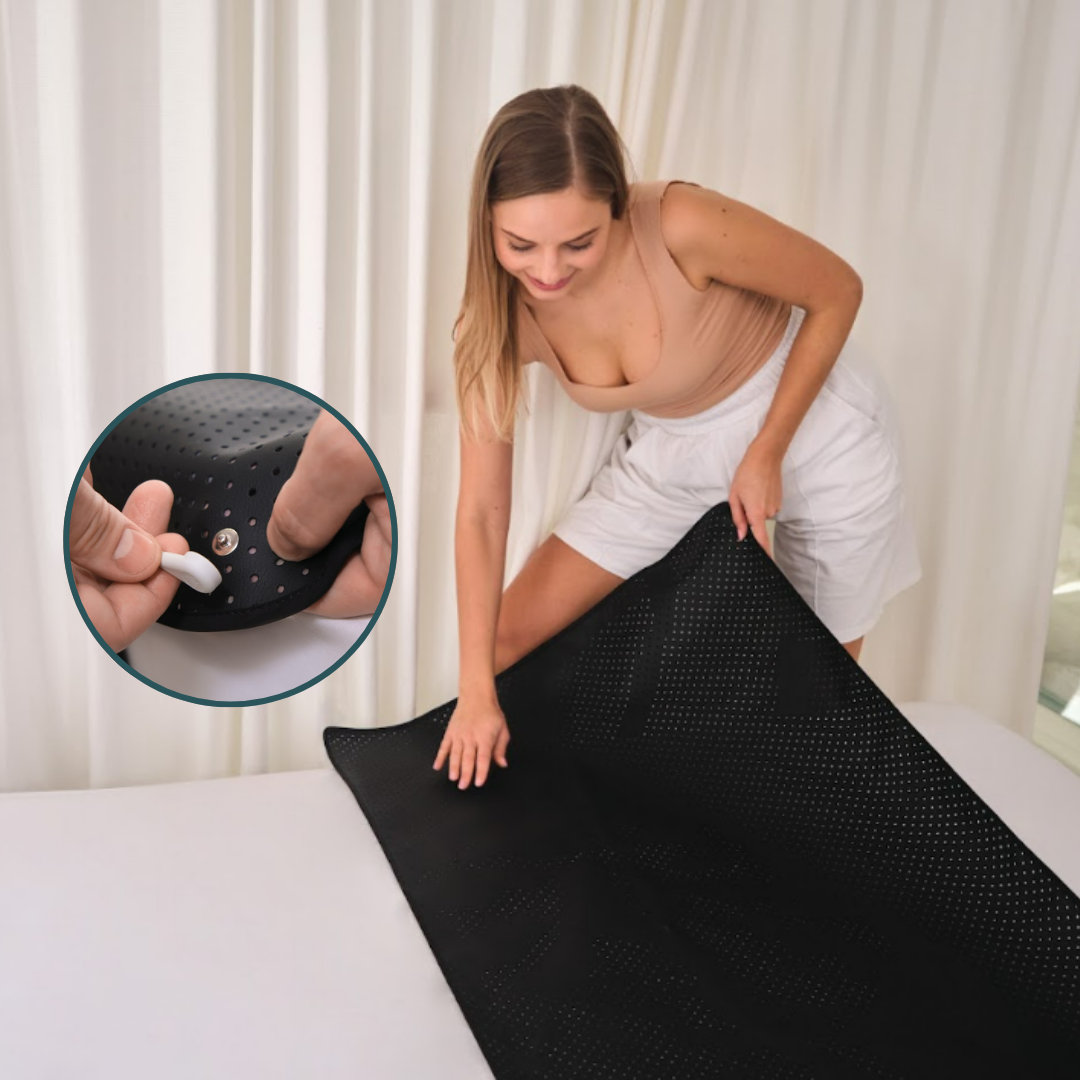
The Grounding Essentials Bed Mat sits across the mattress underneath a compatible fitted sheet and is available in different sizes for different beds and coverage needs.
Because the conductive surface stays beneath the bedding, it may appeal to people who prefer lower-maintenance equipment rather than conductive textiles that need regular washing.
Consider a Bed Mat if you value: durability, easier maintenance, your existing bedding, or different coverage sizes.
Grounding Half Sheet
A Grounding Half Sheet sits between a full fitted sheet and a smaller contact product.
It offers conductive fabric contact across part of the bed without requiring you to replace your entire fitted sheet. This can make it useful for one sleeper, smaller beds, or anyone who wants a simpler entry into grounding bedding.
Consider a Half Sheet if you value: conductive fabric with less coverage and less bedding to maintain.
Grounding Pillowcase
A Grounding Pillowcase provides a smaller contact area and takes up almost no additional space.
It may suit people whose face, neck, arms, or hands naturally remain against the pillow during sleep. Because contact depends more heavily on your sleeping position, it is a more targeted option than a Bed Sheet or Bed Mat.
Consider a Pillowcase if you value: a compact sleep product and minimal changes to your existing bed.

For Working at a Computer
If your desk is where you spend much of the day, grounding can fit into something you are already doing rather than becoming another separate wellness task.
Grounding Mouse Mat
A Grounding Mouse Mat is the most natural choice for computer work because your hand or wrist can maintain contact while you use your mouse.
It requires very little additional space or change to your normal work routine.
Consider a Mouse Mat if you: work at a computer for long periods and prefer grounding through your hand or wrist.
Grounding Mat
A Grounding Mat provides more flexibility than a Mouse Mat.
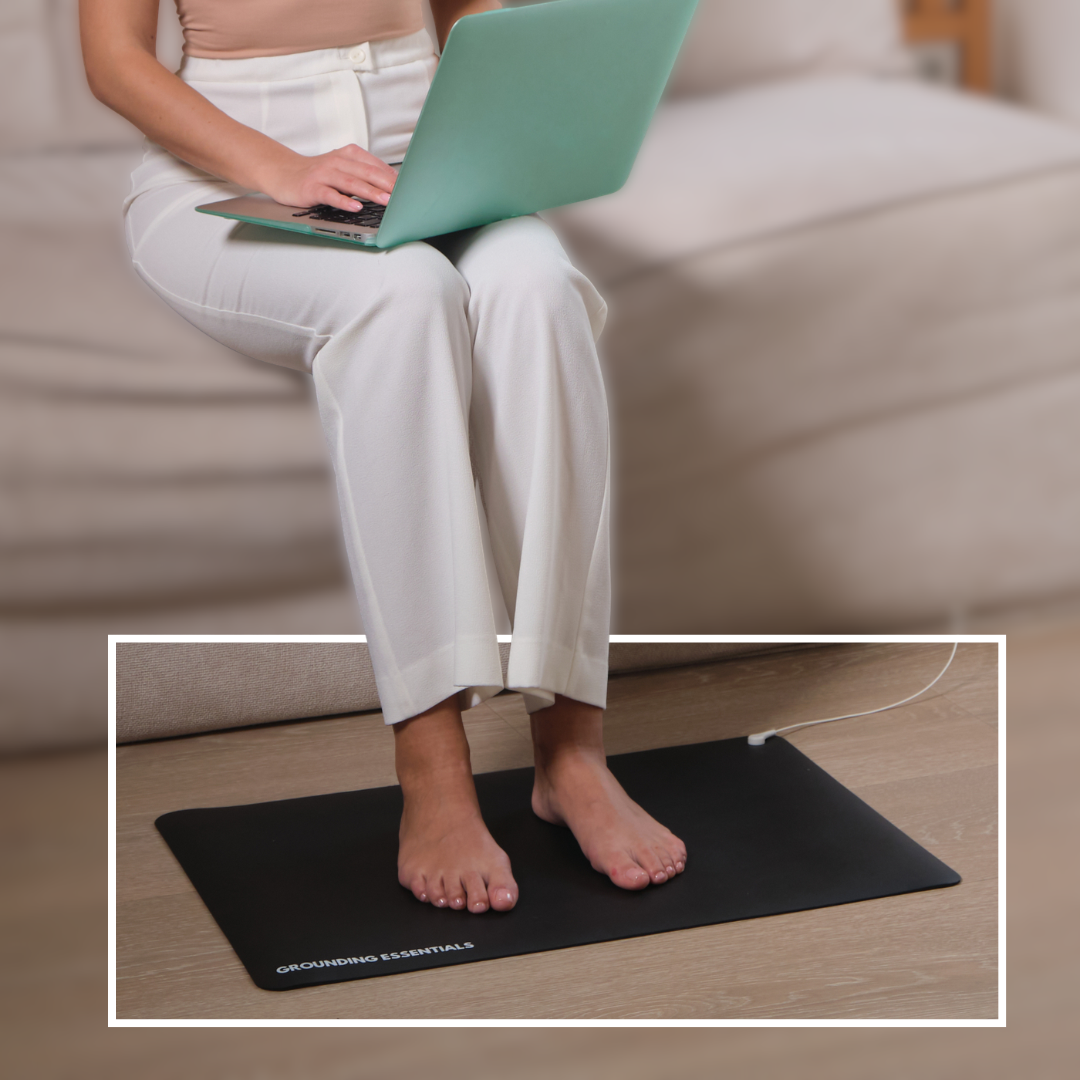
It can be placed underneath your desk for contact with your feet or positioned elsewhere when you are reading, watching television, or relaxing.
Because it is not tied to one activity, it can move between different areas of the home.
Consider a Grounding Mat if you: want one daytime product that can serve several purposes.
Grounding Pad
A Grounding Pad can be useful when you do not need a large conductive surface.
Its smaller size allows it to be positioned beneath a hand, arm, leg, or foot while sitting or relaxing. It can also be easier to move between rooms than a larger mat.
Consider a Grounding Pad if you: want something compact, flexible, and easy to reposition.

Compare the Amount of Contact You Want
More surface area is not automatically better.
A full Bed Sheet offers broad contact, but you may not need that much coverage. Someone who sleeps relatively still may be perfectly comfortable with a Bed Mat or Half Sheet. Someone working at a computer may get more practical use from a Mouse Mat than from a larger mat under the desk.
Think about where your skin naturally rests rather than trying to maximize the number of square centimeters of conductive material.
Comfort and consistency matter more than choosing the biggest product.
Think About Maintenance Before Buying
Different products require different levels of care.
Conductive Bed Sheets, Half Sheets, and Pillowcases need washing and should be cared for according to their specific instructions. Because they contain conductive fibers, products such as bleach, fabric softener, and harsh cleaning treatments should be avoided when the care guide specifies this.
Mats, Bed Mats, Mouse Mats, and Pads have different cleaning requirements and generally do not need to be washed like bedding.
If you prefer minimal maintenance, this difference may influence your decision as much as the product size.
Do You Need Testing Tools?
If you plan to connect an indoor grounding product through your home's electrical grounding system, testing tools can make setup easier to verify.
Grounding Essentials offers two different types:
A Grounding Socket Tester checks whether the outlet appears to be correctly grounded.
A Grounding Conductive Tester checks the conductivity of a compatible grounding product.
These are useful accessories rather than alternatives to the grounding products themselves. Existing Grounding Essentials guides already explain the testing process in more detail, so new users can refer to those instructions when setting up their product.

Which Grounding Product Is Best for You?
If you want the simplest way to narrow down your options, start with the activity you already do most consistently.
For traditional bedding and broad contact: choose a Grounding Bed Sheet.
For overnight grounding while keeping your existing fitted sheet: choose a Grounding Bed Mat.
For a smaller conductive bedding option: consider a Grounding Half Sheet or Grounding Pillowcase.
For daily computer work: choose a Grounding Mouse Mat.
For flexible daytime use: choose a Grounding Mat.
For a smaller movable contact surface: consider a Grounding Pad.
You do not need several products to begin. Starting with one product that naturally fits your routine gives you a simpler way to decide whether grounding is something you want to continue.
Start With the Routine, Not the Product
A useful grounding setup should not require you to redesign your bedroom, workspace, or daily schedule.
Choose the place where grounding can happen almost automatically. That might be while you sleep, answer emails, read on the sofa, or relax at the end of the day.
Once you know when you are most likely to use it, choosing between a Bed Sheet, Bed Mat, Half Sheet, Pillowcase, Mat, Mouse Mat, or Pad becomes much easier.
Start with one setup, follow its care and connection instructions, and give yourself enough time to decide whether it earns a regular place in your routine.

Leave a comment
This site is protected by hCaptcha and the hCaptcha Privacy Policy and Terms of Service apply.