



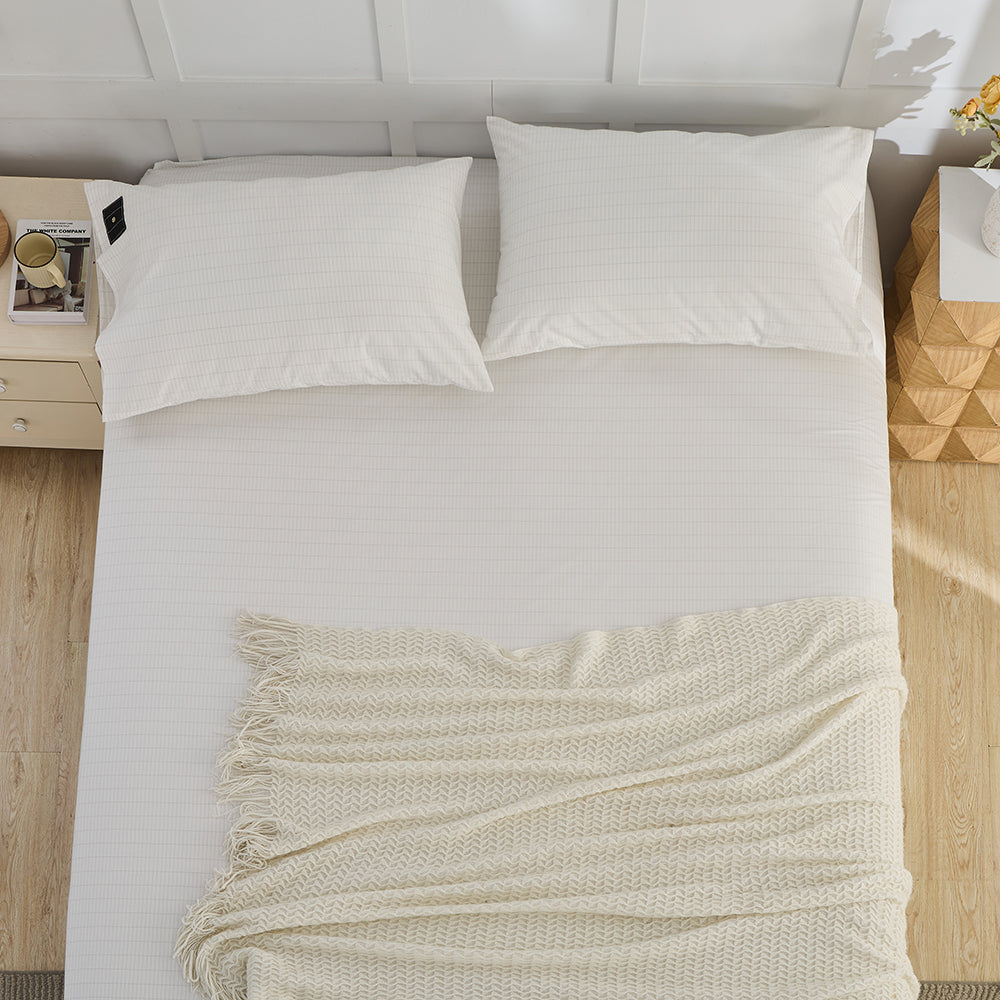
If you have just purchased a grounding sheet and are wondering how to set it up, this simple guide will help you get started.
Grounding sheets are designed to connect your body to the Earth while you sleep. They contain conductive silver fibers and connect to the grounded part of a properly grounded wall outlet. They do not use electricity to operate.
Correct setup, regular skin contact, and proper care can help you get the best possible experience from your grounding sheet.
What Is Included With Your Grounding Sheet?
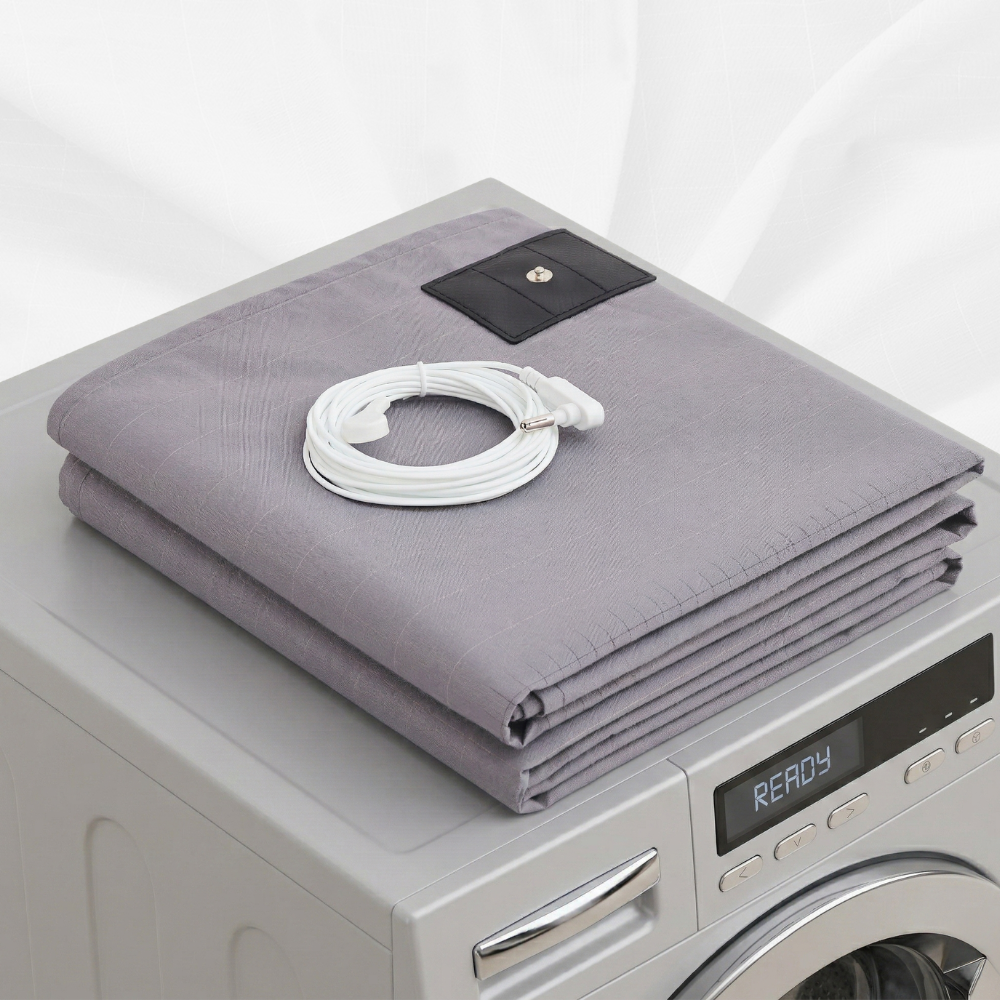
When you purchase a Grounding Essentials Grounding Bed Sheet or Grounding Half Sheet, it comes with:
- A grounding sheet
- A grounding cord
- A connection plug suitable for your selected country
- A user manual
Before using your sheet, check that the grounding cord and plug are in good condition and that you have selected the correct connection type for your country.
Step-by-Step Guide to Using Your Grounding Sheet
-
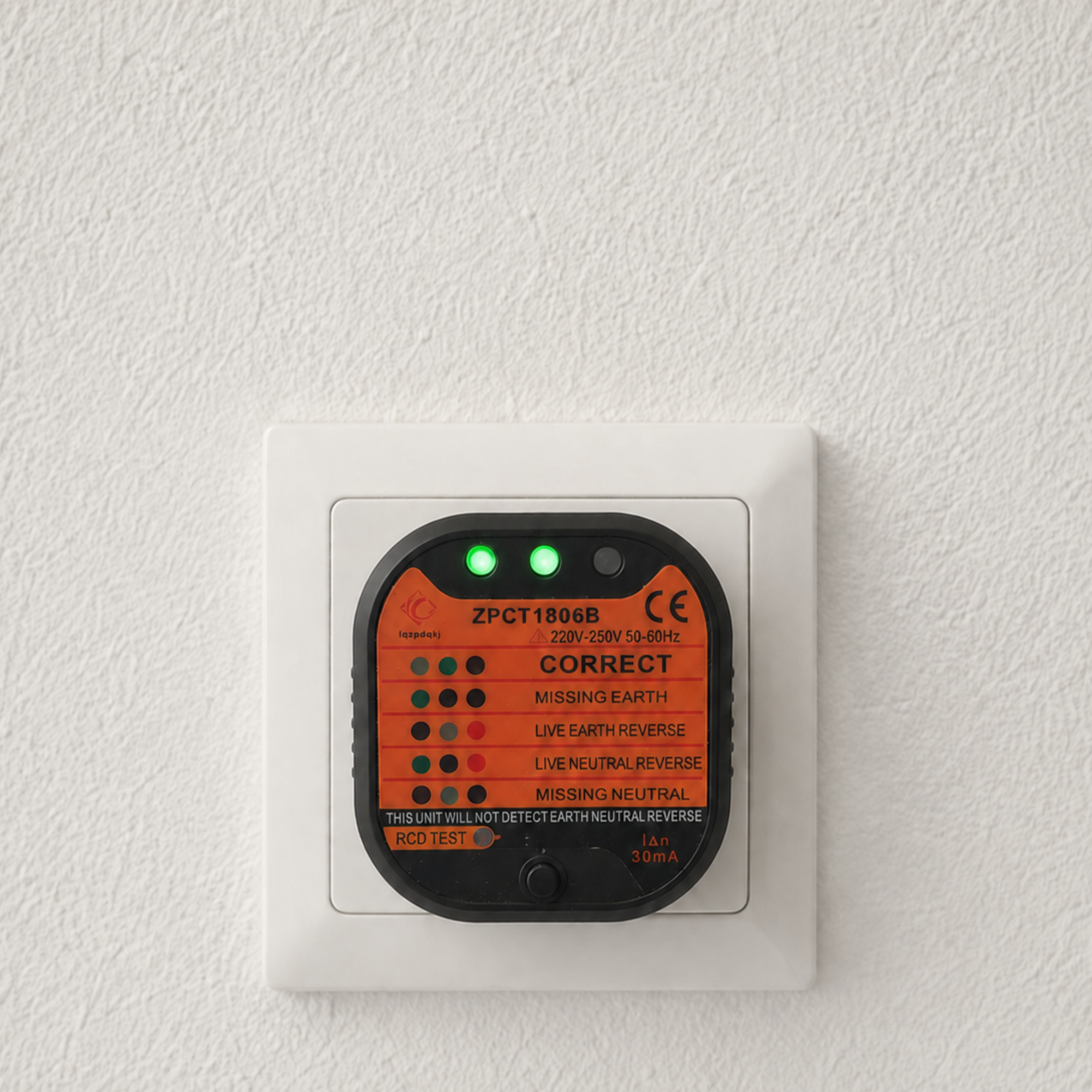
Test Your Wall Outlet
Use a Socket Tester to confirm the outlet is properly grounded.
For the Grounding Essentials tester, two green lights on and the red light off indicate a working ground connection.
If the outlet is not grounded, try another outlet or contact a qualified electrician.
-
Place the Grounding Sheet on Your Bed
Place the fitted Grounding Bed Sheet over your mattress like a regular sheet.
For a Grounding Half Sheet, position it across the bed or lengthwise on one side, then tuck the extra fabric under the mattress.
Make sure part of your skin can touch the sheet while you sleep.
-
Connect the Cord to the Sheet
Press one end of the grounding cord firmly onto the sheet’s connection point.
Make sure it is securely attached and avoid pulling the sheet by the cord.

-
Attach the Cord to the Grounding Plug
Connect the other end of the cord to the grounding plug supplied for your country.
Use the correct plug type for your location.
-
Plug It Into the Grounded Outlet
Insert the grounding plug into the tested grounded outlet. The plug connects only to the grounding port and does not draw electricity.
Your grounding sheet is now ready to use.
Do You Need Direct Skin Contact?
Direct skin contact is recommended for the strongest grounding connection.
Your whole body does not need to touch the sheet. Contact from your feet, legs, arms, hands, or another exposed area of skin can be enough.
You can wear pajamas while using a grounding sheet. Thin clothing made from natural materials such as cotton, bamboo, linen, silk, or wool may still allow grounding. However, direct skin contact generally provides the most reliable connection.
Thick synthetic sleepwear, fleece, waterproof fabrics, and multiple heavy layers may reduce conductivity.

Can You Put a Regular Sheet Over It?
You may place a thin natural-fiber sheet over your grounding sheet, although direct skin contact provides the strongest connection.
Cotton, linen, bamboo, silk, and other thin natural materials may allow grounding through normal body moisture.
Avoid placing thick mattress protectors, waterproof layers, foam toppers, or heavy synthetic bedding between your body and the grounding sheet.
How Long Should You Use a Grounding Sheet?
There is no required amount of time for using a grounding sheet.
Many people sleep on it throughout the night because it fits naturally into their normal bedtime routine. You can also begin with a shorter period, such as one or two hours, and gradually use it for longer if that feels more comfortable.
Some people notice changes quickly, while others experience more gradual or subtle differences. Consistent nightly use makes it easier to understand how grounding fits into your routine.
How to Know If Your Grounding Sheet Is Working
You should not expect your grounding sheet to create heat, buzzing, tingling, or an electrical sensation.
To check that your setup is working:
- Confirm that the wall outlet is properly grounded
- Make sure both ends of the grounding cord are securely connected
- Inspect the cord for visible damage
- Use a conductivity tester to test several areas of the sheet
A conductivity tester can help confirm that the silver-infused surface remains conductive.
Alternative Method: Using a Grounding Rod
If your home does not have a properly grounded outlet, you can use a grounding rod instead.
The grounding rod is placed directly into the Earth outside and connected to your grounding sheet using the grounding cord. The cord can usually be run through a window or beneath a door.
Place the rod firmly into conductive soil and follow the instructions supplied with the product.
Before inserting a grounding rod, make sure the area is clear of underground cables, pipes, irrigation systems, and other services.

Start Grounding While You Sleep
Using a grounding sheet is simple once the correct setup is in place.
Test your outlet, position the sheet on your bed, connect the cord and plug, and allow part of your skin to touch the conductive fabric while you sleep.
With regular use and proper care, your grounding sheet can become an effortless part of your nightly routine.
Explore the Grounding Essentials Grounding Bed Sheet for full mattress coverage or choose the Grounding Half Sheet for a smaller, more flexible option.

Leave a comment
This site is protected by hCaptcha and the hCaptcha Privacy Policy and Terms of Service apply.