



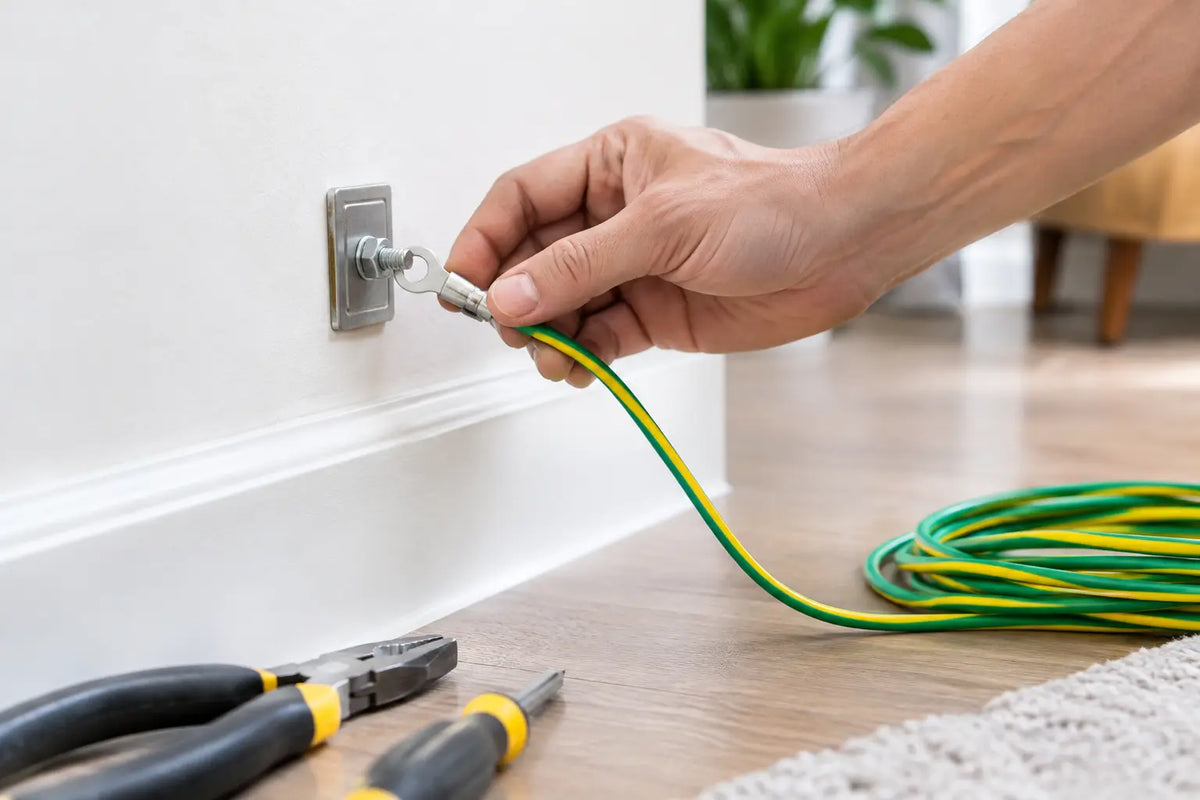
A grounding sheet or mat is only as safe and effective as the outlet connection behind it. To attach a grounding cord safely, you need more than an empty socket nearby. You need a correctly grounded outlet, an undamaged cord, and a setup that never comes into contact with live electrical parts.
The good news is that most grounding products are designed for straightforward home use. The cord connects your conductive product to the grounding system in your home's electrical wiring. It does not power the product, and a properly designed grounding cord does not send electricity through your sheet, mat, or body. Still, electrical safety matters. Taking a few minutes to check your setup can give you confidence before your first night of use.
What a grounding cord actually does
Grounding products such as bed sheets, sleep mats, yoga mats, and pillowcases contain conductive material. A grounding cord creates a connection between that material and the earth connection in a properly wired outlet.
This is different from plugging in a lamp, charger, or appliance. A grounding product does not need electrical power to work. Its cord is intended to connect only to the outlet's grounding path. It should never be inserted into the live slots of an outlet or attached to exposed wiring.
In the United States, a standard three-prong outlet has two vertical slots and one round or U-shaped grounding hole. For compatible grounding cords, that grounding hole is the only part of the outlet connection that matters. If your product was purchased for a different region, make sure its cord and plug are designed for your local outlet standard. Do not force a plug, alter it, or use an improvised adapter.
Check the outlet before you connect anything
An outlet may look grounded without actually being wired correctly. Older homes, renovations, loose connections, and incorrectly installed receptacles can all create uncertainty. This is why an outlet tester is one of the most useful accessories for anyone using a grounding product.
A basic outlet tester plugs into a standard outlet and uses indicator lights to identify several common wiring problems, such as an open ground, reversed wiring, or an open neutral. Follow the tester's instructions carefully, as light patterns differ by model. A result indicating correct wiring is a useful first check before connecting your grounding cord.
An outlet tester has limits. It cannot identify every electrical issue, and it cannot confirm the quality of every grounding connection under all conditions. If the tester reports a fault, if the outlet feels loose, if you see discoloration, or if you are unsure about your home's wiring, stop there. Have a licensed electrician inspect the outlet. Do not treat a grounding product as a reason to troubleshoot electrical wiring yourself.
What if your home has two-prong outlets?
A two-prong outlet does not provide a dedicated equipment-grounding connection. Do not use a cheap two-prong adapter as a workaround unless it is part of a properly verified, code-compliant grounding arrangement installed for that outlet. Simply converting the shape of the plug does not create a ground.
The practical answer is to use a confirmed grounded outlet elsewhere in the home or ask a qualified electrician about safe options. This is particularly worthwhile in older properties, where an outlet's appearance can be misleading.
How to attach a grounding cord safely
Once you have identified a correctly grounded outlet, setup is simple. Start with the product and cord unplugged. Inspect both before connecting them. The cord should have intact insulation, firm connectors, and no bent pins, exposed metal, fraying, cracks, or signs of heat damage.
First, connect the snap or connector end of the grounding cord to your grounding sheet, mat, pillowcase, or other compatible product. Press it into place firmly without forcing it. The connection should sit securely and should not detach with normal movement.
Next, plug the outlet end into the correct grounding connection as directed for your product. For a U.S.-style grounding-only plug, insert the grounding pin into the round or U-shaped ground opening only. If your product uses a compatible grounding adapter designed for a standard outlet, follow the manufacturer instructions exactly.
Keep the cord routed along a wall or under the edge of the bed, where it is unlikely to be pulled, pinched, stepped on, or caught in bed-frame hardware. Avoid running it beneath rugs, through doorways, across walkways, or under a mattress where repeated pressure can wear the cable. A little extra cord management reduces both trip hazards and long-term strain on the connection.
Finally, check that the conductive side of your product is positioned as intended. With a grounding sheet, that usually means the conductive surface faces upward and is in direct contact with bare skin during sleep. With a mat, place bare feet, hands, or another area of skin on the conductive surface during use. The cord connection should remain dry and undisturbed.
Setup mistakes to avoid
The safest grounding setup is also the simplest one. Avoid these common shortcuts:
- Never insert a grounding cord into the narrow or wide live slots of an outlet.
- Never connect a cord to exposed wires, electrical panels, radiators, plumbing pipes, or outdoor metal fixtures.
- Never use a damaged cord, loose outlet, cracked adapter, or product with visibly worn conductive material.
- Never cut, splice, modify, or repair a grounding cord yourself.
- Never place the cord where it may be soaked, crushed, chewed by pets, or pulled by children.
It is also sensible to unplug the system before washing a grounding sheet, moving furniture, rearranging the bed, or inspecting the connector. Follow the care instructions for your specific product. Washing and drying guidance matters because heat, bleach, fabric softeners, and harsh detergents can shorten the life of conductive fibers.
When to ask an electrician
Grounding products are intended for ordinary household use, not electrical diagnosis. Call a licensed electrician rather than experimenting if your outlet tester identifies incorrect wiring, the outlet has no ground, the plug will not sit firmly, or you notice buzzing, sparks, warmth, burning smells, or intermittent power.
The same applies if you live in a building with unusual wiring, use a generator or off-grid power system, or are uncertain about outlet compatibility after relocating internationally. An electrician can confirm whether the outlet is safely grounded and appropriate for your local electrical code.
If you have a pacemaker, implanted medical device, or a medical condition that makes you cautious about new wellness practices, speak with your clinician before use. Grounding is not a replacement for medical care, diagnosis, or prescribed treatment.
A quick safety check before bedtime
Before you settle in, look at the setup once more. Confirm that the outlet tested correctly, the cord is fully intact, the connector is secure, and the cable is out of the way. If anything looks questionable, unplug it and investigate before continuing.
For added reassurance, some people use a conductive tester to confirm continuity from their grounding product to the outlet ground. This can be helpful after moving a bed, replacing a cord, or changing rooms. It is a useful setup check, but it does not replace a properly wired outlet or professional advice when something appears wrong.
Research into grounding and wellbeing is still developing. Some studies and personal reports suggest possible effects on sleep, stress, and recovery, while individual experiences vary. A safe, correctly connected product gives you the best opportunity to explore grounding as part of a broader routine that may also include consistent sleep timing, movement, daylight exposure, and stress-management habits.
Grounding Essentials designs its cords and accessories for clear, everyday setups, but the same rule applies to every brand: never compromise on the outlet connection. A verified ground, an intact cord, and a tidy cable route turn a small bedtime ritual into a more confident one.



Αφήστε ένα σχόλιο
Αυτή η τοποθεσία προστατεύεται από το hCAPTCHA και ισχύουν η Πολιτική απορρήτου και οι Όροι Παροχής Υπηρεσιών του hCaptcha.