



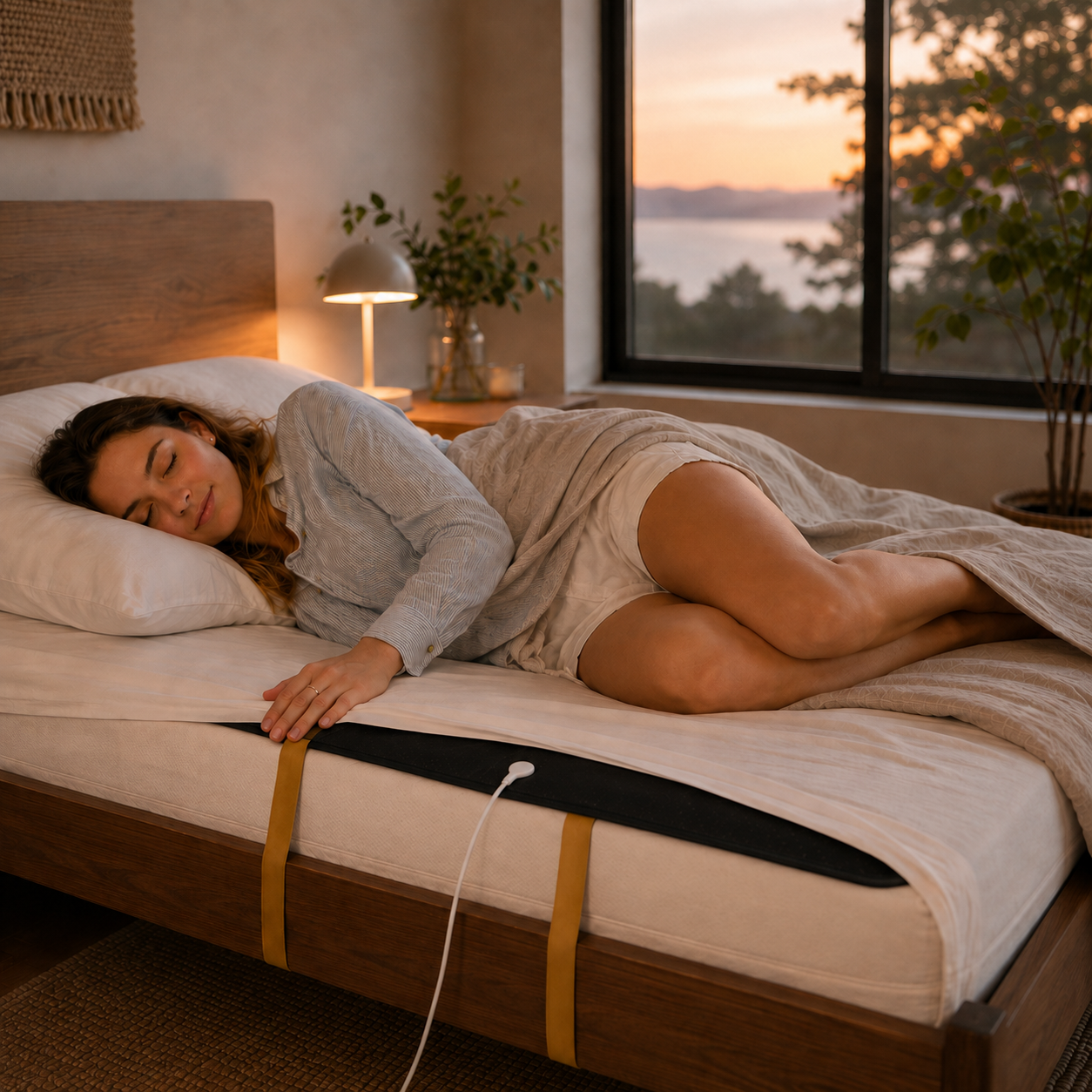
A stressful week can show up before you consciously feel it: restless sleep, a wired-but-tired feeling at night, or energy that disappears halfway through the afternoon. That is why interest in grounding and cortisol levels has grown.
Cortisol is one of the body’s main stress hormones, and its natural daily rhythm plays an important role in sleep, energy, and recovery.
Early research suggests grounding may influence daily cortisol patterns, particularly during sleep, but the evidence is still limited. Grounding has not been proven to lower cortisol, treat cortisol disorders, or replace medical care.
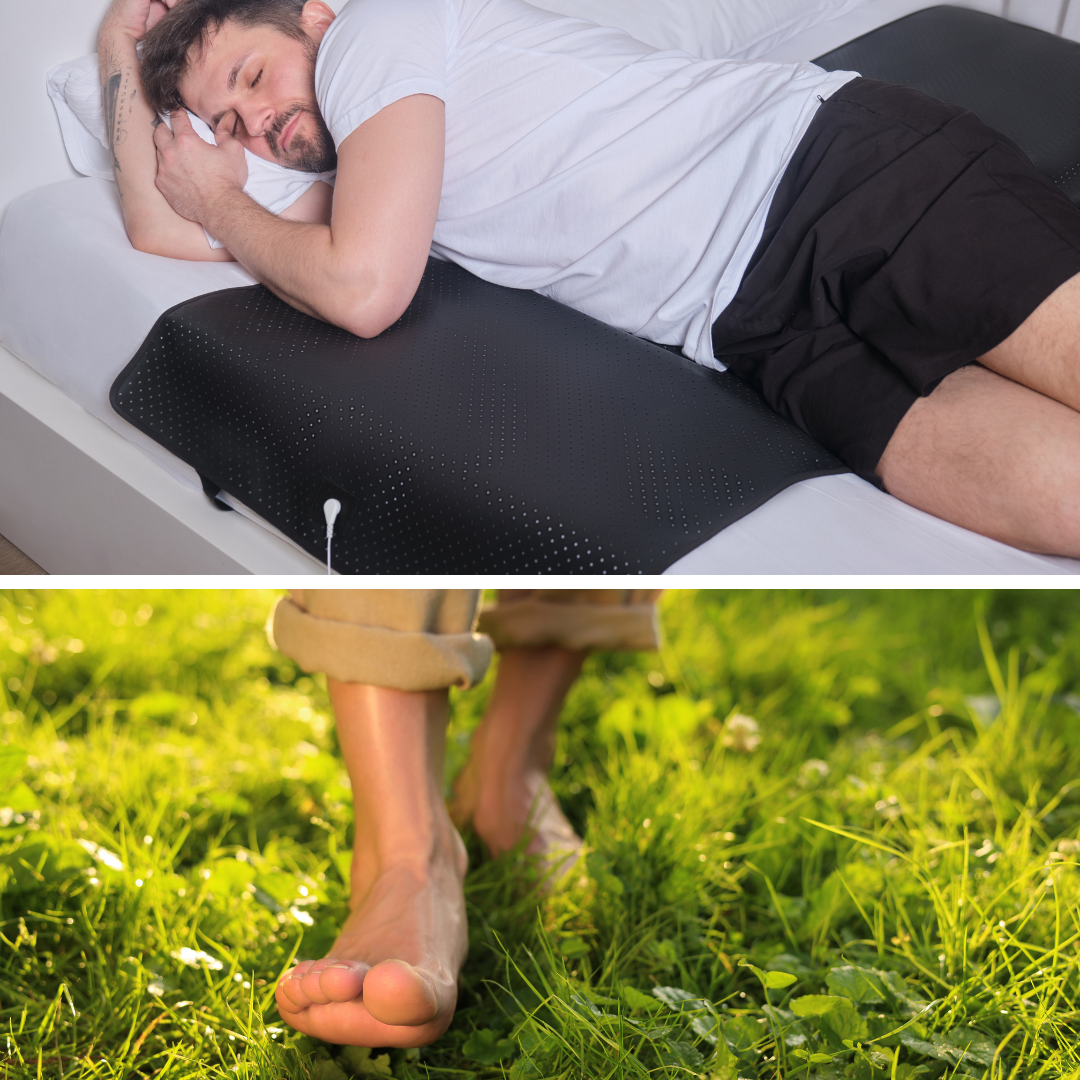
Grounding, also called earthing, means making direct conductive contact with the Earth. Outdoors, this may involve standing barefoot on grass, soil, or sand. Indoors, grounding products connect to the ground port of a properly grounded outlet or to an approved grounding rod.
What Cortisol Does in the Body
Cortisol is often called the “stress hormone,” but your body needs it.
It helps regulate:
- Blood pressure
- Blood sugar
- Alertness
- Energy availability
- Immune activity
- The body’s response to stress
What matters is not eliminating cortisol, but maintaining a healthy daily rhythm.
Cortisol normally rises around the time you wake, helping you become alert. It then gradually declines throughout the day and reaches lower levels at night as your body prepares for sleep.
Stress, irregular sleep, illness, shift work, intense training, alcohol, and some medications can affect this pattern.
Feeling tired or stressed does not automatically mean your cortisol is too high or too low. Symptoms alone cannot diagnose a cortisol problem, so persistent concerns should be discussed with a healthcare professional.

Grounding and Cortisol Levels: What Research Shows
One of the most frequently discussed studies on grounding and cortisol was a small 2004 pilot study involving 12 people who reported sleep difficulties, pain, and stress.
Participants slept on conductive mattress systems connected to ground for eight weeks. Researchers reported changes in their 24-hour cortisol profiles, along with improvements in self-reported sleep, pain, and stress.
The findings attracted attention because cortisol and sleep are closely connected. Poor sleep can influence stress responses, while ongoing stress can make it more difficult to fall asleep or stay asleep.
However, the study was small and cannot prove that grounding directly caused the changes.
Grounding research has also explored areas such as:
- Sleep quality
- Stress and relaxation
- Autonomic nervous system activity
- Inflammatory responses
- Circulation-related measurements
- Body voltage
Some findings are encouraging, but the overall research remains preliminary. Larger, independent, well-controlled studies are still needed to understand whether grounding reliably affects cortisol and who may benefit most.
The most accurate conclusion is that grounding may be worth exploring as a supportive wellness practice, but it is not an established treatment for cortisol disorders, anxiety, insomnia, or other medical conditions.
Why Sleep May Be the Best Time to Try Grounding
If grounding influences cortisol patterns, sleep may be one of the most practical settings in which to explore it.
A Grounding Bed Sheet or Grounding Bed Mat can provide several hours of consistent contact without adding another task to your day.
Consistency is useful because cortisol follows a daily rhythm. One night of grounding is unlikely to tell you much about whether the practice fits your routine.
For a more useful trial, keep your sleep habits relatively stable for several weeks and notice whether anything changes in:
- How easily you fall asleep
- How often you wake during the night
- How rested you feel in the morning
- Your evening stress levels
- Your daytime energy
Grounding should still be considered one part of a broader sleep routine.
Regular wake times, morning daylight, daytime movement, a cool and dark bedroom, and reducing stimulation before bed all play important roles in healthy sleep.
Outdoor grounding can also be part of this routine. Spending time barefoot on grass, soil, or sand may offer a simple way to combine grounding with fresh air, gentle movement, and time away from screens.
How to Try Grounding Safely
Start with a simple goal.
Instead of trying to “fix” your cortisol, focus on something practical, such as creating a calmer bedtime routine or seeing whether grounding helps you feel more settled before sleep.
For overnight use, options include:
For daytime use, a Grounding Mat or Grounding Mouse Mat may be easier to incorporate into a work or relaxation routine.
Direct skin contact generally provides the most reliable connection, although product setup can vary. Always follow the instructions provided with your grounding product.

Check Your Outlet First
Before connecting a grounding product, use a Grounding Socket Tester to check whether the outlet is properly grounded.
A three-prong outlet does not automatically confirm that the ground connection is functioning correctly.
A Conductive Tester has a different purpose. It can be used to check whether a compatible grounding product has a conductive surface and connection.
In simple terms:
- Socket Tester: checks the outlet
- Conductive Tester: checks the grounding product
Do not improvise electrical connections, modify plugs, or use damaged cords. If you are unsure about your home’s electrical wiring, ask a qualified electrician.
Give Grounding Enough Time to Evaluate
Sleep, stress, and energy naturally vary from day to day.
For that reason, it is more useful to try grounding consistently for two to four weeks than to judge the experience after one night.
Keep the rest of your routine reasonably stable and track a few simple observations, such as:
- Bedtime and wake time
- Nighttime awakenings
- Morning energy
- Perceived stress
- Overall sleep quality
You do not need to measure everything.
The goal is to notice patterns in how you feel rather than assume that every good or bad day is caused by grounding.
Feeling more rested does not prove that your cortisol levels changed. Likewise, noticing no difference does not mean you are using the product incorrectly. Individual responses can vary.
When Cortisol Concerns Need Medical Support
Grounding can complement healthy lifestyle habits, but it should not delay appropriate medical care.
Talk with a healthcare professional if you experience persistent symptoms such as:
- Ongoing insomnia
- Severe or unexplained fatigue
- Significant weight changes
- Persistent high blood pressure
- Fainting
- Major mood changes
- Symptoms that continue to worsen
This is especially important for people with diagnosed endocrine conditions, those taking steroid medications, or anyone who has been advised to monitor cortisol or adrenal function.
A qualified clinician can determine whether testing is appropriate and interpret the results in the context of your overall health.

A Realistic Approach to Grounding and Cortisol
The current research on grounding and cortisol is interesting, but it is still developing.
Early studies suggest grounding may influence cortisol patterns, sleep, and stress in some people, but there is not enough evidence to make strong medical claims.
If you want to explore grounding, keep it simple. Verify your outlet, choose a product that fits naturally into your routine, and give yourself enough time to notice whether it makes a meaningful difference.
A Grounding Bed Sheet or Grounding Bed Mat may suit someone who wants consistent overnight contact, while a Grounding Mat or Grounding Mouse Mat can fit more easily into a daytime or work routine.
Treat grounding as one quiet part of your evening or daily wellness routine, not a promise of a perfect stress response.


Leave a comment
This site is protected by hCaptcha and the hCaptcha Privacy Policy and Terms of Service apply.