




A grounding mat or sheet does not announce itself with a dramatic moment. For most people, grounding results are quieter: feeling more settled at bedtime, waking less often, or noticing that a recovery routine feels more complete. Others notice little at first. That range is normal, and it is why a practical, consistent approach matters more than big promises.
Grounding, also called earthing, means making conductive contact with the Earth. Outdoors, that can mean bare skin on grass, soil, sand, or unpainted concrete. Indoors, grounding products connect to the grounding port of a properly grounded electrical outlet, allowing the body to be at the same electrical potential as the Earth. The goal is not to replace medical care or solve every sleep and stress concern. It is to add one simple habit to a well-built wellness routine.
What Grounding Results May Look Like
People usually try grounding for sleep, relaxation, everyday recovery, or a feeling of calm after demanding days. Individual experiences are not proof of a medical effect, but they can help set realistic expectations. The most commonly reported changes tend to fall into a few practical areas.
Some users say they fall asleep feeling less restless. Others describe fewer nighttime wake-ups, a more comfortable morning routine, or a subjective sense of deeper rest. People who train regularly may notice that their usual recovery habits feel more supportive when they use grounding consistently. A smaller group reports no obvious change, even after several weeks.
The timeline varies. A person who is already sleeping well may not feel a meaningful difference. Someone whose bedtime routine is inconsistent may find that the routine itself - getting into bed at the same time, putting away the phone, and using a grounding sheet - is part of what helps. It is worth being honest about that. Wellness habits often work together, and it is difficult to isolate one variable in everyday life.
What the Research Can and Cannot Say
Interest in grounding has led to small studies and physiological research examining sleep, stress markers, cortisol rhythms, pain perception, blood viscosity, and body voltage. Some findings are promising and suggest that grounding may influence measures related to stress regulation, sleep, and recovery. Research has also shown that conductive grounding can reduce induced body voltage when a person is connected to a properly grounded system.
That last point is a measurable electrical effect, not a guarantee of a health outcome. It explains the basic function of an indoor grounding product: it provides a conductive path to ground. It does not establish that every person will sleep better, feel less pain, or recover faster.
The broader health research is still developing. Many studies have small sample sizes, short durations, or designs that need replication in larger, well-controlled trials. That does not make the early research meaningless. It means the responsible position is curiosity rather than certainty. Grounding may be a useful complementary practice for some people, especially when paired with sleep fundamentals, movement, nutrition, and appropriate medical support.
If you have ongoing pain, severe fatigue, insomnia, circulation concerns, or another health condition, speak with a qualified clinician. Grounding should not be presented as a treatment, cure, or reason to delay care.
Why Results Differ From Person to Person
Grounding is simple in concept, but the context around it is not. Sleep and recovery are shaped by light exposure, stress, room temperature, alcohol, caffeine, activity level, medication, illness, and many other factors. A grounding product can be used correctly and still produce an experience that is subtle or hard to separate from the rest of life.
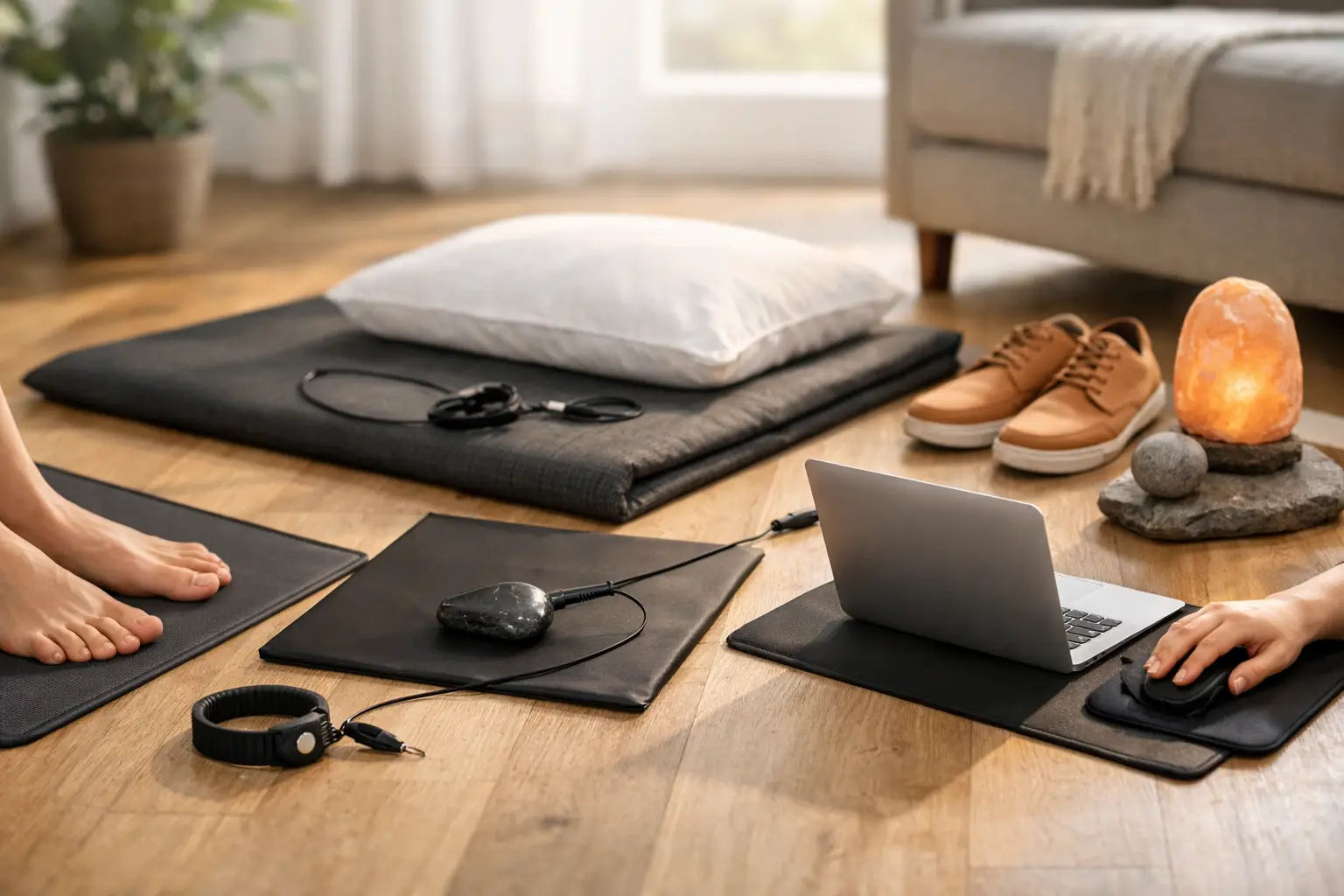
Setup also matters. A grounding sheet, mat, or sleep pad must make skin contact to be conductive. Sleeping on top of a grounding sheet while wearing thin pajamas may still allow contact, but direct bare-skin contact is the clearest option. A grounding mat under thick socks, a blanket, or several layers of fabric may not provide the contact you expect.
Most importantly, the outlet must be properly grounded. The round grounding port is not automatically proof that household wiring is correct. A conductive outlet tester can help check the outlet before you connect a product. This is especially useful in older homes, rented properties, and when traveling internationally. Never connect grounding products to an unverified outlet, and do not use adapters that bypass safety features.
Consistency is another factor. A person using a mat for 20 minutes once a week is testing something different from a person sleeping on a grounding sheet for six to eight hours each night. Neither approach is wrong, but the likely experience and the ability to spot patterns will be different.
How to Test Your Own Grounding Results
The best way to evaluate grounding is to give it a fair, low-pressure trial. Choose one use case first. If sleep is your priority, use a grounding sheet or sleep pad nightly. If you want a daytime practice, place a grounding mat where your bare feet or skin can touch it while you work, read, or relax.
Before you start, write down a simple baseline for one week. Note your usual bedtime, estimated time to fall asleep, nighttime wake-ups, morning energy, and how recovered you feel after activity. You do not need expensive wearables or a perfect spreadsheet. A few notes in a phone or notebook are enough.
Then keep the rest of your routine as steady as possible for two to four weeks. Try not to start a new supplement, radically change your workout plan, or overhaul your diet during the same period. That will not create laboratory-level certainty, but it will make your observations more useful.
Pay attention to patterns rather than single nights. Better sleep after one exhausting day may be random. A repeated change in bedtime comfort, wake-ups, or morning readiness is more informative. Equally, if nothing changes after a consistent trial, that is useful information. There is no need to force a result because a product worked for someone else.
A practical overnight setup
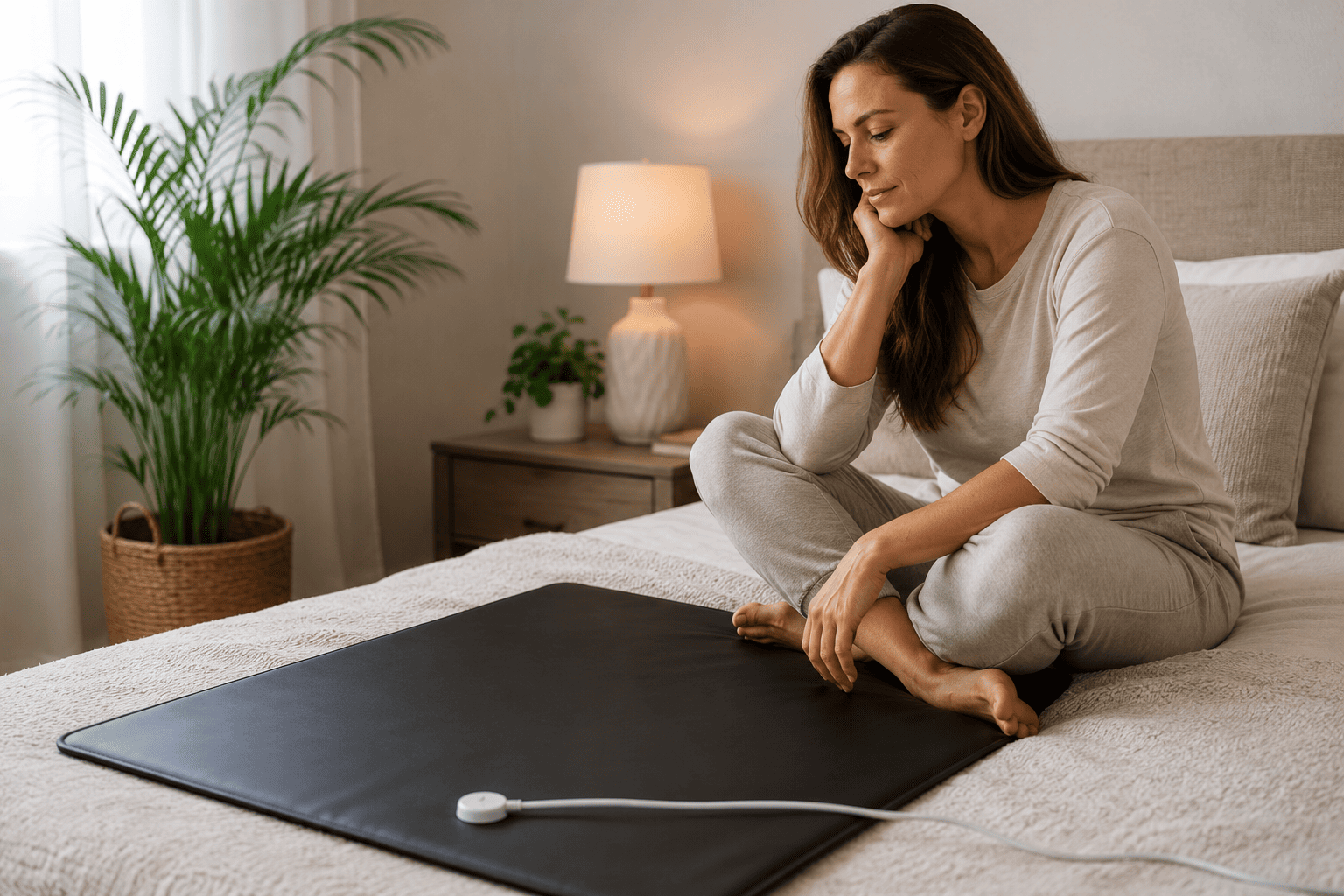
For a grounding sheet, connect the cord to the sheet and then to a tested grounded outlet. Place the fitted sheet directly on the mattress and sleep with bare skin touching it when practical. Follow the care instructions closely: conductive fibers require gentle handling, and lotions, oils, bleach, and some fabric softeners can affect performance over time.
For a sleep pad, place it where bare skin can make contact, such as under the feet, calves, or torso depending on the product instructions. A mat is often a convenient option for daytime desk work or relaxing on the couch. The right choice depends less on hype and more on when you can use it regularly.
Avoid Chasing a Perfect Sensation
Some people expect tingling, warmth, or an immediate feeling when they first connect to a grounding product. There is no required sensation. The body is not meant to receive a shock, and a properly set up product should not feel electrically dramatic. If you feel discomfort, stop using it and check the setup, outlet, and product instructions.
It is also wise to keep your expectations proportionate. Better sleep does not always mean a higher sleep-tracker score. A good result may simply be that you feel more relaxed at bedtime or that you maintain a calming routine more reliably. For another person, the best result may be deciding that grounding is not a meaningful addition to their routine.
Grounding Essentials designs products for consistent indoor use, but a quality product is only one part of the experience. A tested outlet, direct contact, and a realistic trial period give you the clearest chance to evaluate it fairly.
Start with the habit you can repeat. Use grounding during the hours that matter most to you, keep brief notes for a few weeks, and let your own patterns - not exaggerated claims - guide what you do next.

Commenta
Questo sito è protetto da hCaptcha e applica le Norme sulla privacy e i Termini di servizio di hCaptcha.