



Grounding and earthing are often used to describe the same basic practice: creating conductive contact between your body and the Earth.
However, the terms are sometimes used differently:
- Earthing usually refers to direct skin contact with natural surfaces such as grass, soil, sand, or water.
- Grounding often refers to using a conductive product, such as a grounding sheet or mat, that is connected to the Earth.
The intended connection is similar. The main difference is how it is created.
Grounding vs Earthing at a Glance
| Earthing | Grounding |
|---|---|
| Usually practised outdoors | Commonly practised indoors |
| Involves direct contact with the Earth | Uses a conductive grounding product |
| Does not require a product | Requires a sheet, mat, pad, or similar product |
| Depends on weather and outdoor access | Can fit into sleep, work, or relaxation routines |
The terms are also frequently used interchangeably. A grounding sheet may be called an earthing sheet, and a grounding mat may be called an earthing mat.

What Is Earthing?
Earthing involves placing bare skin directly against a conductive natural surface.
Common examples include:
- Walking barefoot on grass
- Standing or sitting on soil
- Walking along wet sand
- Swimming in the sea
- Sitting outdoors with bare feet on the ground
Earthing is a simple, product-free way to connect directly with the Earth. It can also encourage more time outdoors and provide an opportunity to slow down and reconnect with nature.
However, it is not always practical. Cold weather, unsafe surfaces, limited outdoor space, and busy schedules can make outdoor earthing difficult to practise regularly.
What Is Grounding?
In the wellness context, grounding usually means using a conductive product connected to the Earth.
Examples include:
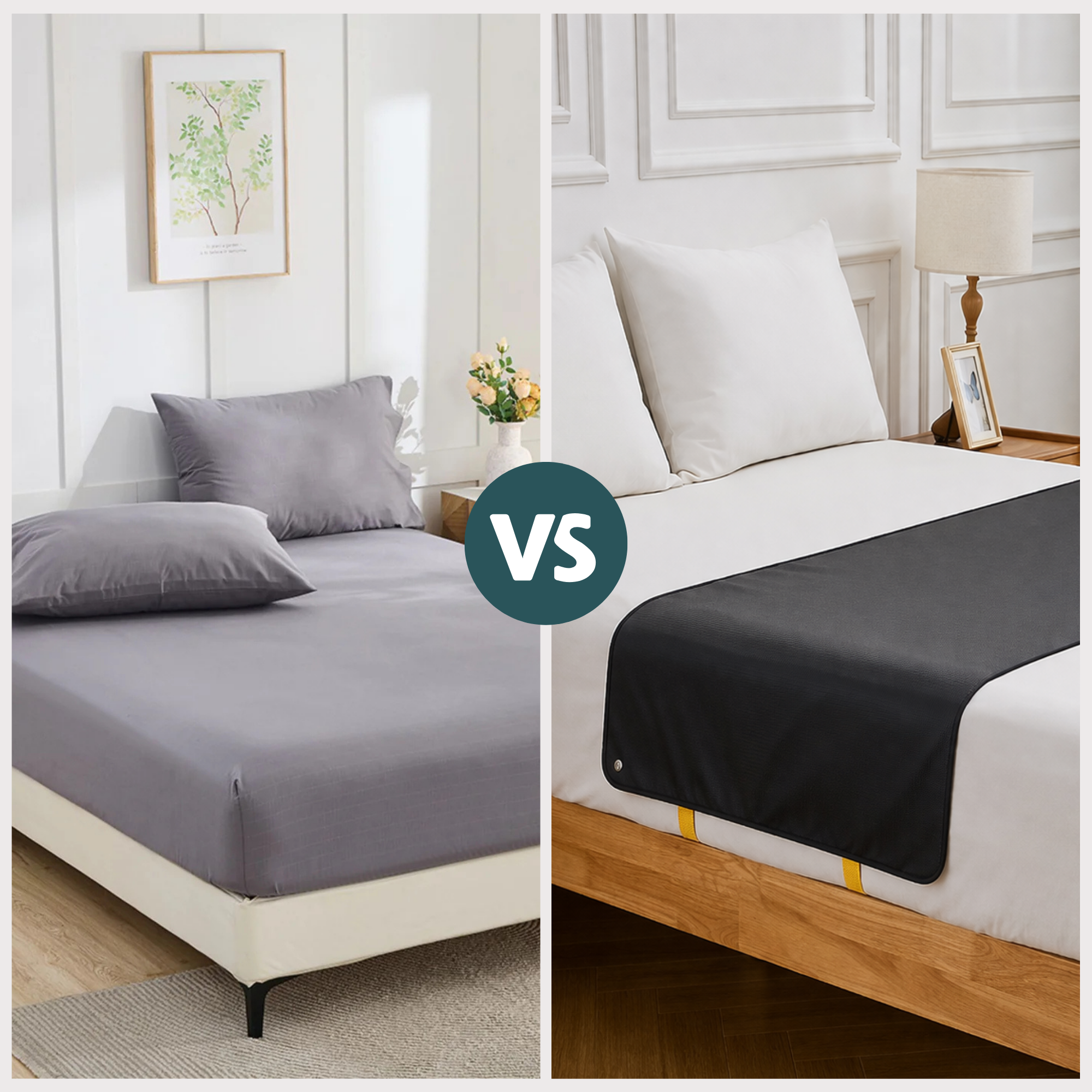
- Grounding bed sheets
- Grounding bed mats
- Grounding mats
- Grounding pads
- Grounding pillowcases
- Grounding mouse mats
- Grounding yoga mats
These products contain conductive materials, such as silver or carbon-based components.
A grounding cord connects the product to either the grounded part of a properly grounded wall outlet or a grounding rod placed in the soil outside.
The product does not use electricity to operate. It connects only to the grounding pathway.
When your bare skin touches the conductive surface, it creates a connection between your body and that pathway.
Are Grounding and Earthing the Same?
In most wellness discussions, yes.
Both terms describe the general idea of connecting the body to the Earth. The practical difference is usually:
- Earthing is direct: Your skin touches the Earth itself.
- Grounding is assisted: Your skin touches a conductive product connected to the Earth.
Because the terminology is not standardised, both words may be used for the same products and practices.
The product name matters less than its conductive materials, correct setup, connection method, and skin contact.
How Does Indoor Grounding Work?
A typical indoor grounding setup works as follows:
- The grounding product connects to a grounding cord.
- The cord attaches to a country-specific grounding plug.
- The plug connects to the grounding point of a properly grounded outlet.
- Bare skin touches the conductive product surface.
A Socket Tester can help confirm whether a compatible outlet is properly grounded before you connect a grounding product.
If an outlet is not grounded, you can use another tested outlet, consult an electrician, or consider a compatible grounding rod.
A Conductive Tester serves a different purpose. It helps check whether the surface of a compatible grounding product remains conductive.

Does Electricity Flow Through Grounding Products?
No. Grounding products do not draw electricity from the powered openings of a wall outlet.
They are designed to connect only to the outlet’s ground connection. They do not need power, consume electricity, or work like electronic devices.
Always follow the instructions supplied with your product and avoid using damaged cords, plugs, or connectors.
Earthing or Grounding: Which Is Better?
Neither option is automatically better. The right choice depends on your routine and environment.
Earthing may suit you if:
- You regularly spend time outdoors
- You have safe access to grass, soil, or sand
- You enjoy walking barefoot
- You prefer a product-free option
Grounding products may suit you if:
- You spend most of your time indoors
- You want to ground while sleeping or working
- Outdoor access is limited
- You want a routine that is less dependent on weather
Many people choose both. They may walk barefoot outdoors when conditions are suitable and use a grounding product indoors as part of their sleep or work routine.
What Does the Research Say?
Grounding has been studied in relation to sleep, stress, inflammation, recovery, and general well-being.
Some small studies have reported potentially positive findings. However, the available research remains limited, and larger independent studies are needed before firm health conclusions can be made.
Grounding should therefore be viewed as a wellness practice rather than a medical treatment. It should not replace medical advice, diagnosis, medication, or treatment.
Experiences also vary. Some people report noticing changes in sleep or daily comfort, while others notice little or no difference.
Common Grounding and Earthing Mistakes
Assuming every outlet is grounded
An outlet may look suitable without having a functioning ground connection. Test it before connecting a grounding product.
Confusing the two types of testers
A Socket Tester checks the wall outlet. A Conductive Tester checks the product surface or connection.
Blocking contact with thick materials
Direct skin contact is usually recommended. Thick clothing, mattress protectors, or synthetic materials may reduce conductivity.
Expecting guaranteed results
People respond differently. Grounding should not be treated as a guaranteed solution for pain, sleep problems, stress, or medical conditions.
Ignoring care instructions
Bleach, fabric softeners, oils, harsh detergents, and high heat may damage some conductive materials. Always follow the care instructions for your product.

Frequently Asked Questions
Is walking barefoot the same as grounding?
Walking barefoot on a conductive natural surface is a form of earthing or grounding. Indoor flooring, asphalt, and other insulated surfaces may not provide the same connection.
Can you practise grounding indoors?
Yes. Conductive sheets, mats, pads, pillowcases, and other products are designed to support indoor grounding when connected correctly.
Do grounding products use electricity?
No. They connect to the grounding pathway rather than the powered part of an outlet.
Do I need direct skin contact?
Direct skin contact is generally recommended because it provides the clearest conductive connection. Contact through fabric can vary depending on its material, thickness, and moisture.
How long should I ground each day?
There is no universally established duration. Some people practise for short periods outdoors, while others use grounding products for longer periods during sleep, work, or relaxation.
Is grounding medically proven?
Some preliminary research has reported possible benefits, but the evidence is not yet strong enough to confirm broad medical claims. More independent research is needed.
Grounding and Earthing Can Complement Each Other
Grounding and earthing are not competing practices.
Earthing offers a simple way to connect directly with natural outdoor surfaces. Grounding products provide an indoor alternative that can fit more easily into sleep, work, and everyday routines.
Whichever method you choose, focus on safe contact, correct setup, realistic expectations, and consistency.
When outdoor conditions are suitable, spend some time barefoot in nature. When outdoor earthing is not practical, choose a grounding product that fits naturally into your daily routine.

Leave a comment
This site is protected by hCaptcha and the hCaptcha Privacy Policy and Terms of Service apply.