



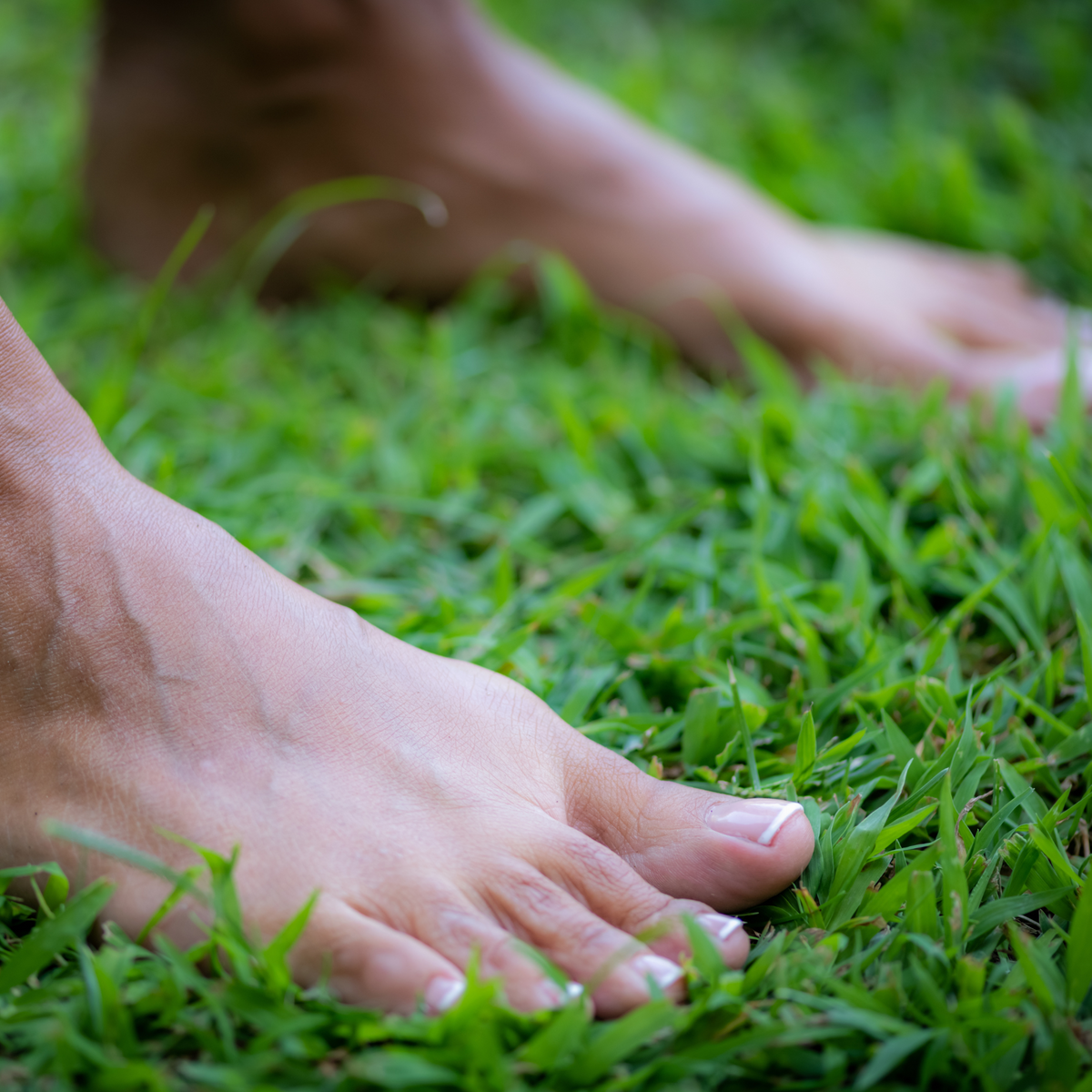
Grounding, also known as Earthing, means creating a conductive connection between your body and the Earth.
This can be done outdoors by walking barefoot on natural surfaces such as grass, soil or wet sand. Grounding can also be practised indoors using a conductive Grounding product connected to a properly earthed electrical socket or an outdoor grounding rod.
Grounding has attracted attention because of its potential effects on sleep, stress, inflammation, recovery and general wellbeing. Some early studies and personal experiences are promising, but research remains limited.
Here are five potential benefits currently being studied and what the available evidence suggests so far.
1. Grounding May Support Better Sleep
Sleep is one of the most common reasons people begin practising Grounding.
Some Grounding users report that they:
- fall asleep more easily
- wake up less often during the night
- sleep more deeply
- feel more rested in the morning
An early pilot study examined people who slept using conductive Grounding systems and reported changes in sleep, pain, stress and night-time cortisol patterns. However, the study was small, so its findings should be considered preliminary rather than conclusive.
Grounding has not been proven to treat insomnia or other sleep disorders. However, it may be a simple wellness practice to try alongside established healthy sleep habits, such as maintaining a regular bedtime, reducing screen use in the evening and creating a comfortable sleeping environment.
2. Grounding May Influence Inflammation and Free Radicals
Inflammation is part of the body's natural response to injury, infection and physical stress. When it persists for too long, it can contribute to discomfort and various health problems.
Small Grounding studies have investigated changes associated with inflammatory responses, muscle soreness and recovery after physical activity. A published review also discussed potential effects on inflammation, immune responses and wound healing. However, much of the supporting evidence came from small or exploratory studies.
The claim that Grounding "neutralises free radicals" is frequently repeated online, but it should not be presented as an established medical fact. The proposed biological mechanisms are still being investigated.
Grounding should not replace medical treatment for arthritis, autoimmune conditions, injuries or chronic inflammation.
3. Grounding May Promote Relaxation and Reduce Stress
Many people describe feeling calmer or more balanced after spending time barefoot outdoors or using a Grounding product.
Researchers have explored whether Grounding could influence the autonomic nervous system, which helps regulate the body's stress and relaxation responses. There are hypotheses and small studies suggesting possible changes in nervous system activity. However, larger controlled studies are needed to confirm these effects.
Outdoor Grounding may also provide benefits that are not necessarily caused by electrical contact alone. Quiet time in nature, taking a break from screens, slow breathing and stepping away from everyday demands can all contribute to relaxation.
For this reason, Grounding can fit well into a broader calming routine that includes spending time outdoors, gentle movement, meditation or mindful breathing.
4. Grounding May Support Everyday Physical Wellbeing
Some Grounding users report experiencing less muscle soreness, joint stiffness or general discomfort.
Small studies have investigated Grounding in relation to post-exercise recovery and pain. A more recent study also examined night-time Earthing after spinal surgery and reported changes in pain and selected biochemical measurements. Further controlled research is needed before these findings can be applied more broadly.
Grounding is not a proven treatment for pain and should not replace professional assessment or prescribed treatment.
Anyone experiencing persistent, severe or unexplained pain should consult a qualified healthcare professional.
5. Grounding May Support General Wellbeing
Sleep, stress, physical comfort and recovery are closely connected. When one area improves, some people may also notice changes in their energy, mood or overall sense of wellbeing.
Some Grounding users report that they:
- feel more rested
- feel less tense
- feel better after physical activity
- feel more connected to nature
- follow their wellness routine more consistently
These experiences are personal and do not prove that Grounding produces the same results for everyone.
Claims that Grounding "boosts the immune system" should also be approached with caution. Although researchers have discussed possible effects on immune and inflammatory processes, there is not enough high-quality evidence to conclude that Grounding strengthens the immune system or prevents illness.
What Does Research Say About Grounding?
Research into Grounding is still at an early stage.
Published studies have investigated areas including:
- sleep and cortisol patterns
- muscle soreness and recovery
- pain and physical wellbeing
- inflammatory responses
- nervous system activity
- blood measurements and circulation
Some findings are promising. However, many studies involve small groups, short study periods, limited control conditions or researchers closely associated with the Grounding field.
Larger, independent and well-controlled clinical studies are needed before Grounding can be recommended as a treatment for specific health conditions.
At present, it is most accurate to describe Grounding as a wellness practice with potential benefits rather than a medically proven therapy.
What Effects Can a Grounding Mat Have?
A grounding mat is based on the same basic principle as traditional Grounding or Earthing: it is designed to replicate contact with the Earth when walking barefoot on natural surfaces is not practical in everyday life.
When the mat is connected via its grounding cord to a properly earthed electrical socket, an electrically conductive connection can be created, provided there is direct skin contact.
According to the Grounding hypothesis, free electrons from the Earth may help balance electrical charge and neutralise free radicals. Some researchers have suggested that this effect could support the body's recovery processes and potentially influence the nervous system, sleep quality or the regulation of stress responses.
The extent of any potential effects, however, depends on several factors, including a functioning earth connection, regular use and direct skin contact.
It is also important to understand that a grounding mat is not a replacement for direct contact with nature. Instead, it offers a practical way to maintain a connection with the Earth while indoors.
Are Grounding Mats Worth Using?
Whether grounding mats are worthwhile largely depends on what you expect from using them.
For people who rarely have the opportunity to walk barefoot on natural surfaces, a grounding mat can provide a simple way to incorporate Grounding into everyday life – for example, while working at a desk or while sleeping with a conductive mat or grounding sheet.
Many users report positive experiences, such as feeling more rested in the morning or subjectively sleeping better. However, these experiences are individual and cannot automatically be generalised to everyone.
Based on the current state of scientific evidence, grounding mats should not be regarded as medical devices or treatments. Instead, they can be considered a complementary way to incorporate Grounding conveniently into a daily wellness routine.
Anyone using a grounding mat should make sure that it is connected correctly, that the electrical socket has a functioning earth connection and that there is sufficient skin contact. These conditions are necessary to create the conductive connection on which the Grounding principle is based.
What Does Science Say About the Effects of Grounding Mats?
Scientific evidence on the effects of grounding mats is still limited.
Some small studies have investigated possible associations between Grounding and factors such as cortisol levels, stress reduction, pain, blood viscosity and the regulation of inflammatory and stress responses. Research, including work at the Pennsylvania State University Children's Hospital, has also examined the physiological effects of a grounding connection.
Some of these studies describe potential positive effects on general wellbeing or an improved balance between sympathetic and parasympathetic nervous system activity. At the same time, researchers frequently note that larger and methodologically stronger studies are needed to reliably confirm the findings reported so far.
From a scientific perspective, Grounding and grounding mats therefore remain an interesting area of research whose potential mechanisms continue to be investigated. Existing findings are promising, but they do not yet support general conclusions about their effects across all individuals.
This balanced interpretation reflects the current state of research.
How to Practise Grounding
Walk Barefoot Outdoors
The simplest way to practise Grounding is to place your bare feet directly on a natural surface.
Suitable surfaces may include:
- grass
- soil
- wet sand
- natural stone
- seawater
Before walking barefoot, check the area for sharp objects, extreme temperatures, insects or other potential hazards.
Use a Grounding Mat or Other Grounding Products
Indoor Grounding products allow you to practise Grounding while sleeping, working or relaxing.
Common options include:
- grounding sheets
- grounding bed mats
- grounding mats
- grounding pads
- grounding pillowcases
- grounding yoga mats
For use in the UK, make sure your Grounding product and its connection accessories are designed for British electrical sockets. Standard UK installations use Type G sockets and a nominal 230 V / 50 Hz electrical supply. For Grounding products, however, the relevant connection is the earth contact of a correctly wired and earthed socket rather than the live electrical supply.
Grounding products that connect through a socket use this earth connection; the product itself does not need mains electricity to provide the grounding connection.
Before connecting a Grounding product, use a suitable UK socket tester to verify that the socket is correctly wired and earthed. Always follow the instructions supplied with your product and never use damaged cables, adaptors or connectors.
Is Grounding Worth Trying?
Grounding may be worth trying if you are looking for a simple way to spend more time outdoors or add a calming wellness practice to your daily routine.
Some people report improvements in sleep, relaxation, recovery and everyday wellbeing. Others may notice only minor changes or no noticeable difference at all.
Approach Grounding with realistic expectations. It should complement healthy habits and appropriate medical care, not replace them.
You can start by spending some time barefoot on a safe natural surface. For a more regular indoor routine, you can explore grounding sheets, bed mats and other Grounding products that can fit naturally into your sleep, work or relaxation routine.



Leave a comment
This site is protected by hCaptcha and the hCaptcha Privacy Policy and Terms of Service apply.