



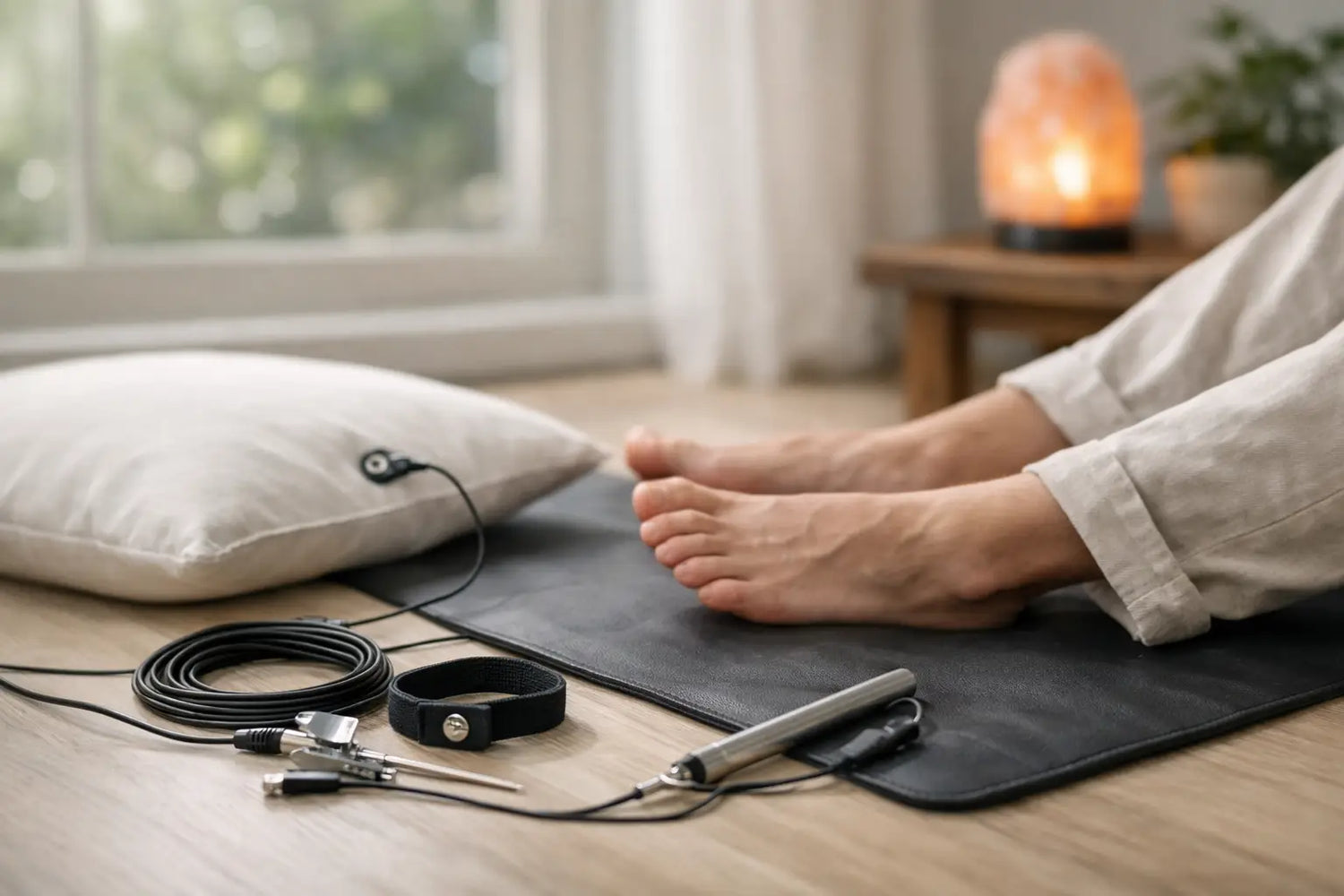
A grounding sheet, mat, or sleep pad should never feel like an electrical experiment. When it is properly designed and connected to a correctly grounded outlet, it is intended to provide a direct connection to the earth ground - not to deliver household electricity to your body. So, are grounding products safe? For most healthy adults, quality grounding products used as instructed are generally considered low risk. The details matter, though: product design, outlet grounding, setup, and your individual health situation all deserve attention.
How grounding products are designed to work
Grounding, also called earthing, recreates the electrical connection people can get from standing barefoot on soil, grass, or sand. Indoor products use conductive materials, commonly silver fibers woven into fabric or conductive carbon, connected by a cord to the grounding port of a properly grounded outlet.
The key distinction is that a grounding product connects to the outlet's earth ground only. It does not connect you to the live electrical current that powers appliances. A well-made grounding cord also includes a built-in safety resistor, usually 100 kilo-ohms. This limits current flow as an added safety measure.
This setup can reduce the measurable voltage between your body and electrical ground in your environment. That is a physical measurement, and it is different from proving a specific health outcome. Small studies and early research have explored grounding in relation to sleep, stress markers, blood flow, pain, and recovery. The findings are interesting, but the overall evidence base remains limited, with more large, independent, high-quality trials needed.
For that reason, grounding is best approached as a wellness practice, not a medical treatment. Some people report feeling more relaxed or sleeping better, while others notice little or no difference.
Are grounding products safe for everyday use?
For most people, using a properly made grounding bed sheet or mat in a dry indoor setting is straightforward. The product itself is passive: it has no battery, heating element, or electronic stimulation. You simply make skin contact with the conductive surface while it is connected to a verified ground.
The main safety issue is not the sheet or mat. It is the electrical installation it connects to. An outlet may look normal but have a missing, faulty, or incorrectly wired ground. In older homes, renovated spaces, travel accommodations, and some offices, this is not unusual.
A basic outlet tester can check whether a three-prong outlet appears correctly wired and grounded. Many grounding product kits include a continuity tester that can help confirm the cord and product are functioning as intended. These tests do not replace a professional electrical inspection, but they are a sensible first check.
If you are unsure about an outlet, do not guess. Ask a qualified electrician to inspect it. Never force a grounding plug into an outlet, remove the round grounding pin, or use an ungrounded two-prong adapter. A grounding product cannot create a ground where one does not exist.
What quality safety features look like
A dependable product should use conductive materials designed for skin contact, an insulated connection cord, and an in-line safety resistor. The plug should connect only to the grounding port. Clear care instructions, setup guidance, and a way to test conductivity are also good signs that a brand takes safe use seriously.
At Grounding Essentials, products are designed for everyday home use and supported with setup instructions and testing guidance. Still, even a high-quality product relies on a properly grounded outlet and correct use.
Be cautious of products that make vague claims about “absorbing electricity,” do not explain how their plug works, or ask you to modify your wiring. You should always be able to understand what connects where and why.
Who should take extra precautions?
Grounding products are not known to introduce electrical current into the body under normal use, but certain situations call for professional guidance rather than assumptions.
If you have an implanted electrical medical device, such as a pacemaker, implanted defibrillator, neurostimulator, insulin pump, or other device that uses electrical sensing or signaling, speak with your physician and the device manufacturer before using grounding products. The concern is not that grounding products are established to interfere with these devices, but that safety data for every device and use case is not available.
The same thoughtful approach applies if you are under active medical care for a significant condition, have unexplained symptoms, or plan to use grounding in place of prescribed treatment. Grounding can be one part of a broader sleep and relaxation routine, but it should not replace medical advice, medication, rehabilitation, or urgent care.
People with sensitive skin should also pay attention to their response. Silver textile is widely used in clothing and wellness fabrics, but any material can irritate some individuals. Start with short periods of contact, keep the product clean, and stop using it if you develop a rash, itching, or discomfort. A thin layer of natural fabric may reduce direct contact, although it can also reduce conductivity depending on the material and moisture level.
There is limited research specifically focused on pregnancy, infants, and young children using grounding products. That does not automatically mean a product is unsafe, but it does mean the most responsible advice is to discuss individual questions with a qualified healthcare professional.
Safe setup matters more than most people realize
A safe grounding routine starts with a simple check. First, inspect the product and cord. Do not use a grounding sheet, mat, or cord that is visibly damaged, frayed, wet, or heavily worn. Keep the connection dry, and do not place cords where they can be pulled, pinched by furniture, or become a trip hazard.
Next, test the outlet. Use a compatible outlet tester according to its instructions, or arrange for an electrician if the wiring is uncertain. Then connect the grounding cord to the product before connecting the plug to the outlet's grounding port. Make sure the cord is fully seated and lies safely out of the way.
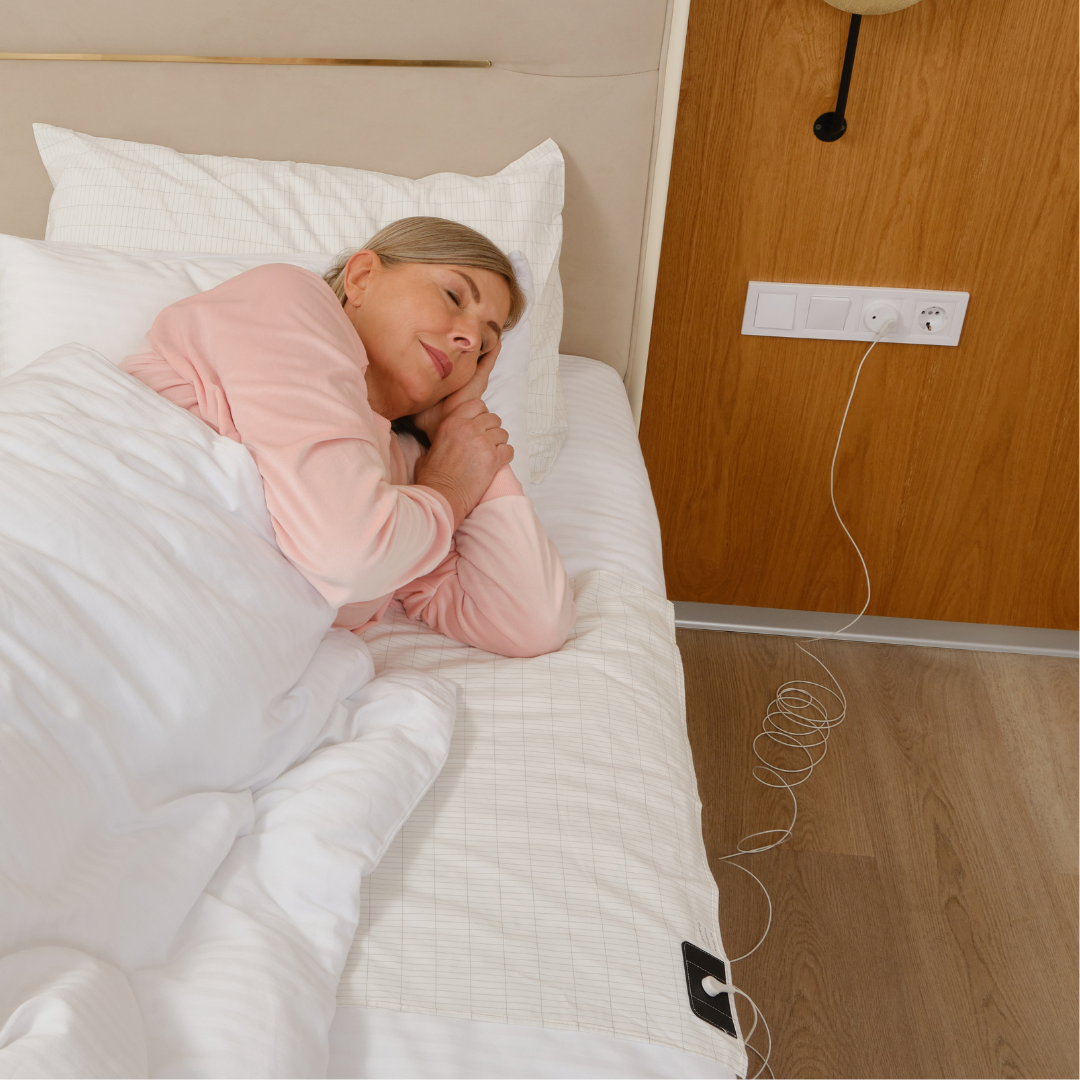
For a bed sheet or sleep pad, place it where bare skin can make regular contact, such as under your legs, feet, torso, or hands. You do not need to wrap yourself in the cord or use more than one product at once. More contact time is not automatically better. A comfortable, consistent setup is usually the most practical approach.
Avoid combining grounding products with improvised wiring, homemade plugs, damaged extension cords, or electrical adapters that defeat the ground connection. If your home uses outlets that differ from the product plug type, use an appropriate product version or have a qualified professional advise you. Do not modify the product yourself.
What grounding products cannot promise
Safety and effectiveness are separate questions. A product can be carefully designed and correctly used while still producing different results for different people. Reduced body voltage can be measured, but translating that measurement into better sleep, less pain, improved circulation, or faster recovery for every user goes beyond what current research can guarantee.
Be especially skeptical of claims that grounding cures disease, replaces medication, detoxifies the body, or protects against all electromagnetic fields. These statements are not supported by strong clinical evidence. Grounding products do not block EMFs, and they are not a substitute for diagnosing or treating a health condition.
A more realistic expectation is to treat grounding as an experiment within healthy fundamentals: a consistent sleep schedule, movement, daylight exposure, nourishing food, stress management, and appropriate medical care. Keep notes for two to four weeks. Consider your sleep routine, stress level, training load, and other changes before crediting any single tool.
A practical way to try grounding safely
Start with one product and one goal. If sleep is your focus, use a properly connected grounding sheet or sleep pad consistently and track how you feel in the morning. If you are using a mat at a desk, begin with brief sessions and notice whether it fits comfortably into your workday.
Test your outlet, inspect your equipment, and follow the care instructions so the conductive material remains effective. Most importantly, stay curious without expecting a miracle. The safest wellness choices are usually the ones that are simple, well understood, and easy to stop if they are not right for you.

Hinterlasse einen Kommentar
Diese Website ist durch hCaptcha geschützt und es gelten die allgemeinen Geschäftsbedingungen und Datenschutzbestimmungen von hCaptcha.