




A person using a grounding sheet may notice they fall asleep more easily, feel calmer at bedtime, or simply feel no different at all. That range of experiences is exactly why future grounding research matters. The question is no longer just whether grounding is interesting. It is whether researchers can study it carefully enough to identify who may benefit, under what conditions, and which outcomes can be measured reliably.
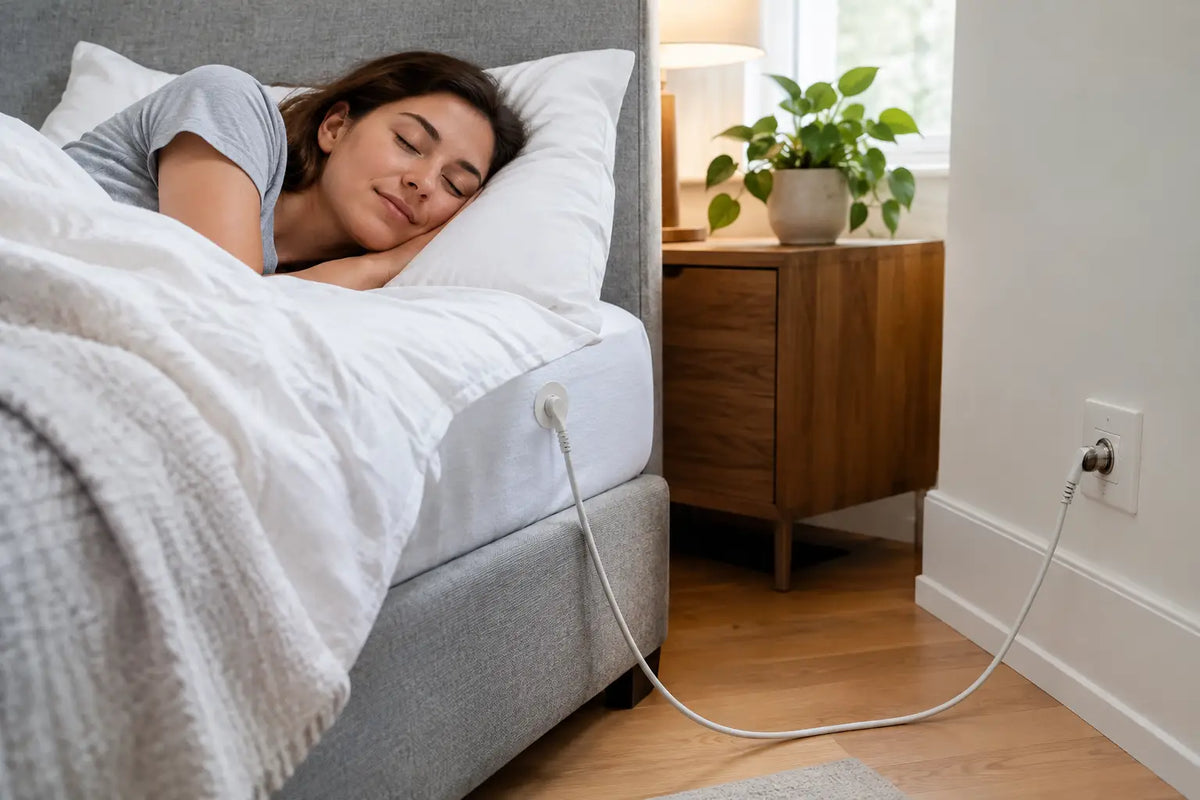
Grounding, also called earthing, refers to direct contact between the body and the Earth’s electrical potential. Outdoors, that can mean walking barefoot on conductive natural surfaces. Indoors, grounding products are designed to connect to the ground component of a properly grounded electrical outlet, allowing the body to be electrically connected while resting, working, or sleeping.
The existing body of research is promising in places, but still limited. Small studies and pilot investigations have explored changes in sleep, pain perception, stress-related measures, blood flow, inflammation-related markers, and body voltage. These findings are useful starting points, not final answers. Better studies can help separate real physiological effects from expectation, normal night-to-night variation, and changes people make when they begin paying closer attention to their health.
Why the Current Evidence Needs a Closer Look
Many grounding studies have been small, short, or difficult to compare with one another. Participants may use different products, follow different schedules, or report different outcomes. One study might focus on subjective sleep quality, while another measures cortisol patterns or body voltage. That makes it hard to combine results into one clear conclusion.
There is also a practical challenge: creating a convincing placebo comparison. If someone can see or feel that they are using a grounding mat or sheet, expectations may influence how they rate their sleep, discomfort, or stress. This does not mean their experience is unreal. It means researchers need study designs that can distinguish perceived benefit from an effect that is consistently measurable beyond expectation.
The most valuable future work will not try to prove that grounding does everything. It will ask narrower, more useful questions. Does a properly grounded sleep product affect specific sleep measures over eight weeks? Does it change recovery markers after a defined exercise session? Are outcomes different for people with poor sleep compared with people who already sleep well? Clear questions create more trustworthy answers.
Future Grounding Research Needs Better Trials
The next generation of studies should be randomized, adequately sized, and independently conducted whenever possible. Random assignment helps ensure that one group is not already healthier, more active, or more motivated than the other. A larger sample makes it less likely that a striking result happened by chance.
Blinding matters, too. In grounding research, full blinding can be technically challenging, but not impossible. Researchers can use visually identical products and carefully designed control setups that do not provide a true ground connection. They should also test and document the electrical properties of both conditions rather than assuming the equipment performs as intended.
Longer trials would be especially helpful. A single afternoon on a mat cannot answer the same question as consistent nightly use for two or three months. Sleep routines, stress levels, exercise, travel, and seasonal changes can all affect how people feel. Studies that track participants over time can show whether an early change lasts, fades, or only appears in certain groups.
Researchers should also report adverse events and non-response. Wellness research often highlights positive results, but an honest picture includes participants who experienced no meaningful change, found the routine inconvenient, or stopped using the product. That transparency helps consumers make decisions based on likely outcomes rather than idealized ones.
Measurements That Go Beyond “I Felt Better”
Self-reported sleep, soreness, and well-being are meaningful. If a person feels more rested, that matters in everyday life. But subjective reporting works best alongside objective measurements.
For sleep, future studies could combine sleep diaries with wearable actigraphy, which estimates sleep and movement patterns, or more detailed overnight testing when appropriate. Useful measures may include sleep onset, wake time after falling asleep, total sleep time, and consistency across nights. Researchers should also account for caffeine, alcohol, medication changes, screen habits, and bedtime schedules.
For recovery, a study might examine perceived muscle soreness alongside training load, heart-rate variability trends, and markers selected for a specific hypothesis. For stress, investigators could pair questionnaires with measures such as heart rate, cortisol timing, or autonomic nervous system activity. No single number can explain a person’s health, so the strongest work will use several complementary measures.
Electrical measurement deserves the same care. One well-understood effect of grounding is that it can reduce the voltage measured on the body relative to ground when a correctly connected product is used. That is a measurable electrical change. However, lower body voltage by itself does not establish a medical benefit. Future research must connect electrical measurements to relevant health outcomes rather than treating one as automatic proof of the other.
The People Studied Matter as Much as the Product
Grounding may not work the same way for everyone. Someone who sleeps seven uninterrupted hours may have little room for improvement, while a person with an irregular schedule may notice a different result. Athletes, shift workers, older adults, and people dealing with high perceived stress may respond differently, if they respond at all.
Future grounding research should describe participants clearly: age range, baseline sleep quality, activity level, health conditions, medication use, and daily routines. This helps readers see whether a study resembles their own situation. It also prevents broad claims from being made from a narrow group of participants.
Researchers should be particularly careful when studying people with chronic pain, diagnosed sleep disorders, cardiovascular conditions, or other ongoing health concerns. Grounding can be explored as a complementary wellness practice, but it should not be presented as a replacement for medical evaluation or treatment. Studies in these groups need appropriate medical oversight and realistic language about what the data can and cannot show.
Product Quality and Electrical Safety Belong in the Research
Not all grounding products are identical. Conductive materials, connection cords, durability after washing, outlet adapters, and setup instructions can affect both usability and electrical performance. A well-designed study needs to state exactly what was used, how it was tested, and how participants were instructed to use it.
Before using an indoor grounding product, users should confirm that the outlet is properly grounded with a suitable outlet tester. A grounding product does not create a ground connection where one is absent. It should never be modified, connected to an unverified electrical source, or used as a substitute for safe electrical installation.
For consumers, this is not a minor technical detail. A study using verified equipment and correct setup cannot automatically be applied to a product that is poorly made or used incorrectly. This is why clear setup guidance and conductive testing are part of responsible product education, not just fine print.
What Consumers Can Do While Research Develops
You do not need to wait for every unanswered question to adopt sensible habits that support rest and recovery. If you want to try grounding, approach it as a personal wellness experiment rather than a guaranteed solution. Keep other parts of your routine as stable as possible for a few weeks, use the product consistently, and notice patterns rather than judging a single night.
A simple sleep log can be more revealing than memory. Record bedtime, wake time, how long you think it took to fall asleep, nighttime awakenings, caffeine or alcohol intake, exercise, and how rested you felt in the morning. This creates context. If sleep improves, you can see whether grounding was the only meaningful change or one part of a broader routine.
Use products as directed, verify your outlet before connecting, and set realistic expectations. Grounding Essentials recommends treating grounding as one supportive practice among many, alongside daylight exposure, regular movement, a comfortable sleep environment, and professional care when symptoms are persistent or concerning.
The most encouraging direction for future research is not bigger promises. It is better questions, better controls, and clearer reporting. Until then, curiosity and careful observation are a sensible place to start.

Hinterlasse einen Kommentar
Diese Website ist durch hCaptcha geschützt und es gelten die allgemeinen Geschäftsbedingungen und Datenschutzbestimmungen von hCaptcha.