



Grounding Bed Sheets vs. Grounding Bed Mat: Which Is Right for You?
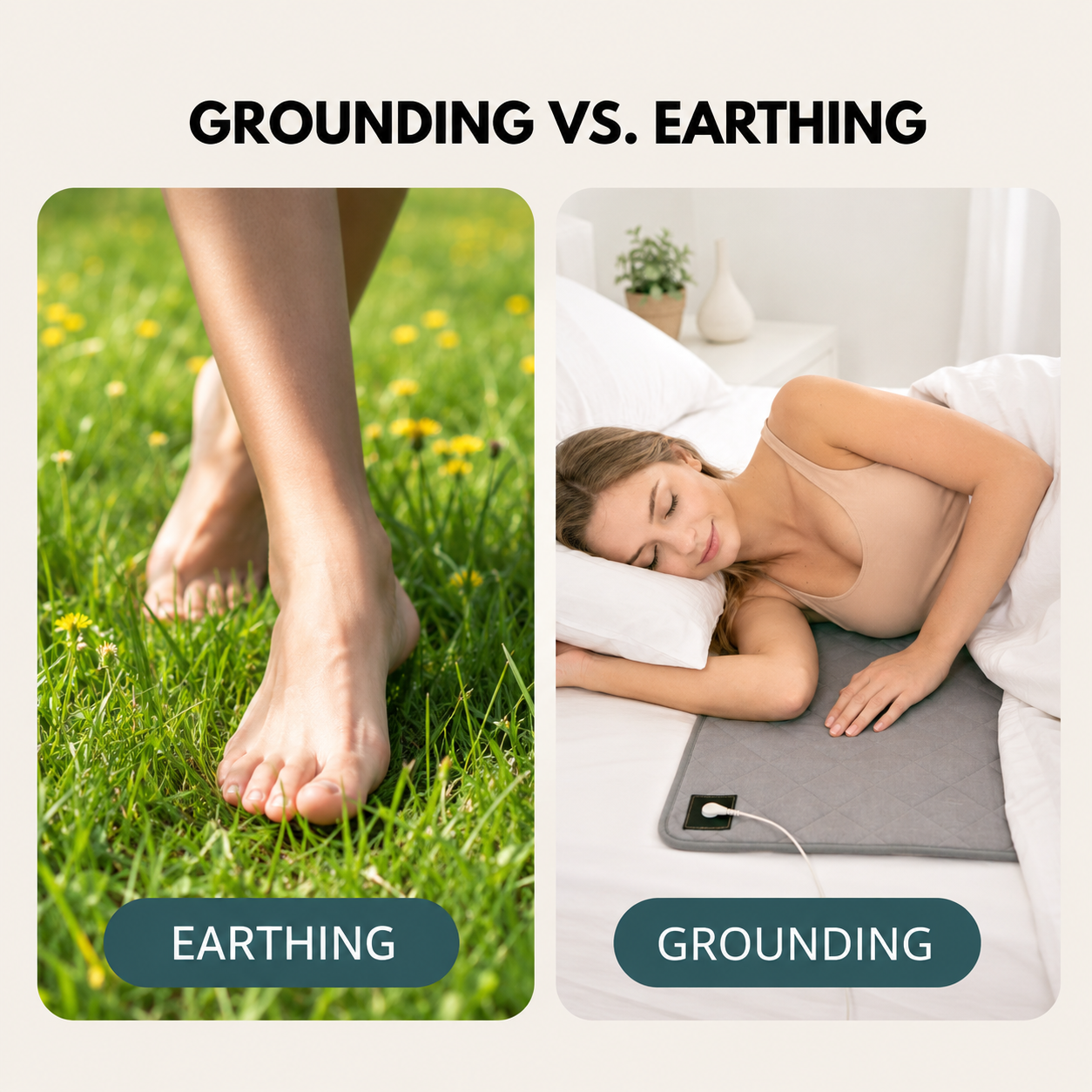
Grounding bed sheets and grounding bed mats are both designed to help you stay connected to the Earth while you sleep. The main difference is where they sit on your bed and how your body contacts the conductive surface.
A grounding bed sheet replaces or sits on top of your regular bedding, allowing direct contact with conductive fabric. A grounding bed mat is positioned underneath your fitted sheet, so you can continue using your preferred bedding.
Neither option is best for everyone. Your choice depends on the feel you prefer, how much maintenance you want, your bedding materials, and whether you prefer direct contact or a protected surface beneath your sheet.
Grounding Bed Sheet vs. Bed Mat at a Glance
| Grounding Bed Sheet | Grounding Bed Mat |
|---|---|
| Used as the sleeping surface | Placed under your fitted sheet |
| Provides direct skin contact | Works through compatible bedding |
| Soft, breathable fabric | Durable conductive surface |
| Machine washable | Usually wiped or hand-cleaned |
| Simple to test directly | Requires correct sheet material and positioning |
| Experiences regular washing and friction | Remains protected beneath the bedding |
What Is a Grounding Bed Sheet?
A grounding bed sheet is a conductive sheet designed for direct contact while you sleep.
Grounding Essentials sheets are made with organic cotton and conductive silver fibers woven throughout the fabric. The silver creates conductivity across the sheet when it is correctly connected.
A full fitted grounding sheet replaces your regular fitted sheet and wraps around the mattress. A grounding half sheet is smaller and lies across part of the bed, making it suitable for different mattress sizes.
Because your skin touches the conductive fabric directly, grounding sheets are generally simple to set up and test. They also feel similar to traditional cotton bedding.
Grounding sheets require regular washing. Mild detergent and gentle washing help protect the conductive fibers. Avoid bleach, fabric softener, harsh chemicals, and high heat.
What Is a Grounding Bed Mat?
A grounding bed mat is a durable conductive mat placed horizontally across your mattress.
Adjustable straps help keep it in position, and your regular fitted sheet is placed over the top. This lets you continue using your preferred bedding while the mat remains protected underneath.
For the most reliable contact, use a thin fitted sheet made from a natural material such as cotton or linen. Thick mattress protectors, synthetic fabrics, waterproof layers, and heavily treated bedding may reduce conductivity.
Moisture naturally produced during sleep can help improve conductivity through the fitted sheet. However, the mat must still be positioned beneath the area where your body will rest.
Which Option Is Easier to Use?
A grounding bed sheet is usually the more straightforward option.
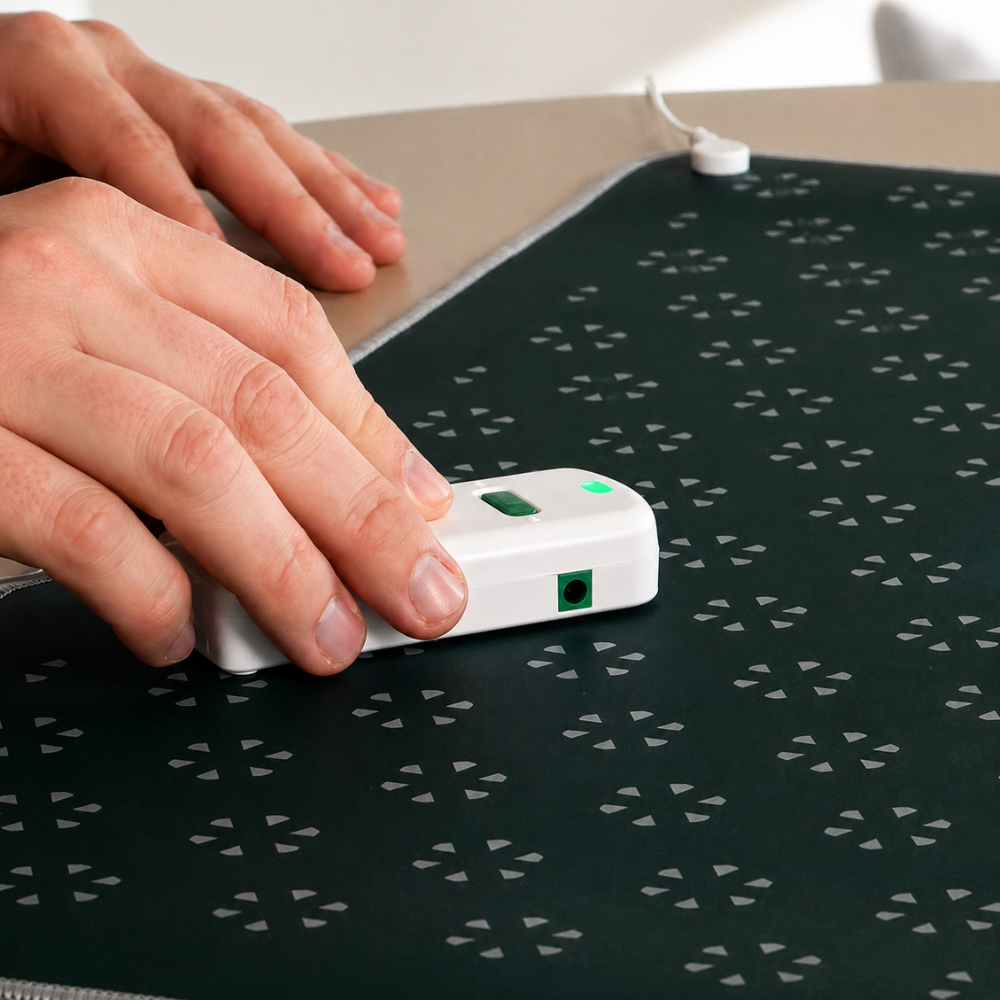
It provides direct contact, fits like regular bedding, and can be checked easily with a compatible Conductive Tester. You do not need to consider whether another sheet could interfere with conductivity.
A grounding bed mat requires slightly more attention during setup. You need to:
- Choose enough coverage for your mattress and sleeping position.
- Secure the mat in the correct position.
- Place a compatible fitted sheet over it.
- Make sure your body remains positioned over the mat.
Couples and people who move frequently during sleep may benefit from choosing a wider bed mat.
Which Option Is More Comfortable?
Comfort depends on your personal preference.
Choose a grounding bed sheet if you prefer the soft, breathable feel of cotton directly against your skin.
Choose a grounding bed mat if you want to keep using your current fitted sheet and prefer the conductive product to remain underneath your bedding.
Because the bed mat sits below the fitted sheet, you should not normally feel its surface directly. This may suit anyone who does not want to change the familiar feel of their bed.
Which Option Is Easier to Maintain?
Grounding bed sheets are machine washable, but they require more frequent care because they are used as your sleeping surface.
Repeated washing, body oils, skincare products, friction, and incorrect detergents may gradually affect the conductive silver fibers.
A grounding bed mat generally requires less maintenance. It stays protected beneath the fitted sheet and can be cleaned according to its care instructions without being placed in a washing machine.
A product’s lifespan depends on how often it is used, how it is cleaned, and how carefully it is maintained. Regular testing can help confirm that the surface remains conductive.
How to Choose the Right Option
Choose a grounding bed sheet if you:
- Want direct skin contact
- Prefer soft cotton bedding
- Want the simplest setup
- Like the appearance of a traditional sheet
- Do not mind regular washing
Choose a grounding bed mat if you:
- Want to keep using your existing fitted sheet
- Prefer a durable, low-maintenance option
- Want the conductive surface protected beneath your bedding
- Use thin, natural-fiber sheets
- Want different coverage options for one or two sleepers
Do Both Products Need a Grounded Outlet?
Yes. Both must be connected to a functioning grounding pathway.
This can be provided through the grounded part of a properly grounded wall outlet or a compatible grounding rod placed outside.
Use a Socket Tester before connecting a product to a wall outlet. A Socket Tester checks whether the outlet is properly grounded.
A Conductive Tester performs a different job. It checks the conductive surface and connection of a compatible grounding product.
Grounding bed sheets and bed mats do not use electricity to operate.
Frequently Asked Questions
Can a grounding bed mat work through a fitted sheet?
Yes, but the bedding material matters. Thin natural fabrics such as cotton and linen are generally more suitable than thick, synthetic, waterproof, or heavily treated materials.
Can I place a mattress protector over the mat?
A thick or waterproof mattress protector may interfere with conductivity. The mat should normally sit above the protector and directly beneath a compatible fitted sheet.
Do grounding sheets wear out faster than bed mats?
Sheets experience more washing and direct friction, while bed mats remain protected beneath the bedding. Actual durability depends on use and care.
Can two people use one grounding bed mat?
Yes, provided the mat is wide enough and positioned so both sleepers remain over its conductive surface. A Large or XL mat is usually more suitable for couples.
Which option provides more direct contact?
A grounding bed sheet provides direct contact because your skin touches its conductive fabric. A bed mat creates contact through the fitted sheet placed above it.
Which Is Right for You?
Choose a grounding bed sheet for direct contact, soft fabric, and simple setup.
Choose a grounding bed mat if you want a durable, low-maintenance option that allows you to continue using your preferred fitted sheet.
Both can support an indoor grounding routine when correctly connected, tested, positioned, and cared for.
Compare Grounding Essentials Bed Sheets and Bed Mats to find the size and setup that best match your mattress, sleeping habits, and bedding preferences.

Leave a comment
This site is protected by hCaptcha and the hCaptcha Privacy Policy and Terms of Service apply.