




Most people spend nearly every hour of the day insulated from the Earth by shoes, flooring, beds, and office spaces. The potential grounding benefits come from changing that one practical reality: restoring a direct conductive connection to the Earth while you sleep, rest, work, or recover.
For people who wake up tired, carry daily tension in their body, or feel like recovery takes longer than it should, grounding is a simple habit worth understanding. It is not a replacement for medical care, movement, nutritious food, or a consistent sleep schedule. It is a supportive wellness practice that fits around the routines you already have.
What Is Grounding, Exactly?
Grounding, also called earthing, means making conductive contact with the Earth. Outdoors, that can be as simple as standing barefoot on grass, sand, soil, or unsealed concrete. Indoors, grounding products are designed to create that connection through conductive materials that connect to a properly grounded outlet or grounding rod.
Your body is electrically active. Nerves, muscles, and the heart all depend on electrical signals. Grounding research explores what may happen when the body is brought to the same electrical potential as the Earth, including changes in body voltage and physiological markers connected to rest and recovery.
The practical appeal is straightforward. You do not need to find time for another demanding wellness routine. A conductive sleep mat, fitted sheet, or grounding pillowcase can work while you are already in bed. A grounding mat can support your routine while you answer emails, read, stretch, or sit at your desk.
Grounding Benefits That Matter in Daily Life
The most meaningful benefits are not about chasing a perfect feeling overnight. They are about supporting the conditions your body needs to settle, repair, and show up with more energy.
More restful sleep
Sleep is where many people first notice a difference. When stress stays high, the nervous system can remain switched on long after the lights go out. That may look like trouble falling asleep, waking repeatedly, feeling hot and restless, or waking up with the sense that eight hours somehow was not enough.
Early grounding studies and customer experiences suggest that consistent grounding may support relaxation and sleep quality for some people. The effect can be subtle at first: a calmer feeling at bedtime, fewer restless nights, or an easier time getting back to sleep after waking. For others, it can take several weeks of consistent use before they can tell whether it belongs in their routine.
Grounding does not work identically for everyone. Room temperature, alcohol, caffeine, screen habits, pain, stress, and sleep disorders all affect how you sleep. Still, grounding can be an easy addition to a stronger wind-down routine, especially because sleep gives you several uninterrupted hours of contact.
A calmer stress response
Modern life asks the body to stay alert for far too long. Meetings, parenting, commutes, notifications, training schedules, and constant problem-solving can leave you physically at rest but mentally braced for the next demand.
Grounding may help some people feel more settled by supporting a shift out of that always-on state. That does not mean it erases stressors or replaces professional mental health support when you need it. It means a quiet, physical ritual can help signal that it is safe to downshift.
Try using a grounding mat during the part of the day when you tend to hold the most tension. For some people, that is at a desk in the afternoon. For others, it is on the couch after dinner, with bare feet or skin touching the conductive surface. Pair it with slower breathing, a few minutes of stretching, or simply a screen-free pause.
Support for recovery and everyday aches
Hard workouts, long shifts, travel, poor sleep, and repetitive work can all create the same frustrating outcome: your body feels like it never fully resets. Grounding is commonly used as a recovery tool because research in this area has explored its possible relationship with inflammation, circulation, pain perception, and stress hormones.
The evidence is still developing, and claims should be kept in perspective. Grounding is not a cure for chronic pain, an injury, arthritis, or an inflammatory condition. But people who use it consistently often choose it because it is noninvasive, easy to use, and compatible with other recovery habits such as mobility work, hydration, physical therapy, and appropriate medical care.
If discomfort disrupts your sleep, nighttime grounding may be the most convenient place to start. If soreness is tied to your workday or exercise routine, a mat during rest periods may make more sense. The best option is the one you will actually use often enough to assess.
Steadier energy starts with better recovery
Energy is not just about stimulants. It is also shaped by how deeply you sleep, how stressed you feel, how much pain you are carrying, and whether your body gets enough recovery between demands.
That is why people sometimes describe grounding benefits as better daytime energy, even when they are not using a grounding product during the day. The goal is not an artificial burst. It is a more restored baseline after a calmer night and a more consistent recovery rhythm.
If fatigue is new, severe, or persistent, get it checked by a qualified healthcare professional. Grounding can be part of a wellness routine, but unexplained exhaustion deserves real attention.
Why Consistency Makes the Difference
A ten-minute barefoot walk outside can feel great, especially if you have been indoors all day. But occasional outdoor contact and an overnight grounding routine serve different purposes. One gives you a welcome reset; the other creates a longer, repeatable period of connection.
Most people benefit from treating grounding like hydration or a bedtime routine rather than a one-time experiment. Use the same product in the same place, ideally every day, and give yourself enough time to notice patterns. Keep a simple note of sleep quality, morning stiffness, stress level, and energy for two to four weeks.
Avoid changing every part of your wellness routine at once. If you start a new supplement, mattress, workout plan, and grounding sheet in the same week, it becomes difficult to know what is helping. A simple, consistent trial gives you a clearer answer.
Choosing the Right Way to Ground Indoors
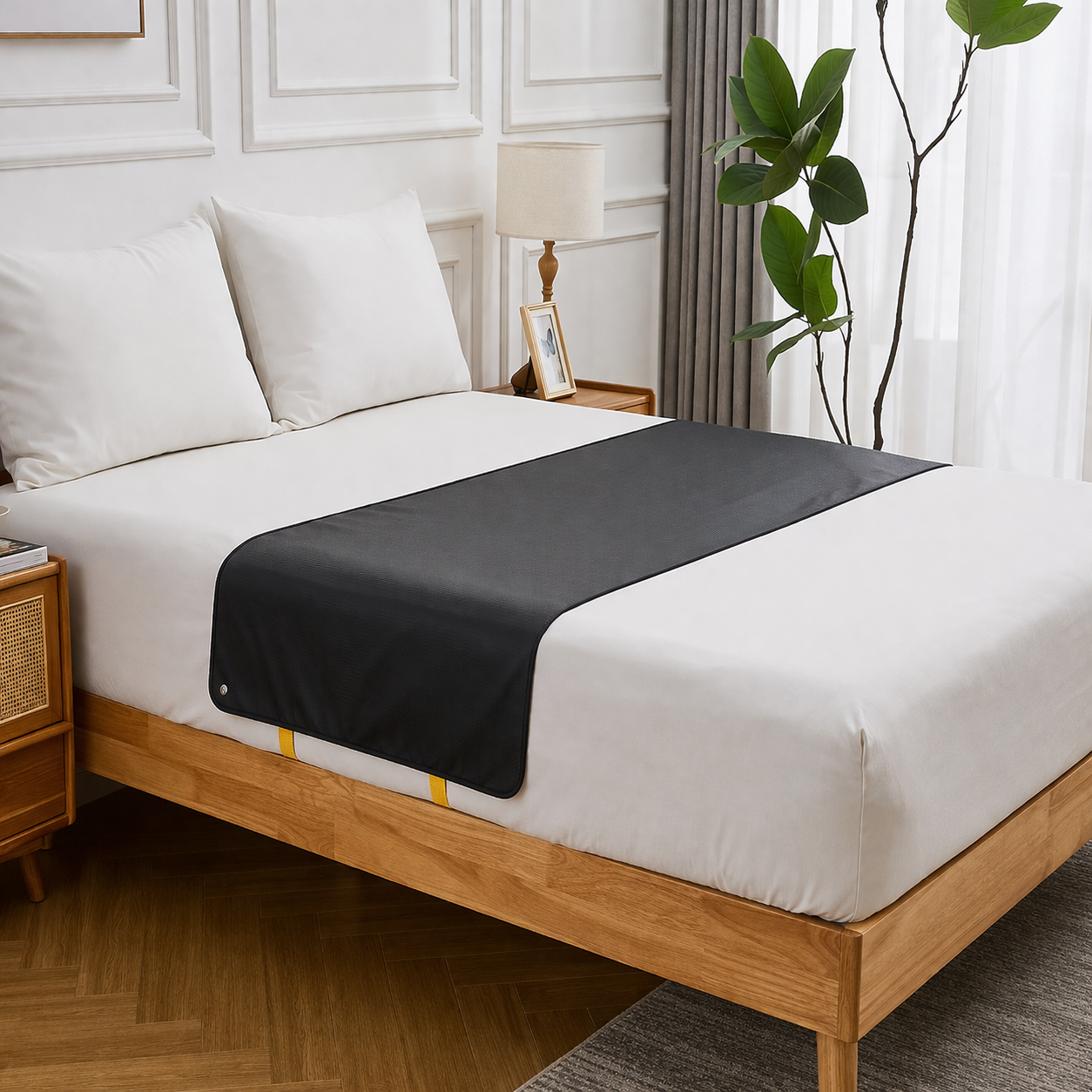
The best setup depends on where you need support most. If sleep is your priority, grounding bedding is usually the natural choice because it provides extended contact without adding another task to your day. A fitted sheet, sleep pad, or bed mat can be placed where bare skin will touch it during the night. A grounding pillowcase can be a useful addition for people who prefer contact near the face and neck.
For work and daytime stress, a grounding mat under bare feet or forearms can make grounding easier to maintain. Yoga and movement mats suit people who want to build grounding into stretching, breathwork, meditation, or post-workout recovery.
Quality and setup matter. Conductive products need reliable contact with the body and a verified grounding connection to work as intended. Make sure the outlet you plan to use is properly grounded, follow all product instructions, and use a conductive tester if you are unsure about your setup. Do not use damaged cords or products, and never modify electrical connections yourself.
Grounding Essentials offers options for sleep, work, movement, and recovery, so you can choose a format that fits your existing life instead of forcing a new routine.
A Better First Week of Grounding
Start with the easiest use case. If you already spend seven or eight hours in bed, make sleep your first experiment. Place your grounding product according to its instructions, ensure bare skin can make contact, and use it every night for one week.
Keep your expectations realistic. Some people report a noticeable shift quickly. Others notice gradual changes only when they look back at their sleep, tension, or recovery over time. And some people may not experience a meaningful difference at all. That transparency matters: the value of grounding comes from testing it consistently in your own body and routine.
Support the experiment with basics that make any sleep routine stronger: dim lights before bed, keep the room cool, limit late caffeine, and give yourself a few quiet minutes before sleep. Grounding works best as part of a restorative environment, not as a shortcut around every other factor that affects health.
The most useful wellness tools are often the ones that remove friction. If grounding helps you create a calmer space to sleep, recover, and reset each day, that simple connection can become a habit worth keeping.

Hinterlasse einen Kommentar
Diese Website ist durch hCaptcha geschützt und es gelten die allgemeinen Geschäftsbedingungen und Datenschutzbestimmungen von hCaptcha.